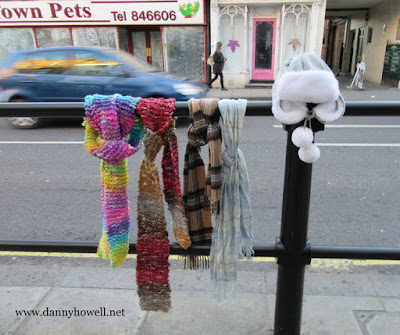
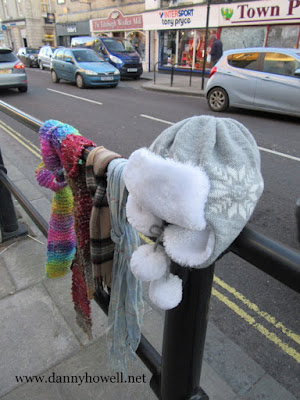
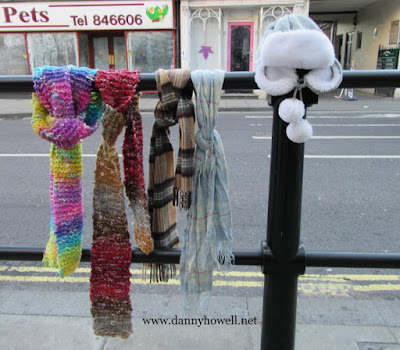
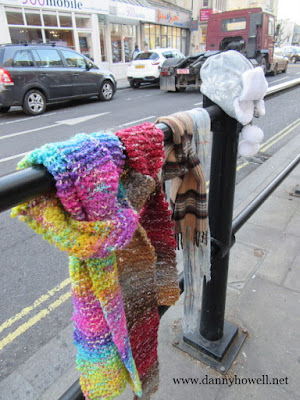
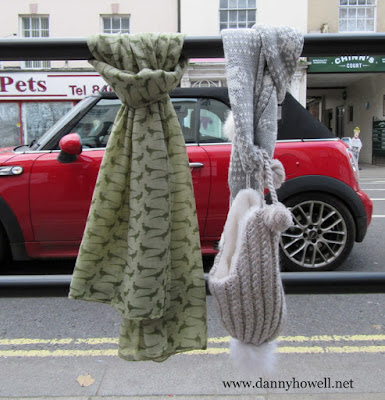
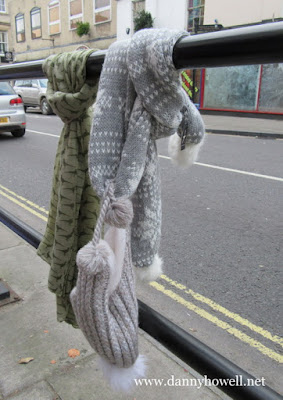
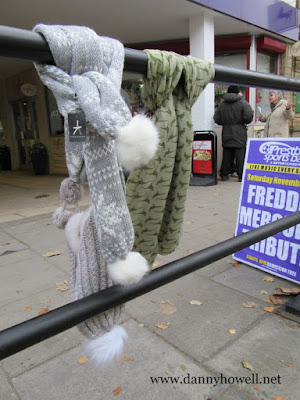
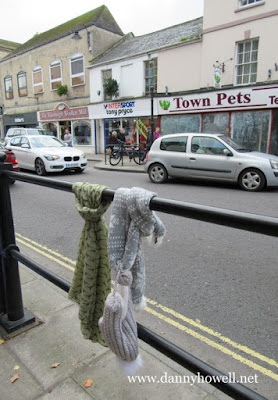
More scarves and a hat left on the railings in the Market Place, Warminster (at the southern end of Three Horseshoes Walk).
Kind-hearted people have been leaving scarves on railings or tied to lamp posts in Warminster.
The idea is that if someone is homeless and on the streets, or if a person is just feeling the cold, they can help themselves to a scarf or a hat~ it’s also a wonderful way of letting the less fortunate know that there are people in Warminster who really care.
Photographs taken by Danny Howell on Tuesday 29th November 2016.
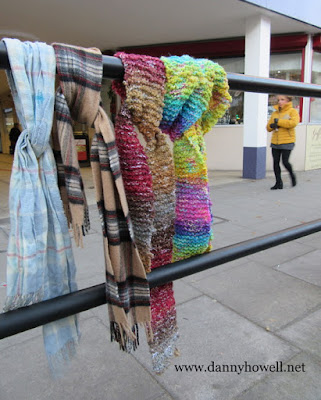
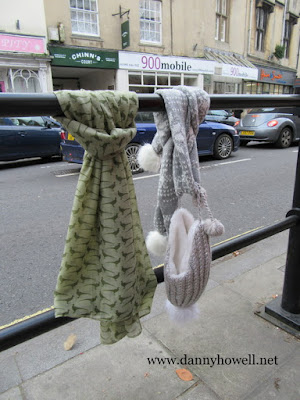
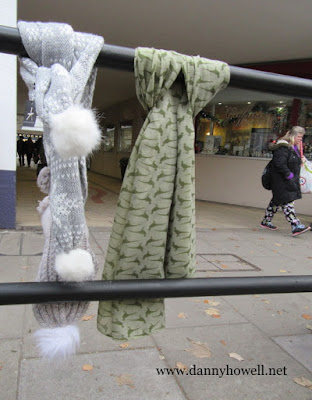
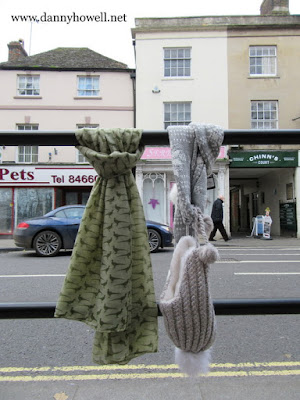
Kind-hearted people have been leaving scarves on railings or tied to lamp posts in Warminster.
The idea is that if someone is homeless and on the streets, or if a person is just feeling the cold, they can help themselves to a scarf ~ it’s also a wonderful way of letting the less fortunate know that there are people in Warminster who really care.
Scarves tied to the railings in the Market Place, Warminster, opposite the southern entrance to Three Horseshoes Walk.
Photographs taken by Danny Howell on Saturday 26th November 2016.
Members of the public are being asked to help create a record of ritual markings on buildings that were once believed to ward off evil spirits.
The “witches’ marks” were often carved near entrances to buildings, including the house where Shakespeare was born and the Tower of London.
The symbols were believed to offer protection when belief in witchcraft and the supernatural was widespread.
But heritage agency Historic England says too little is known about them.
This Halloween it is calling for people to document the marks, which can be found in medieval houses, churches and other buildings, most commonly from around 1550 to 1750.
‘Easy to overlook’
The symbols, which were intended to protect inhabitants and visitors of buildings from witches and evil spirits, took many forms, including patterns and sometimes letters.
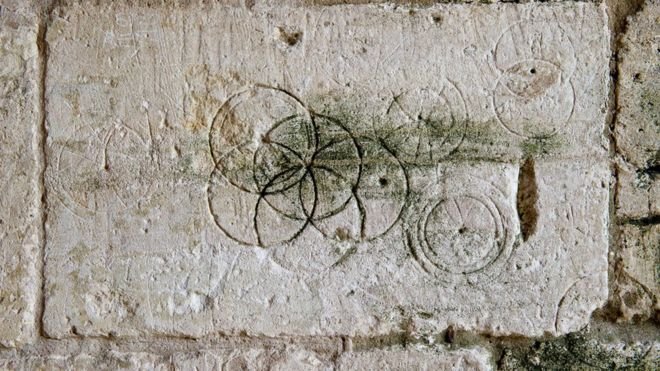
The most common type was the “Daisy Wheel”, which looked like a flower drawn with a compass in a single endless line that was supposed to confuse and entrap evil spirits.
They also took the form of letters, such as AM for Ave Maria, M for Mary or VV, for Virgin of Virgins, scratched into medieval walls, engraved on wooden beams and etched into plasterwork to evoke the protective power of the Virgin Mary.
Known examples include several found at Shakespeare’s birthplace in Stratford-upon-Avon, Warwickshire, carved near the cellar door where beer was kept, and at the Tithe Barn, Bradford-on-Avon, Wiltshire, to protect crops.
Others have been found in caves, such as the Witches’ Chimney at Wookey Hole, Somerset, which has numerous markings.
Duncan Wilson, chief executive of Historic England, said: “Witches’ marks are a physical reminder of how our ancestors saw the world. They really fire the imagination and can teach us about previously-held beliefs and common rituals. Ritual marks were cut, scratched or carved into our ancestors’ homes and churches in the hope of making the world a safer, less hostile place. They were such a common part of everyday life that they were unremarkable and because they are easy to overlook, the recorded evidence we hold about where they appear and what form they take is thin.”