Burials At Hill Deverill 1770-1774

Hill Deverill burials 1770 – 1774

Arranged alphabetically by surname:

JOHN EDWARDS, 7 December 1770.

ELIZABETH ELLIOTT, wife of Samuel Elliott, 13 April 1773.

THOMAS FORD, 9 January 1771.

MARY HOULDAWAY, 24 February 1771.

GRACIOUS PARKER, 27 February 1774.

JOHN PARKER, 23 August 1770.

JOHN PARKER, son of John Parker, 9 November 1770.

MARY PARKER, wife of Benjamin Parker, 20 March 1770.

HUGH TANNER, 12 April 1772.

ELIZABETH TOWNSEND, wife of Edward Townsend, 20 October 1771.

MARTHA TURNER, wife of Jeremiah Turner, 1 January 1772.

Wylye Burials 1765 – 1769

Wylye Burials, 1765 – 1769, arranged alphabetically by surname:

George Akerman. Buried 1 August 1768.

Hannah Barnett. Buried 8 September 1765.

John Beckett. Buried 7 May 1765.

Ann Bell. Buried 8 May 1769.

Thomas Bell (a bastard child of Elizabeth Bell by Thomas Mitchell, miller of Steeple Langford). Buried 25 January 1769.

John Benham (S Pox). Buried 2 April 1768.

Hannah Bounds (a child). Buried 9 January 1767.

Hannah Bowne. Buried 20 January 1767.

James Bowne. Buried 24 January 1767.

Nathaniel Bowne. Buried 8 December 1769.

Grace Cool. Buried 6 May 1769.

Cecily Crouch. Buried 26 August 1769.

Martha Doughty. Buried 24 June 1769.

Sarah Doughty. Buried 24 August 1768.

Ann Hayter (widow). Buried (in the church) 18 October 1765.

Elizabeth Hayter (from Codford). Buried (in the church) 24 September 1765.

Charles Hinwood (an infant). Buried 25 March 1765.

Thomas Hinwood. Buried 19 February 1765.

Phebe Hughes. Buried 6 February 1768.

Christopher Kerley. Buried 2 April 1767.

Matthew Kerley. Buried 3 April 1769.

Betty Lock. Buried 9 November 1767.

Henry Lock. Buried 29 July 1769.

Thomas Lock (an infant). Buried 7 December 1765.

John Long. Buried 1 May 1769.

Ann Lush. Buried 4 November 1769.

Elizabeth Mead. Buried 18 October 1765.

Edith Perry. Buried 9 March 1768.

Thomas Rogers. Buried 12 September 1769.

Lawrence Snook, the elder. Buried 6 February 1765.

Lawrence Snook. Buried 18 February 1768.

James Sturgis (S pox). Buried 17 January 1766.

James Titt. Buried 7 August 1769.

Hannah Worme. Buried 22 April 1768.

Letitia Worme. Buried 17 January 1767.

John – (the son of a travelling woman). Buried 13 April 1765.

A poor man. Buried 15 December 1766.

Upton Scudamore Burials, 1765-1769

Burials at Upton Scudamore, 1765 – 1769

Arranged alphabetically by surname:

MARY BARNES, 15 August 1768.

JANE BARRY, 9 December 1769.

REVEREND RICHARD BARRY, Rector, 26 February 1766.

DANIEL BARTON, 23 June 1766.

ELEANOR BARTON, 9 July 1766.

ELIZABETH CARPENTER, 11 June 1767.

ESTHER CARPENTER, 11 October 1767.

WILLIAM CARPENTER, 8 November 1767.

JAMES CHIVERS, 28 April 1768.

BRIDGET DANIEL, 14 March 1769.

MARY DANIEL, 11 January 1767.

WILLIAM DANIEL, 10 January 1767.

MARY HILL, widow of the late Thomas Hill, 11 May 1765.

MARY HUNT, the wife of George Hunt, 15 January 1765.

JOHN INGRAM, 15 October 1766.

MARTHA INGRAM, 2 November 1766.

HANNAH MANNET, daughter of Isaac and Mary, 9 February 1765.

SARAH MARSH, 28 February 1769.

EDWARD MARTIN, 6 March 1766.

MARY MARTIN, 15 November 1767.

ELIZABETH MOORE, 6 October 1769.

RICHARD NIGHTINGALE, 15 July 1767.

SARAH NIGHTINGALE, 22 January 1767.

ESTHER PEARCE, 17 November 1767.

WILLIAM PEARCE, 26 December 1766.

JOSEPH PIERCE, 21 September 1765.

JANE PLAYER, 29 November 1767.

SUSANNA PLAYER, 3 December 1767.

MARY RICHARDS, 29 September 1767.

ANNE RUDDOCK, 16 May 1769.

THOMAS RUDDOCK, 16 April 1767.

JOHN RYMELL, 11 October 1766.

MARGARET SEAMAN, 8 November 1766.

MRS MARY SEAMAN, widow of the late Mr. William Seaman, 13 April 1765.

ANNE SLADE, 12 June 1767.

EDWARD SLADE, 12 August 1767.

ANNA MARIA SMITH, 11 December 1768.

BENJAMIN THYMELL, 9 June 1765.

ANNE TURNER, 2 May 1766.

BETTY TURNER, 5 February 1767.

ROBERT WATTS, 11 December 1767.
Codford St. Peter Burials 1765 – 1769

Burials at Codford St. Peter, 1765 – 1769

Arranged alphabetically by surname:

JOAN BADDER,
24 March 1768.

JOHN BARNS,
4 September 1768.

WILLIAM BARNS,
24 October 1766.

JAMES BENNETT,
29 January 1767.

JANE COCKEREL,
20 April 1765.

MARY COLLINS,
13 October 1766.

MRS COLLINS,
26 April 1767.

MARTHA COMPTON,
15 November 1766.

THOMAS COMPTON,
14 September 1765.

BETTY COTTRELL,
24 October 1766.

HENRY COTTRELL,
27 October 1766.

MARTHA COTTRELL,
2 November 1766.

JASPER EMM,
23 January 1766.

JANE HOLLOWAY,
4 October 1769.

WILLIAM LACEY,
2 November 1766.

HANNAH MOLD,
10 July 1767.

RACHEL MOLD,
8 October 1767.

MRS ANN PHELPS,
9 December 1765.

MR WILLIAM RABBETTS,
16 November 1769.

BRIDGET ROWDEN,
13 June 1767.

MRS STILLINGFLEET,
11 October 1765.

ANN TOMER,
18 November 1769.

EDWARD TURNER,
23 March 1769.

JAMES TURNER,
6 September 1765.

MR JOHN TURNER,
26 June 1767.

SARAH WHALE,
8 November 1767.

Burials At Hill Deverill 1765-1769

Hill Deverill burials 1765 – 1769

Arranged alphabetically by surname:

SARAH COOPER, daughter of Thomas Cooper, 22 December 1765.

JEAN EDWARDS, 1 December 1765.

MARY EDWARDS, daughter of John Edwards, 7 October 1768.

JEAN GIBBS, 19 January 1766.

WILLIAM GIBBS, son of William Gibbs, 5 January 1766.

ELIZABETH HASKEL, wife of Robert Haskel, 10 April 1769.

ROBERT HASKEL, 16 April 1769.

MARY LOVER JEAPSON, 8 January 1769.

BENJAMIN PARKER, 19 July 1765.

BENJAMIN PARKER, 20 June 1767.

BETTY PARKER, 26 July 1765.

JESE PARKER, 15 August 1765.

MARTHA PARKER, 14 July 1765.

MARY PARKER, daughter of John Parker, 24 October 1768.

WILLIAM PARKER, 18 December 1768.

ELINER SNELGROVE, 1 January 1765.

MARY SNELGROVE, 8 December 1765.

The Town Of Heytesbury In 1767

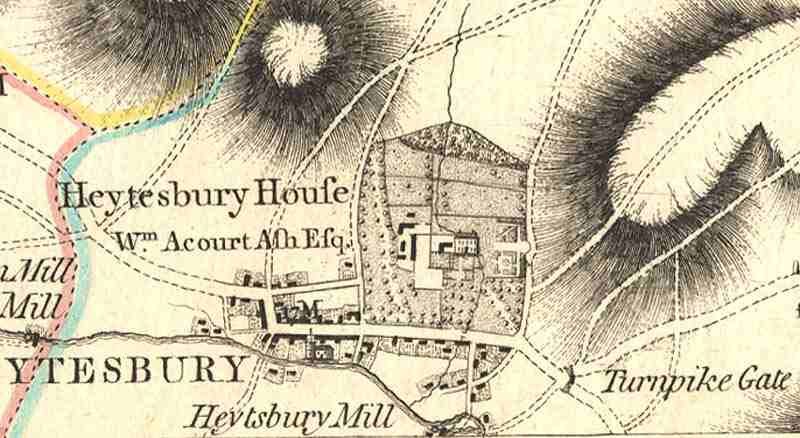
The Parish Magazine, dated April 1902, includes a short account of the “town” of Heytesbury, which was written some 135 years previously, in 1767, just two years after the Great Fire of Heytesbury. The account reads:

The following paper has been found and kindly forwarded by a relative of the late Mrs. Knight, the widow of a former incumbent. No doubt it will interest many of our readers. The date is 1767.

HEYTESBURY

Heytesbury, Heightsbury, Hegesbury, Heghtredsbury, on the records, and in the Index Villiaries, Upper and Lower Haresbury, situated on the river Willey, in the south part of Wiltshire, and gives name to the Hundred in which it stands. It consists chiefly of a street of irregular buildings, in an open country, and in an healthy air, and was sometime the residence of the Empress Maud, when she contended with King Stephen for the crown of England.

The parish is of large extent, measuring upwards of fourteen miles in circumference. It is an ancient borough by prescription; and the members to Parliament are elected by a bailiff and burgesses, and returned by the former. The present members (1767) are Pierce A’Court Ashe and Lieutenant Gererne William A’Court, Esquires.

In the time of King Edward the III. it belonged to the Lord Bartholomew Burgwarish, and then consisted of two manors, viz., East Court and West Court.

It afterwards went to Thomas, Lord Hungerford, who built the church about the year 1400; his successor, Walter, Lord Hungerford, Lord High Treasurer of England, founded a chantry therein, and also founded an hospital for twelve poor aged men and one woman, which was made a body corporate, &c., with an allowance for a chaplain, who was likewise to be a warder and teach a free school; but this not being fully performed in his lifetime, Margaret, widow of his son, Robert, Lord Hungerford, effected it. From the said Walter, it went by marriage to Lord Hastings; from thence to William Ashe, Esquire, and lastly to Peirce A’Court Ashe, Esquire.

The Church is Collegiate, having four prebends in it, belonging to the Cathedral Church of Salisbury; the building is spacious and strong, in the form of a cross, in the centre of which is a high tower, containing six tuneable bells.

The town has two fairs yearly, viz., May the third, the invention of the cross; for on this day, in the year 326, the cross that Christ suffered on was found, being searched for by order of Queen Helen, mother to Constantine the Great, having been hid and buried by the heathens 180 years, and therefore was called by our ancestors, Crouchmas Day, the word crouch being an old English word for cross. The other fair is kept on September the 14th, the exaltation of the cross, a day in commemoration of the cross on which Christ suffered being regained a second time, anno 644, by Heraclitus the Emperor, in a victory over Cosraes, King of Persia, that had it 14 years; the Emperor on this day carried it on his shoulders to Mount Calvary, and there set it up, and exalted it with great solemnity. This day was called Holy Rood Day, from the Saxon word rood, signifying cross.

The inhabitants enjoy a tolerable good trade in the clothing way.

By a dreadful fire which happened June 12th, 1765, three parts of the town was laid in ashes, among which most of the farms, corn, and hay, with abundance of household furniture and other valuable effects.

The Great Fire Of Heytesbury, 1765

Wednesday 12 June 1765:

Fire destroys two-thirds of Heytesbury. A description of “The Great Fire’ reads: “Be it remembered that on Wednesday the 12th day of June, 1765 about twelve oc [o’clock] in the forenoon, a dreadful fire began at the west end of the town of Heytesbury in the county of Wiltshire at the house then in the occupation of Mr William Wilkins, which burnt with such irresistible violence, the wind blowing very briskly from the west, and the weather very dry, that notwithstanding the endeavours of the inhabitants and neighbourhood, with the help of three engines to stop its progress, in the space of two hours it burnt down and consumed 65 dwelling houses, the hospital and chapel adjoining thereto, together with the Free Schools, barns, stables, out-houses, ricks of corn and hay belonging to several farms, stockes in trade and other effects; the whole loss being then computed at thirteen thousand pounds. Two persons were miserably burnt, one of them an old woman of between 70 and 80 years of age, the other a child of 19 months old who both died a few days afterwards. Many other inhabitants being destitute of houses were forced to take up their lodgings in the church till houses could be prepared for them.” [The Ancient Village Of Heytesbury, E.D. Ginever, 1974].

The only building, on the north side of the village street, to survive the fire was the lock-up. Middlebrook, in his serial The Wylye Valley, also says three fire engines attended the fire.

error: Content is protected !!