The Passing Of Tony Burden

Tuesday 20th May 2025

Tony Burden (of Warminster, who spent his final years residing at The Tynings, Norton Bavant) passed away peacefully on Friday 9th May 2025, aged 90. A funeral service will be held at St John’s Church, Boreham Road, Warminster, on Thursday 5th June 2025, commencing at 12 noon. This will be followed by the burial. A reception will be held at St. John’s Parish Hall. Family flowers only please but donations if desired can be made payable to “St. Johns Church” and/or “Warminster Town Football Club” and can be donated on the day of the service c/o F. Curtis & Son, funeral directors, 11 Portway, Warminster.

Bernard Elliott Has Died

Wednesday 10th April 2024

Bernard James Elliott, who formerly farmed at North Farm, Norton Bavant, has died. He passed away, peacefully, at his home at Sambourne Gardens, Warminster, on Saturday 16th March 2024. He was 88. He was a beloved husband to Ann, a much loved father, grandfather and great grandfather. The funeral service will be held at West Wiltshire Crematorium, Semington, on Friday 19th April 2024, at 11.00 a.m. Family flowers only. Donations, if desired, may be made to Diabetes UK, the British Heart Foundation or the Wiltshire Air Ambulance. Funeral directors: F. Curtis & Son, 11 Portway, Warminster.

Thomas Dagger, A Journeyman Baker From Norton Bavant, Raised The Alarm Of The Great Fire Of London, 1666

Sunday 10th September 2023

John Baker, in an article for the Wiltshire Times, writes:

A Wiltshire bakery worker has been identified by historians for the first time as being the first person to raise the alarm of The Great Fire of London in 1666.

Thomas Dagger, 24, from Norton Bavant, Warminster, was a journeyman baker who was living in Pudding Lane where the fire started.

The inferno that ensued destroyed most of the medieval city of London and famously led to the writer Samuel Pepys burying his cheese in his garden to protect it from the flames.

Mr Dagger was identified by historians researching the details of the fire for the Museum of London for a new exhibition when it reopens on a new site in 2026.

Kate Loveman, an associate professor of English literature at the University of Leicester, who conducted the research, said Mr Dagger was the first to witness the fire and the first person to raise the alarm.

Thomas Dagger was a journeyman baker who left Wiltshire for London after his father died, becoming a baker’s apprentice aged around 15.

He had been apprenticed to Thomas Farriner, whose bakery in Pudding Lane was identified as being where the fire broke out in the early hours of September 2 1666.

For the first time, Mr Dagger has been identified as the servant who, according to contemporary accounts, was first woken by “the choke of the smoke” coming from the fire.

He roused the household to escape from a window above the bakery with his employer and Farriner’s daughter.

Although the role of Farriner’s bakery was quickly established, Dagger’s name was not associated with the fire at the time, Professor Loveman said.

To identify Mr Dagger, she pieced together contemporary accounts, legal documents and apprenticeship and guild archives, as well as parish and other public records.

She added: “Taken together, “we can be pretty confident that Thomas Dagger was in the Farriner household on the night of the fire, and we’ve got a source that seems to be credible that says he was the person who first woke up,” she said.

“So if we’re looking for someone who “discovered’ the Fire of London, it’s him.

“Soon after the disaster, he merges back into the usual records of Restoration life, having children and setting up his own bakery. His is a story about the fire, but also about how Londoners recovered.”

Mr Dagger’s name also appeared with others on a court indictment against Robert Hubert, a Frenchman who confessed to starting the fire and was executed, although he was later shown not to have been in London at the time.

Other records allowed Professor Loveman to fill out more of Mr Dagger’s biography and apprenticeship history.

She said that Mr Dagger was married and his wife may have been pregnant at the time of the fire. In later years, they had more children and he went on to work as a London baker in his own right, right into the 1690s.

Professor Loveman said that Mr Dagger was an otherwise unremarkable young man who was “swept up in history”.

She added: “Ordinary people should be remembered – we shouldn’t just have the names of the really famous people.”

Thousands of children study The Great Fire of London as part of the national curriculum for England at Key Stage 1.

Simone Few, audience and interpretation manager for the Museum of London, said: “It’s obviously a story that really captures their imagination and sparks a love of history.

“We wanted to dig deeper into the research and make sure that the stories we’re telling about it reflect the diversity of the population of London in the 17th century.”
Service Of Thanksgiving At Norton Bavant For Lady Jardine Paterson

Monday 5th February 2018

Danny Howell writes ~

A Service Of Thanksgiving for the life of Lady Jardine Paterson will be held at All Saints Church, Norton Bavant, on Friday 16th March 2018, commencing at 12 noon.

Lady Jardine Paterson died peacefully in her sleep on 19th January 2018, aged 93. Her funeral was private. Priscilla Jardine Paterson, who was known affectionately as “Lady P” by many people who lived in the locality of Norton Bavant, was the widow of Sir John Valentine Jardine Paterson. His middle name ‘Valentine’ was given because he was born on Valentine’s Day (14th February) 1920. Details of Sir John’s military and business career can be gleaned from the Wikipaedia page: https://en.wikipedia.org/wiki/John_Jardine_Paterson 

Sir John Jardine Paterson died on 12th March 2000. He and Lady Jardine Paterson had lived in retirement at the Manor House in Norton Bavant, a property which had been purchased in 1947 by Lady Jardine Paterson’s father Sir Kenneth Nicholson MC (1891-1964). Sir Kenneth was a Scottish East India Merchant. Lady Jardine Paterson’s mother was Mignon Shuttleworth. 

Sir John and Lady Jardine Paterson married in 1953. Their marriage was blessed with one son and three daughters. Lady Jardine Paterson’s residence, as a widow after she moved out of the Manor, was at South Farm House, Norton Bavant (the family farmed South Farm) but she spent her final years away from the village. Her death notice in the Daily Telegraph was as follows: “Priscilla died peacefully in her sleep on 19th January, aged 93. Widow of John, adored mother and grandmother. Service of Thanksgiving will be held at 12 noon on Friday 16th March at Norton Bavant.”

The Gravestone Of Frederick Charles Humphries (Late Of Norton Bavant) And Emily Humphries At Bishopstrow

Monday 18th April 2016

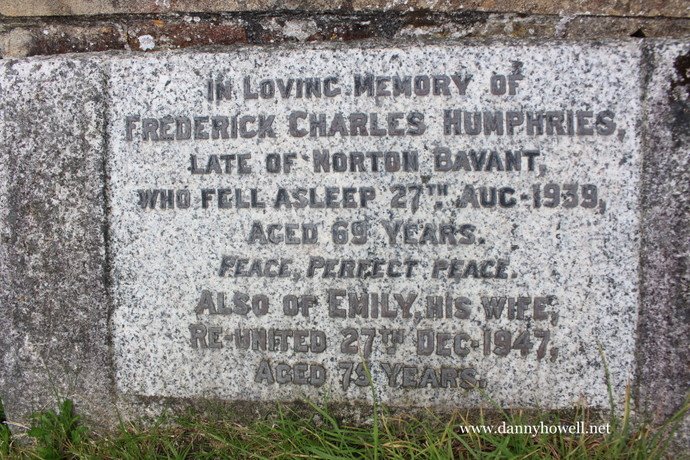
 A gravestone in St. Aldhelm’s Churchyard,
Bishopstrow. The inscription reads:

“In loving memory of
Frederick Charles Humphries,
late of Norton Bavant,
who fell asleep 27th Aug 1939,
aged 69 years.
Peace, Perfect Peace.
Also of Emily, his wife,
re-united 27th Dec 1947,
aged 75 years.”

Photograph taken by Danny Howell
on Monday 18th April 2016.

Mad Jack Benett Of Norton Bavant

Wednesday 21st May 2014

Brian Excell writes ~ 

Dear Danny, I’m enjoying your website on the lore of south west Wiltshire.

I was particularly interested in your story on ‘Mad Jack’ Bennett, who was indeed a memorable character in southern Wiltshire from about 1890 to his death in 1947.  His real name was John Montagu Fane Benett Stanford  (his surname was Benett with one ‘n’). I’m very interested in Jack as I’ve been writing a book about him and his family – the Benett-Stanfords; they are all quite an interesting bunch.

I have made contact with other people who know something about the Benett-Stanfords such as Jan Oliver, Rex Sawyer, Bernard Pike and Robert Moody, so I would be most interested to hear from you if you had any further anecdotes about Jack and/or Pythouse.

Your Jack at the Bishopstrow church was fascinating – a typical ‘Jack’ story.  I know that Bishopstrow had a particular interest to Jack in that his wife Evelyn came from there. However, a week before their scheduled wedding of June 23rd, 1893 her father Capt. Burchall Helme walked in front of a passenger train which went by his property thus killing himself.  The wedding understandably had to be postponed.

Thank you for any further information you can pass my way. 

Danny Howell replies ~ 

Hello Brian, Thank you for your email with regard “Mad Jack” Benett.

Very interested to hear you are writing a book about him and his family.

I have been told by more than person that a favourite thing for Mad Jack to do, was, when out in his car, was to stop and talk to people at the roadside who would marvel at his car. He would ask them if they would like to go for a ride in it, only to drive on quite a distance and then drop them off miles from where they started ~ the unfortunate people would then have to make their way back on foot!

Also of interest, and I guess you know this already, is correspondence from Jack in a local newspaper with regard the name of the village Norton Bavant and its owners; and “The House That Jack Built”, a cottage in Norton Bavant, but I guess if you’ve been researching you know about these things?

I have come across Captain Burchall Helme in my researches (there’s a memorial plaque to him in Bishopstrow Church). I believe I’m right in saying he was crossing the railway line between Bishopstrow and Middleton, to go and watch some haymaking in progress, when he was struck by the train and accidentally killed.

Pleased to hear from you. Do keep in touch.

The Gauntlett Graves In Norton Bavant Churchyard

Monday 19th May 2014

Julie Hill writes ~

Hi Danny, I tried to find [Jack. W. Gauntlett] Joan Gauntlett’s bother’s grave in Norton Bavant churchyard on Saturday morning. The only info on the Commonwealth War Graves Commission website is that it is to the east of the church. Have you any idea where it is as many of the graves are overgrown, illegible or no longer marked. I saw an article on the television about how the Commonwealth War Graves abroad are well tended whereas many of the ones in the UK are so neglected. This made me search for the name of Gauntlett as I knew he’d died in the First World War and I was surprised to learn that he’s buried at Norton Bavant. Joan had a photograph of him on her wall and I was always curious about him. 

http://www.cwgc.org/find-war-dead.aspx?cpage=1

Do you know where Joan’s parents [George and Florence] were buried too?


Danny Howell replies ~

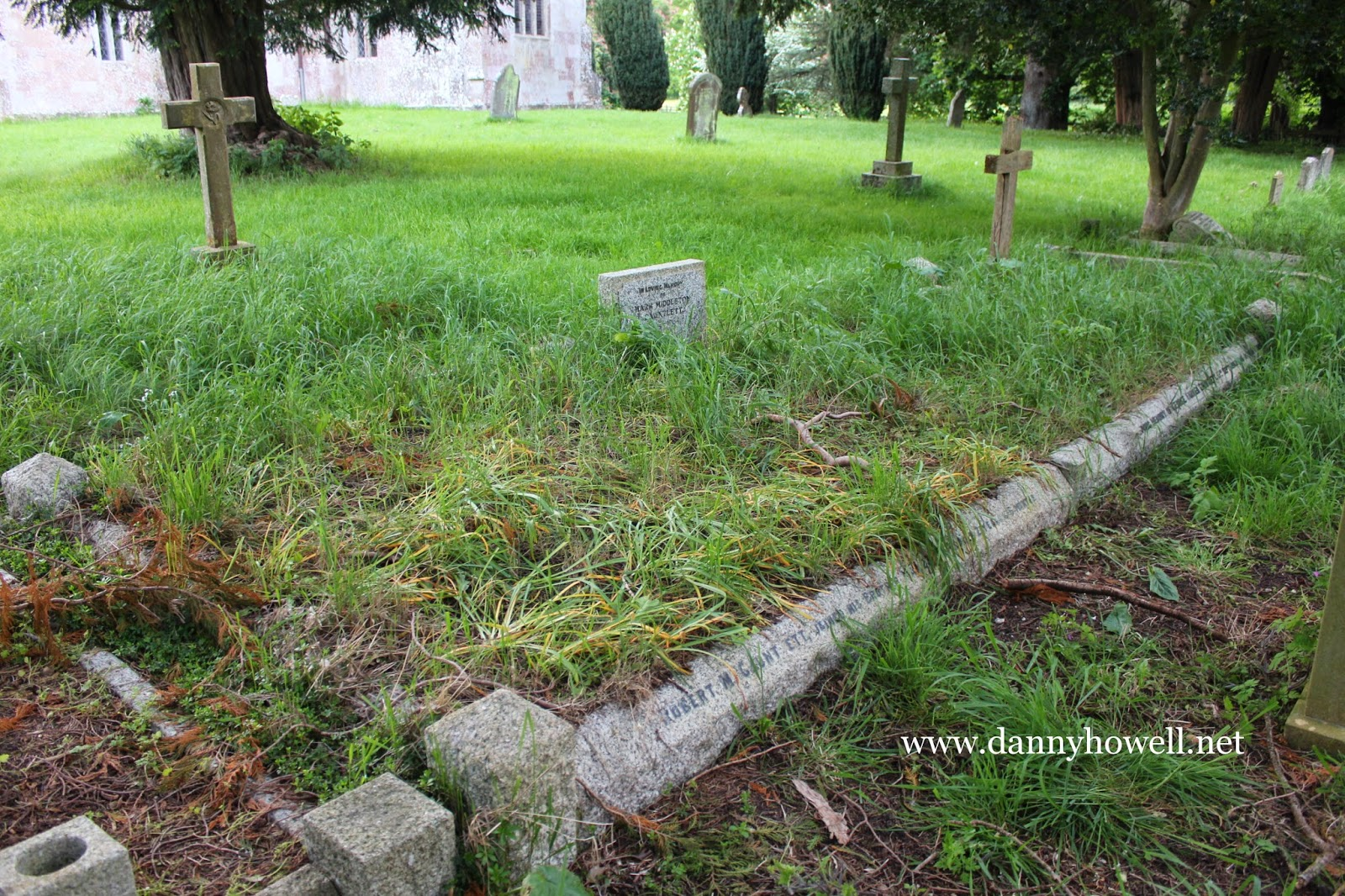
Hello Julie, How are you? Good I hope. Thank you for your enquiry. I’m pleased to say the graves of the Gauntlett family are still visible and their inscriptions readable. Six members of the family ~ George and Florence and their four offspring ~ Joan, Mark, Jack and Bobby ~ lie together in one large plot, and it would be more correct to say they are in the south east corner of the churchyard at Norton Bavant, in fact as about as near that corner as you can get, so you’ll have no trouble finding their family plot. It is surrounded by an oblong of kerb stone on which are these inscriptions all the way round:

“In loving memory of George Farmer Gauntlett, 13th September 1946, aged 81 years.” [east kerb, right hand side].

“Also of Florence Mary, his wife, at rest 1st April 1975, aged 98 years.” [west kerb, left hand side].

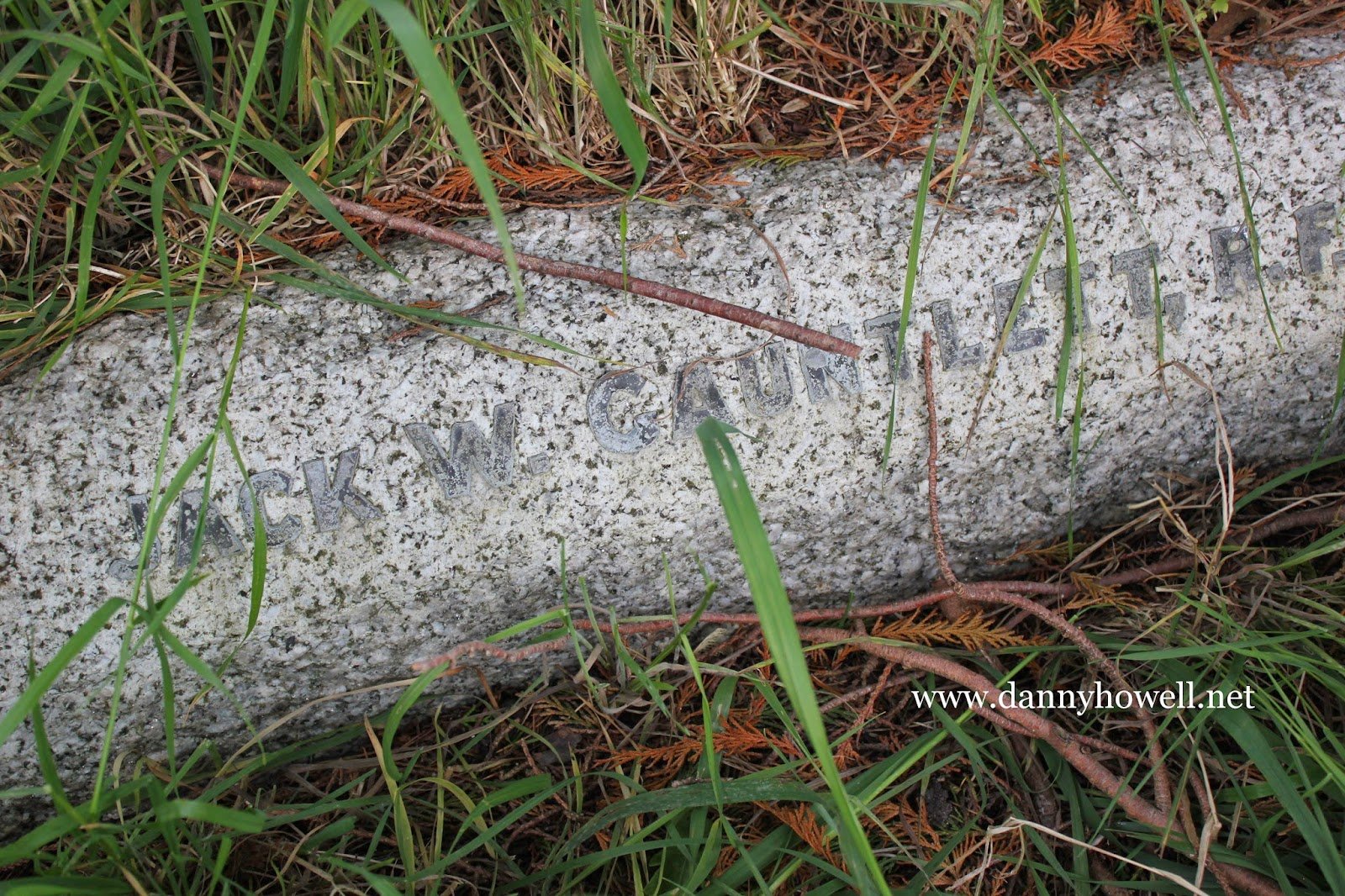
“Jack W. Gauntlett, RFC, Passed to a fuller life May 11th 1917, aged 19 years & 2 months.” [west kerb, right hand side].

“Robert M. Gauntlett joined his brother May 23rd 1917 aged 2 years & 6 months.” [east kerb, left hand side].

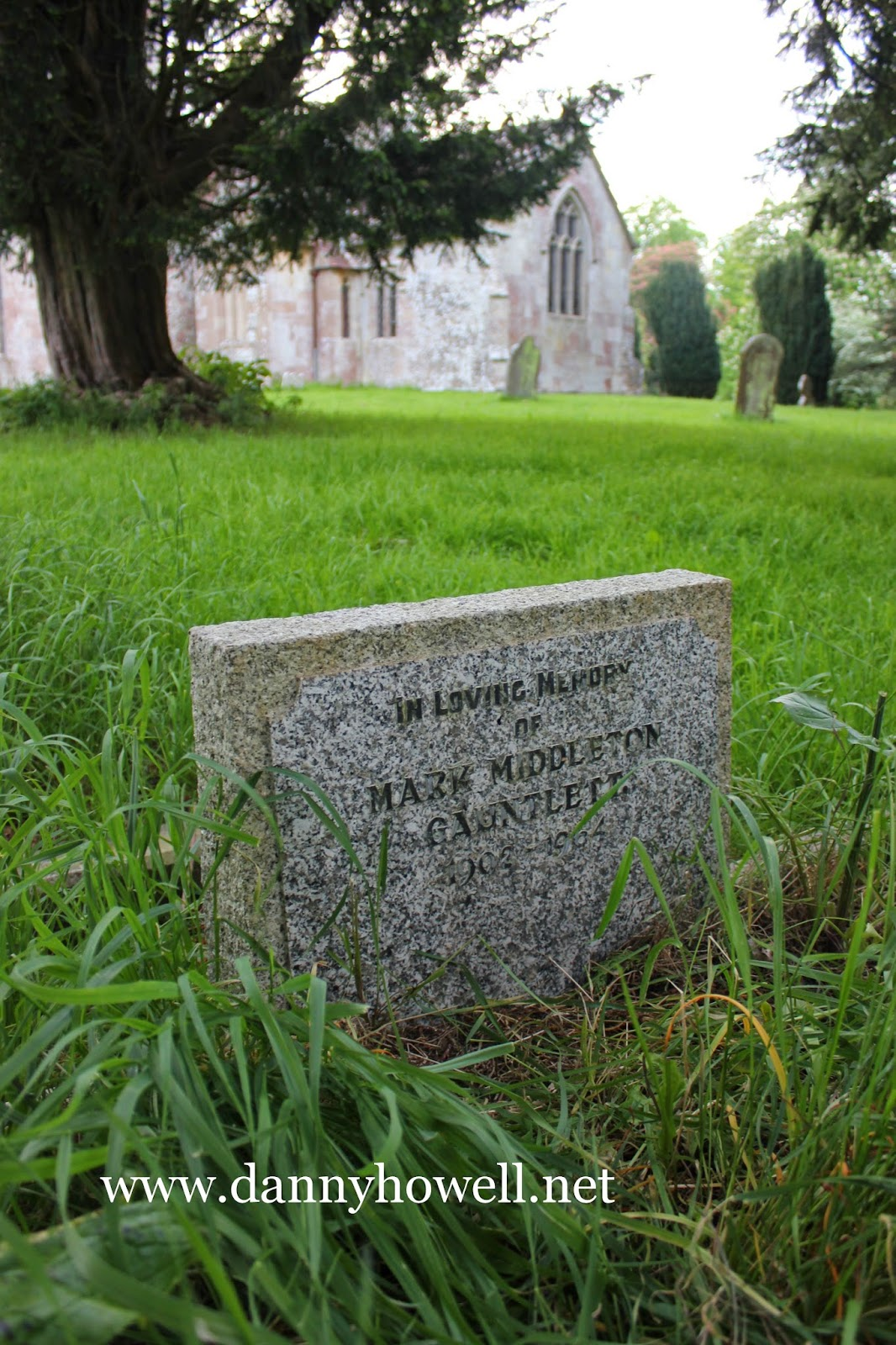
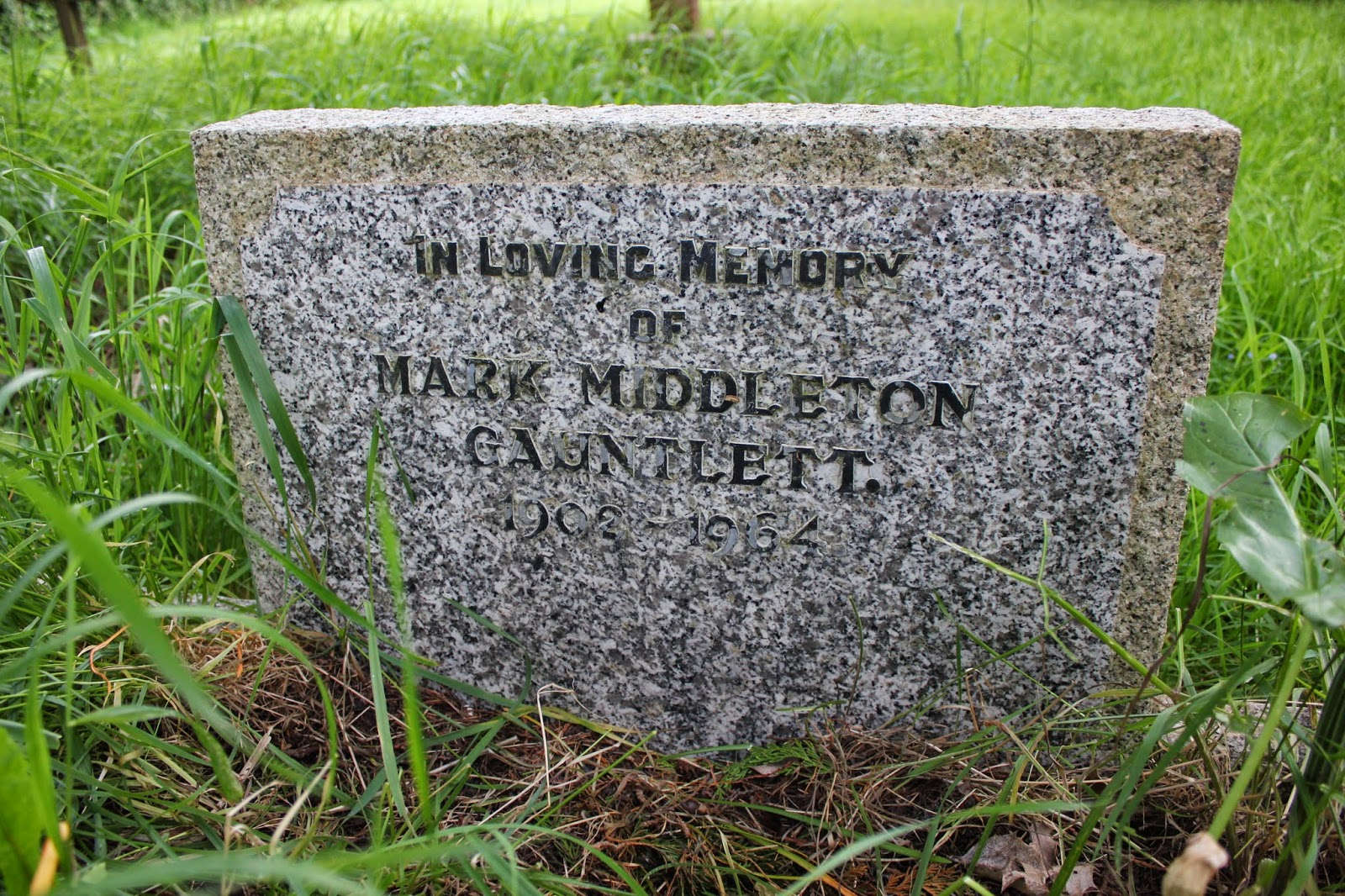
“In loving memory of Mark Middleton Gauntlett 1902 – 1964.” [upright stone on west side].

“Dearly loved sons of George & Florence Gauntlett.” [south kerb].

“Joan Gladys Gauntlett 1900 – 1985.” [north kerb].

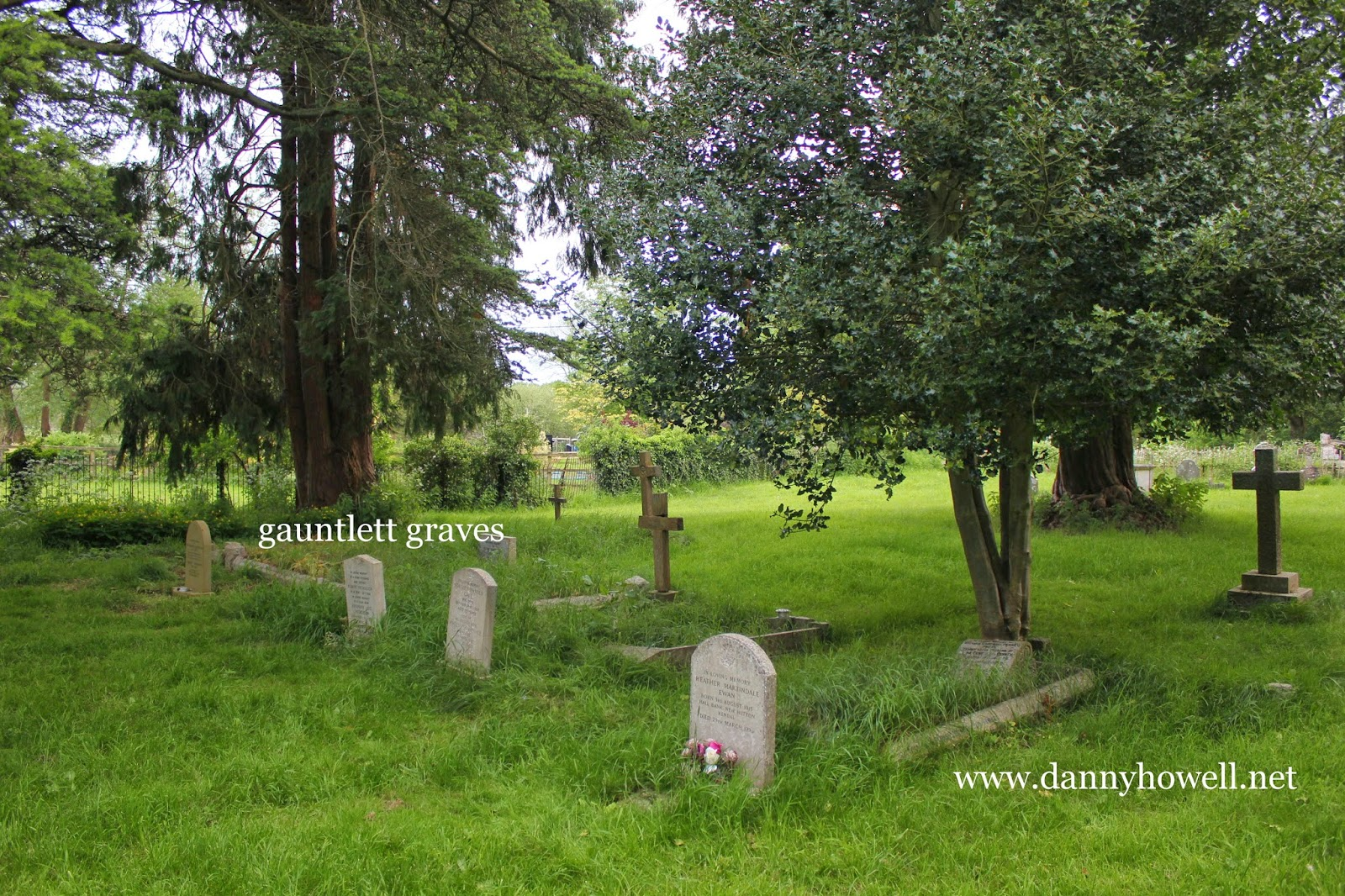
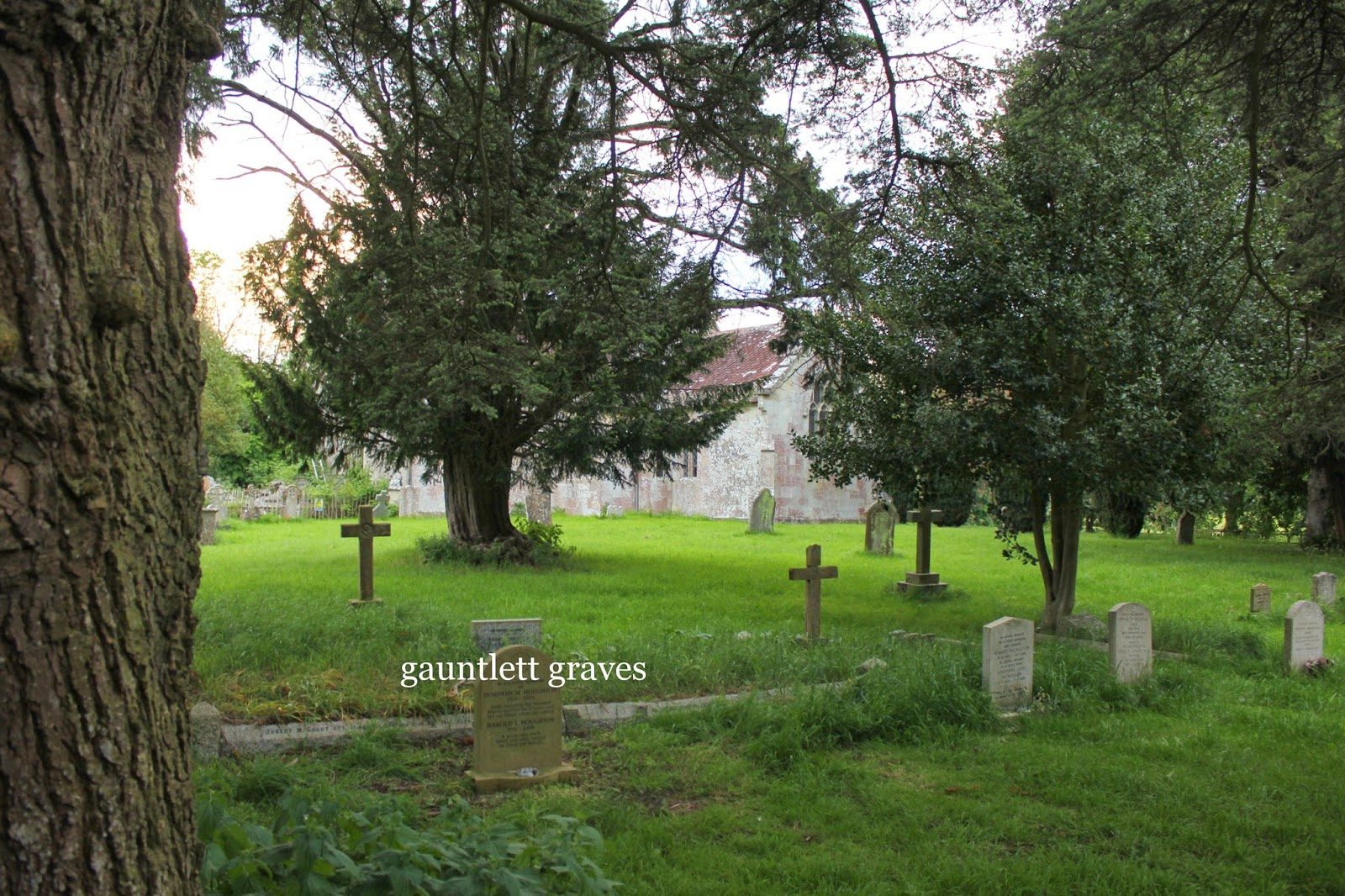
You’ll have no trouble finding the Gauntlett plot in the south east corner of the churchyard. As you walk into the churchyard, under the lych gate arch, walk straight ahead, past a grave with railings around it, then a row of three flat stones and then in the same row are three upright stones. Beyond there is the Gauntlett plot, next to the gravestones of Penney (with a holly tree) and Brooks, and the wooden cross of Gerald Sandy Kaye. The other side of the Gauntlett plot is the grave of Brooks. The Gauntletts lie between the yew tree to the south east of the church and the two cedars in the south east corner of the churchyard, opposite the iron gate in the iron railings around the churchyard.

And here are some photos of the Gauntlett family plot:

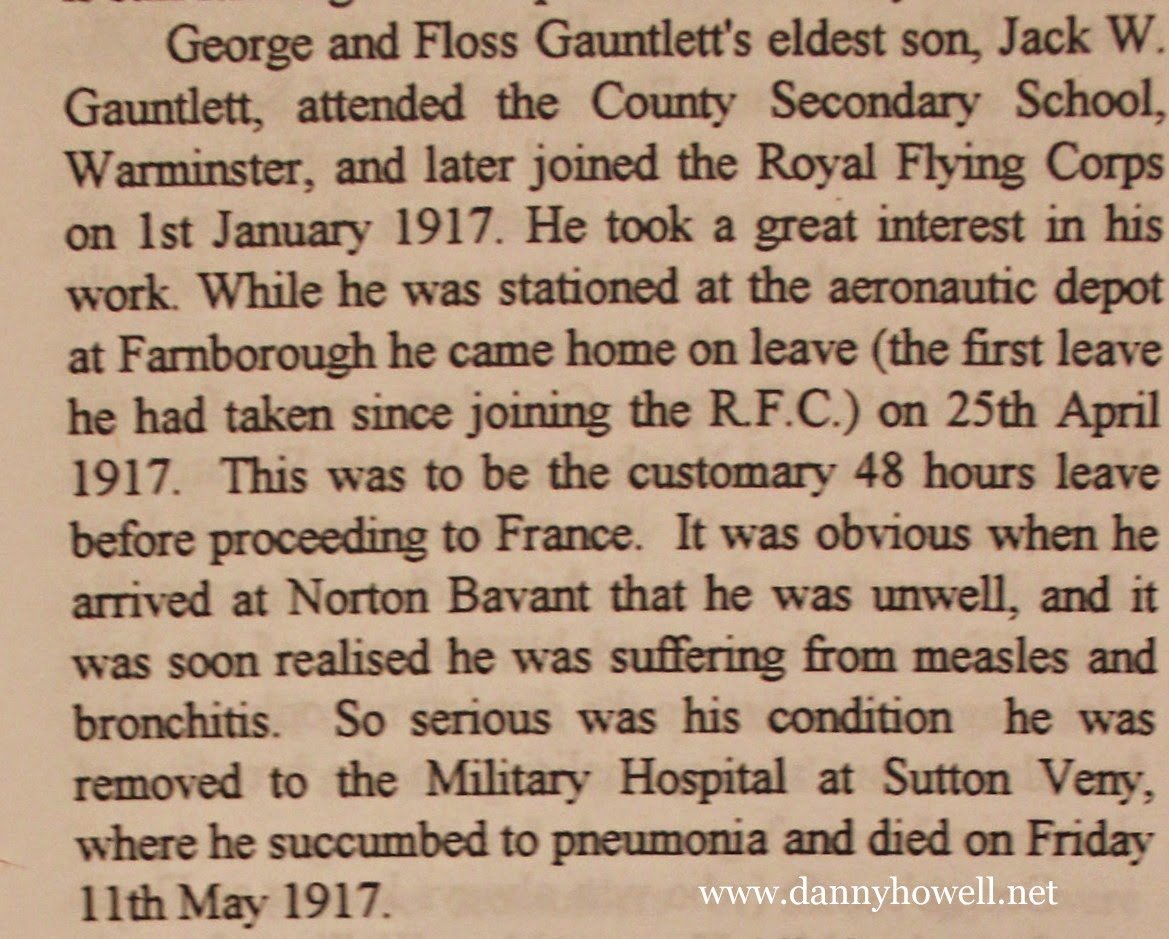
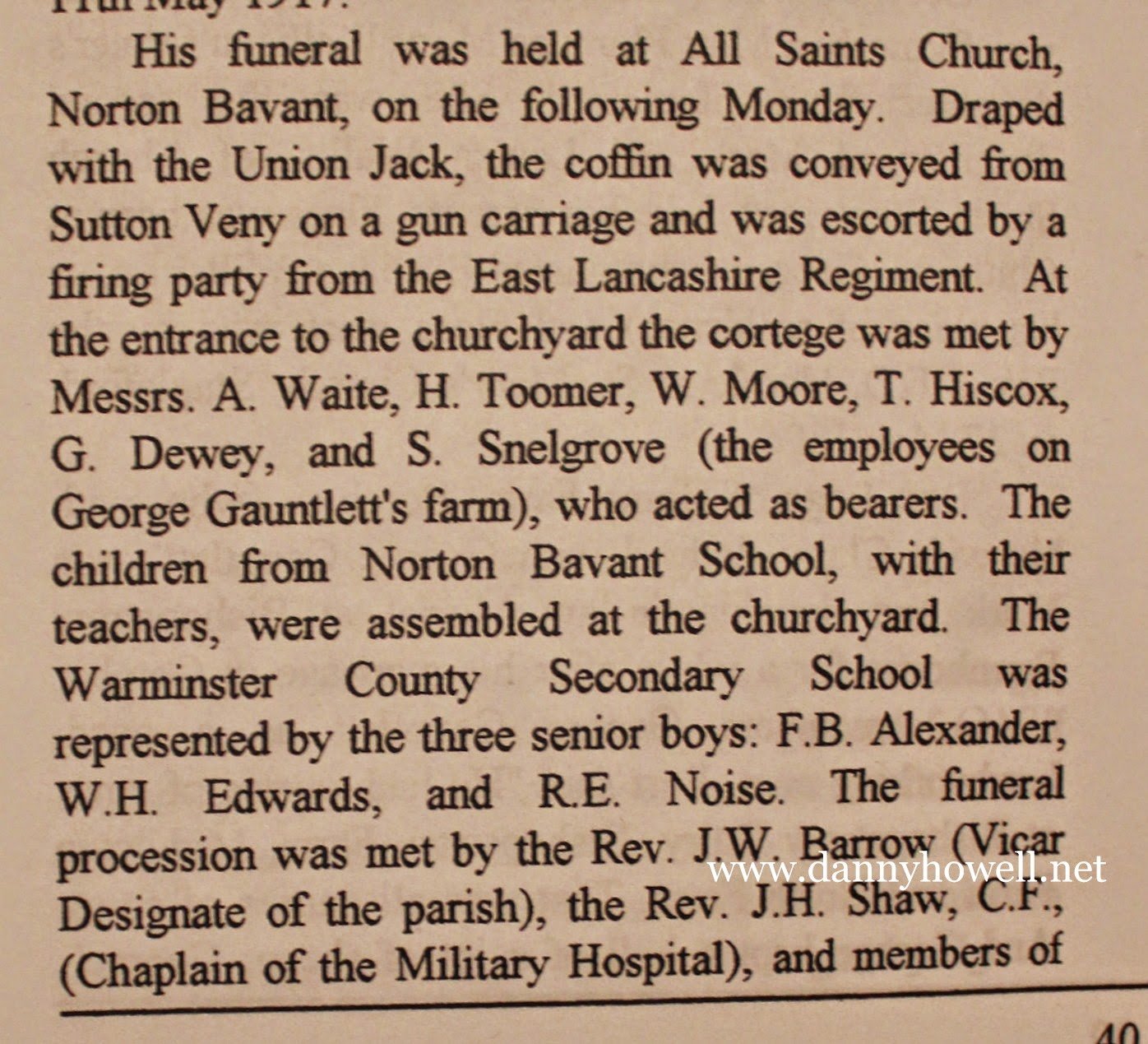
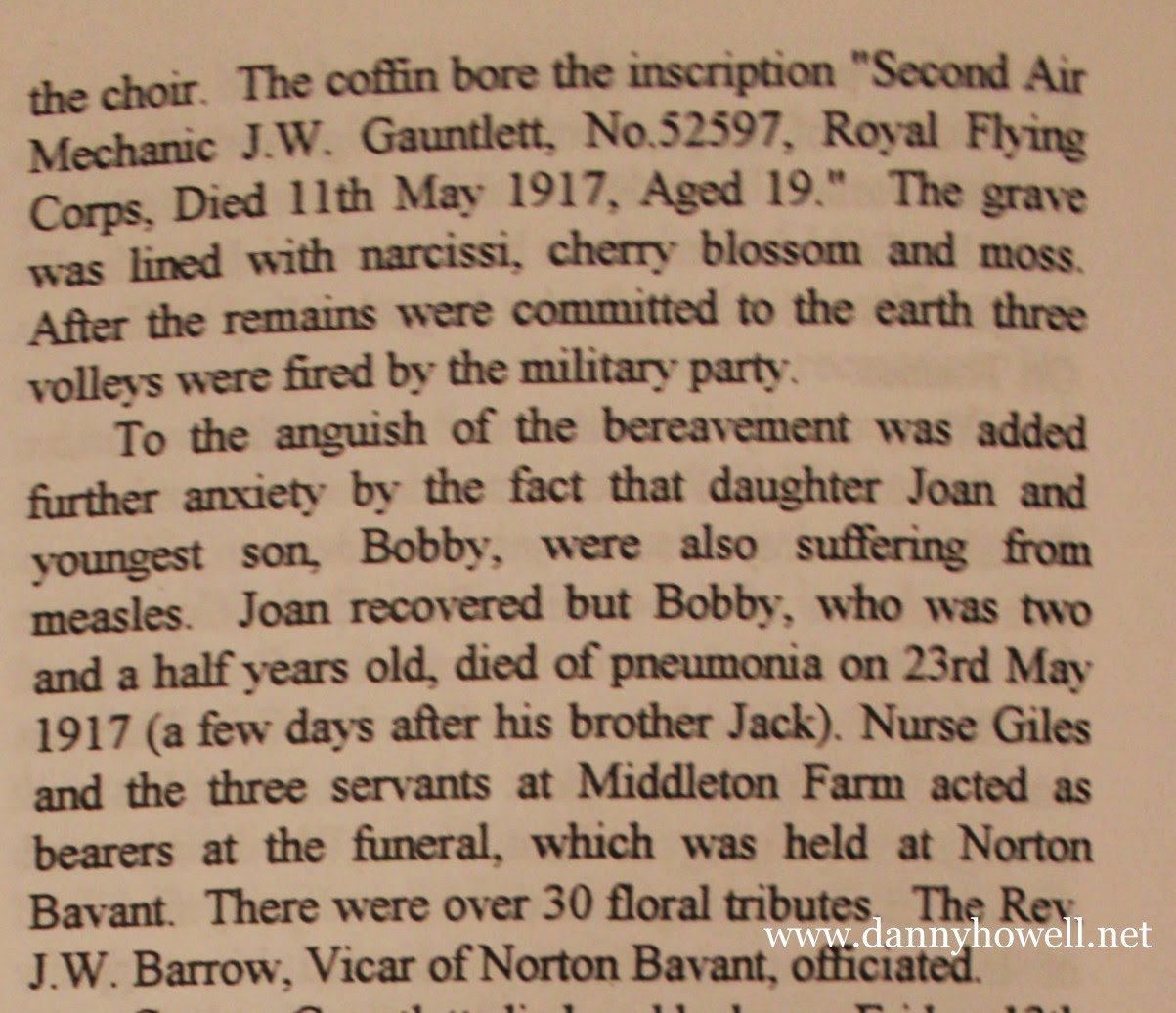
Have you got a copy of the book The Illustrated Warminster And District Miscellany which I published in May 1996? In that book I included several pages of notes about the Gauntlett family including George, Florence, Jack, Robert (Bobby), Mark and Joan. The Gauntletts at one time farmed Bishopstrow Farm at Bishopstrow; and Middleton Farm and North Farm at Norton Bavant. Here are the passages from my book about Jack and Bobby:

You will see that Jack, who was in the Royal Flying Corps, is buried at Norton Bavant and not abroad, as he came home on leave, took ill and died in the military hospital at Sutton Veny Camp. He does not have the traditional Commonwealth style gravestone, which is probably why you couldn’t find his grave, but his inscription, as I have already mentioned is included in the kerb surround of the Gauntlett family plot.

error: Content is protected !!