Sunday 17th May 2015
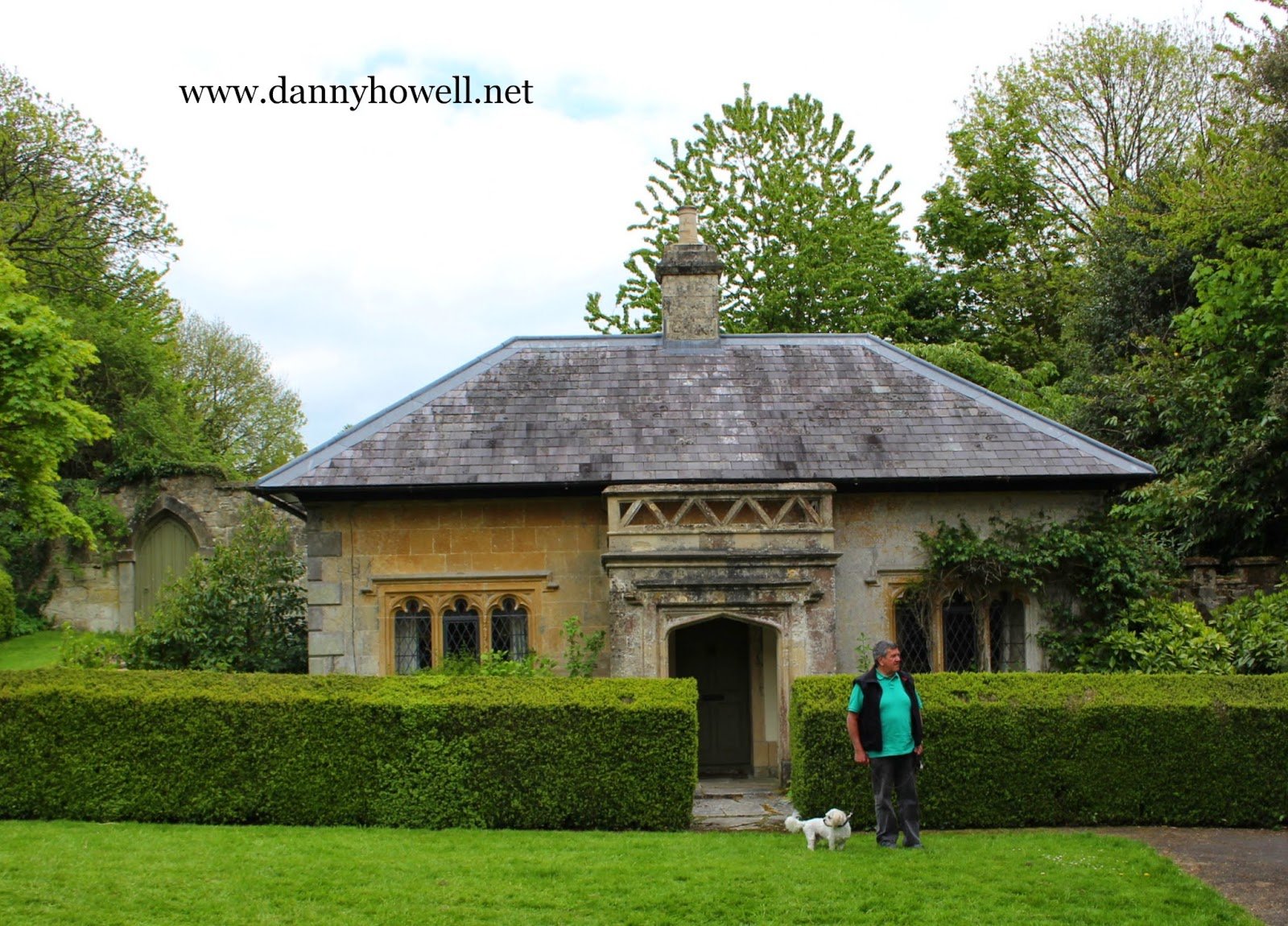
The Lodge adjacent the entrance gate of
Stourhead House, Stourton.
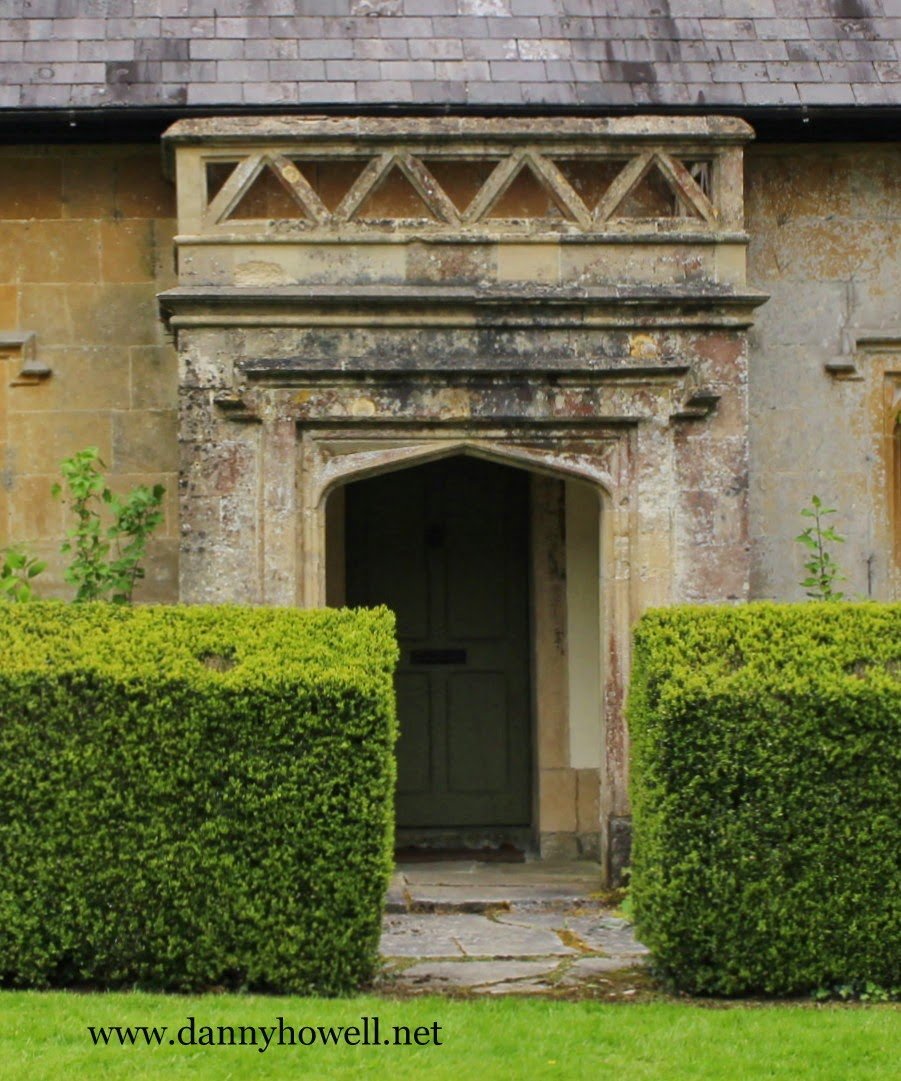
Photographs taken by Danny Howell
on Sunday 17th May 2015.
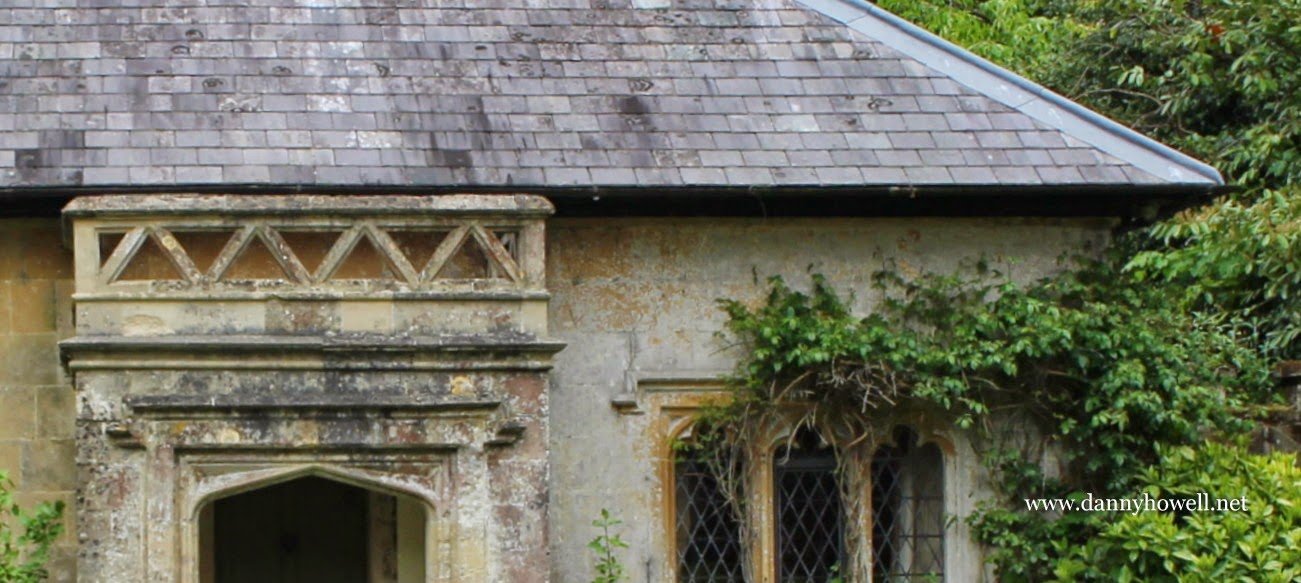
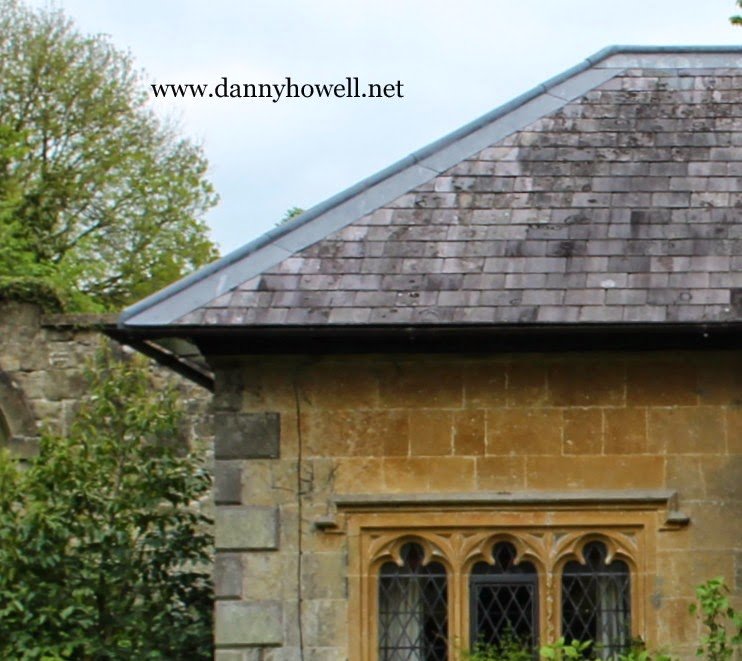
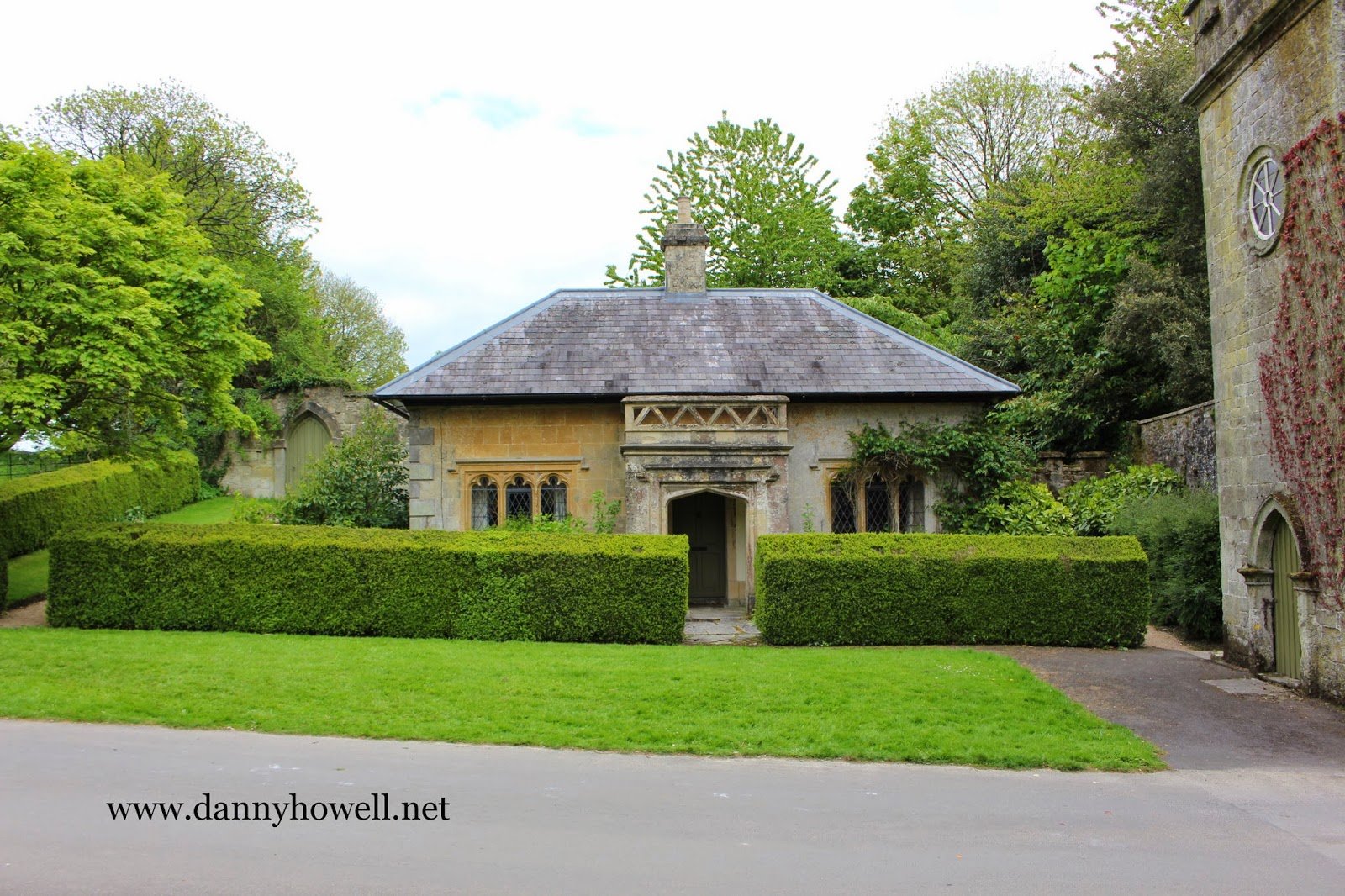
Sunday 17th May 2015
The Lodge adjacent the entrance gate of
Stourhead House, Stourton.
Photographs taken by Danny Howell
on Sunday 17th May 2015.
All residents of Kilmington, Stourton with Gasper, and Norton Ferris are invited to a Diamond Jubilee Party at the Home Guard Club, Kilmington, on Monday 4th June 2012.
Schedule of Events: Children Activities and Tea Party, 3.30 p.m. to 6.00 p.m.
Street Party from 6.00 p.m.
Barbecue from 6.00 p.m.
Bar and Country & Western Band Joe D. Rose.
Please, no dogs at the event.
Admission by ticket only.
Adult, £5.
Children 10 Years and Under, £3.
Children under 5 Years, Free.
Please book your tickets by 21st May 2012.
Ticket booking, telephone:
Elizabeth 01985 844971.
Celia 01985 844613.
Jane 01985 844248.
Gillian 01985 844940.
Home Guard Club 01985 844458.
1990:
Stourton And Stourhead
This part of the world was possessed, since before the Norman accession, by the Stourtons, a family who once had a castle here.
They had several claims to fame. Sir William Stourton was elected Speaker of the Commons shortly before he died in 1413. Sir John Stourton was held in high esteem by Henry VI and was made Baron and Lord Stourton of Stourton in May 1448.
Like all families, the Stourtons had their ups and downs but they seem to have had more than their fair share of misfortune.
Charles, the 8th Lord Stourton, was hanged in Salisbury Market Place on 6th March 1556 for committing a double murder. Following a long-standing feud, he killed the Hartgills, father and son, because they thwarted his plans to obtain a written promise and bond from his mother, the Dowager Lady Stourton, not to remarry.
One of the Hartgills had been a steward of the estate during the time of the 7th Lord Stourton and had been dismissed for suspected dishonesty.
It is said the Hartgills met their demise in a field near Stourton and that Charles held a candle while his accomplices cut the throats of the two victims. Their bodies were later buried in a dungeon. At his trial at Westminster Hall, Charles refused to plead at first but he later confessed. He was sentenced to death and because he was a peer of the realm he had the ‘honour’ of being hung with a silken rope. His accomplices were hung in chains at Mere. After Charles’ execution some of the Stourton family estate was forfeited but the 9th Baron was restored “in blood” by an Act of Parliament in 1575.
Further Stourtons held the land and property at Stourton until it was purchased in the 18th century by Henry Hoare, the son of a former Lord Mayor of London. Henry Hoare demolished the old Stourton House and erected a small Palladian mansion nearby, built to the design of Colen Campbell.
The house remained intact until a fire gutted the central part of it on 16th April 1902. Fortunately, the wings containing the library and the picture gallery were untouched by the fire and all the contents of the state rooms on the ground floor were saved.
Sir Henry Hoare (6th Bart. 1865 – 1947) had the house restored with the help of Sir Aston Webb and Mr Doran Webb of Salisbury.
It was Henry Hoare II (1705 – 1785) who was responsible for much of the landscape we see at Stourhead today. Although he probably managed the estate during his mother’s lifetime, he did not come to live at Stourhead until her death in 1741. Like his father before him, Henry Hoare II was a merchant banker in Hoare’s Bank, founded by his grandfather Sir Richard Hoare (1648 – 1718).
As well as laying the foundations of the library at Stourhead, Henry transformed the landscape here between 1744 and 1785. He made a dam across the headwater of the River Stour to form an artificial lake about 300 yards away from the House. With the help of the Palladian architect, Henry Flitcroft (a Hampton Court gardener’s son, who was a protégé of Lord Burlington and rose from being an apprentice joiner to the rank of Comptroller), he laid out the vistas and the ornaments around the lake.
These included the Temple of Flora (1744), the Grotto (1748), the Pantheon (1754), the ornamental five-arched bridge (1762), and the Temple of Apollo (1765).
St Peter’s Pump, which formerly stood near St Peter’s Church, at the west corner of Peter Street, Bristol, and was removed by an Act of Parliament in 1766, was erected on a grotto base at Stourhead in the same year, over the top spring of the River Stour in a valley known as Six Wells Bottom.
The River Stour flows onward, out of Wiltshire, through Dorset, to meet the sea at Christchurch in Hampshire. By a curious coincidence, the River Wylye, which rises about a mile away from the source of the Stour, to the west of Kilmington, takes a different meandering course, past Warminster and on to Wilton, where she meets the Avon that finally flows into the sea also at Christchurch! A third river, the Brue, has her watershed near Stourhead, and flows west through Somerset, giving her name to the town of Bruton.
Sir Henry and Lady Hoare gave Stourhead House and its contents, the gardens and over 2,000 acres of land, to the National Trust in 1946. Their only son, Henry Colt Arthur Hoare (born 1888), was a Captain in the Dorset Yeomanry and died of wounds he received in 1917 while in action during the First World War. Sir Henry and Lady Hoare died within a few hours of each other in March 1947. Sir Henry left the remainder of the estate to his cousin, Henry Peregrine Rennie Hoare.
The devoted work of the National Trust ensures the upkeep and attention the Stourhead Estate requires, and preserves for the nation what is undoubtedly the only 18th century garden created by an amateur that remains as it was originally conceived. Many visitors have thought it to be unparalleled part of our English heritage and its beauty has not failed to escape the pens of several writers over the years.
William Hazlitt described the delightful Stourhead scene in 1824. He wrote: “You descend into Stourton by a sharp-winding declivity, almost like going underground, between high hedges of laurel trees, and with an expanse of woods and water spread beneath. It is a sort of rural Herculaneum, a subterranean retreat. The inn is like a modernised guard-house; the village church stands on a lawn without any inclosure; a row of cottages facing it, with their white-washed walls and flaunting honeysuckles, are neatness itself. Everything has an air of elegance, and yet tells a tale of other times.”
Sunday 4th March 1990
Stourton Parish Church is dedicated to St Peter, and consists of a chancel, a nave with three bays, aisles, a north porch and a western tower.
The church has many monuments including the effigy of an unknown lady, circa 1400, who lies facing the door.
The most magnificent monument here is that of the fifth Lord Stourton (died 1536) with its tomb chest and two recumbent figures. The bearded Lord Stourton, with his long hair, is wearing fine armour, and lays beside his wife Agnes. Kneeling at their heads are three small figures: a headless lady, a bearded man wearing a chain around his neck, and a youth wearing a furred gown.
The ancient Stourton family, many of whom are buried in the church, held this place from Saxon times until the beginning of the 18th century.
St Peter’s Church also contains memorials to the Hoare family. Henry Hoare (1677 – 1725) was known as “Good Henry” because of his many charitable works. His son, also called Henry (1705 – 1785) was dubbed “the Magnificent,” and Sir Richard Colt Hoare, are both buried here. Richard’s wife, Hester, who died in 1785, aged 23, leaving him a widower, has a memorial of a pink granite sarcophagus on a tall base with a black granite urn.
Sir Richard Colt Hoare (1758 – 1838), the famous Wiltshire antiquarian, lies in a small mausoleum. His tomb comprises a marble sarcophagus in classical style, under a Gothic canopy with a pierced parapet.
Sir Richard’s Ancient History Of Wiltshire describes some of the earliest archaeological surveys of the county and details of excavations he made with William Cunnington of the barrow mounds on Salisbury Plain between 1800 and 1810. He also planned and wrote part of the History Of Modern Wiltshire which was unfinished at the time of his death.
Stourton Church nestles in a peaceful hollow, tucked under a tree-topped hill, oppsite the Bristol High Cross, and makes a fitting resting place for Sir Richard, a man who loved Wiltshire so much.
From the Visitors’ Guide To Wiltshire, circa 1973:
King Alfred’s Tower stands high on the hills three miles west of Stourton.
It is a local landmark erected by Henry Hoare, the banker, in about 1766, to mark the spot where the Saxon King is believed to have raised his standard victoriously against the Danes on his return from Athelney in 879.
Stourhead,
Warminster,
Wilts.
July 24th 1940.
Dear Balfour,
Your letter of 22nd July came as a great surprise and shock to me, as Sir Kingsley Wood having decided not to proceed with the proposal I naturally hoped that it would not be again put forward. Mr. Young, the tenant, has cultivated Bonham Farm in an admirable manner and the crops on it are quite outstanding, and its acquisition will undoubtedly be a great loss to agriculture.
In view, however, of the critical state of the war and your vital need of more aerodromes, I feel it would not be right for me to object any further. I must, however, ask that the Air Ministry should write me definitely that they are only requisitioning the land for the period of the war and will not put down hard runways or do anything that could not be easily made good after the war, and that I can absolutely rely on the land being handed back, with compensation under Section 2 (1) (b) of the Compensation (Defence) Act 1939 and that the tenants will be compensated for disturbance under Section 2 (1) (d) of the Act.
It is, in my view, a necessity for the sake of the property, the National Trust to whom it is bequeathed and agricultural interests in this district, that there should be no permanent aerodrome here.
Yours sincerely.
Hutchinson’s Pocket Guide for Hampshire and the Isle Of Wight, Wiltshire and Dorset, published in 1939, mentions:
Stourton village lies in a dell, a pretty spot, with its flower-bedecked cottages and fourteenth century church, containing monuments to former owners of Stourhead.
Stourton Women’s Insitute
Programme For 1931:
January 28th.
Demonstration – Singers Sewing Machine, by Mr. Mutton.
February 25th.
Demonstration – Rug Making. Market Stall. Charades. Tea 1d. Items.
March 25th.
Lecture – Care of the Teeth. Market Stall. Singing. Tea 1d. Items.
April 29th.
Lecture – Poultry, by Mr. Burdett. Market Stall. Competition. Tea 1d. Items.
May 27th.
Demonstration – Dress Making, by Mrs. Light. Market Stall. Games. Tea 1d. Items.
June 24th.
Garden Meeting – Brook House.Mrs. Meyrick Jones. Folk Dancing. Tea 1d. Items.
July 29th.
Lecture – Miss Olivier on “The Danes In England”. Games. Tea 1d. Items.
August Holiday.
September 30th.
Demonstration – Drummers Dyes. Market Stall. Singing. Tea 1d. Items.
October 28th.
Open Meeting. Mr Laidlay on Birds And Beasts.
November 25th.
Christmas Cooking, by Miss Herridge. Competitions. Tea 1d. Items.
December 9th.
Business Meeting and Entertainment.
A Handbook For Residents And Travellers In Wilts And Dorset, (fifth edition published by John Murray of Albemarle Street, London, in 1899), after featuring some notes about Alfred’s Tower, near Stourton, says:
“1 m. S. of the tower rises an enormous mound, vulgarly called Jack’s Castle, long considered as a beacon, but originally sepulchral, Sir R.C. Hoare having found in it the remains of a warrior buried with his weapons.”
From The Warminster Parish Magazine, June 1869:
The Christ Church [Warminster] choir paid a visit to Stourton on Whit-Tuesday, at the invitation of the Rev. W. Hickman. Although the morning was wet and discouraging the weather became beautifully fine in the afternoon, and the party went over to the house, dined at the inn, and then walked through the beautiful grounds to the tower. Several friends accompanied the Choir, and all we trust spent a pleasant day.