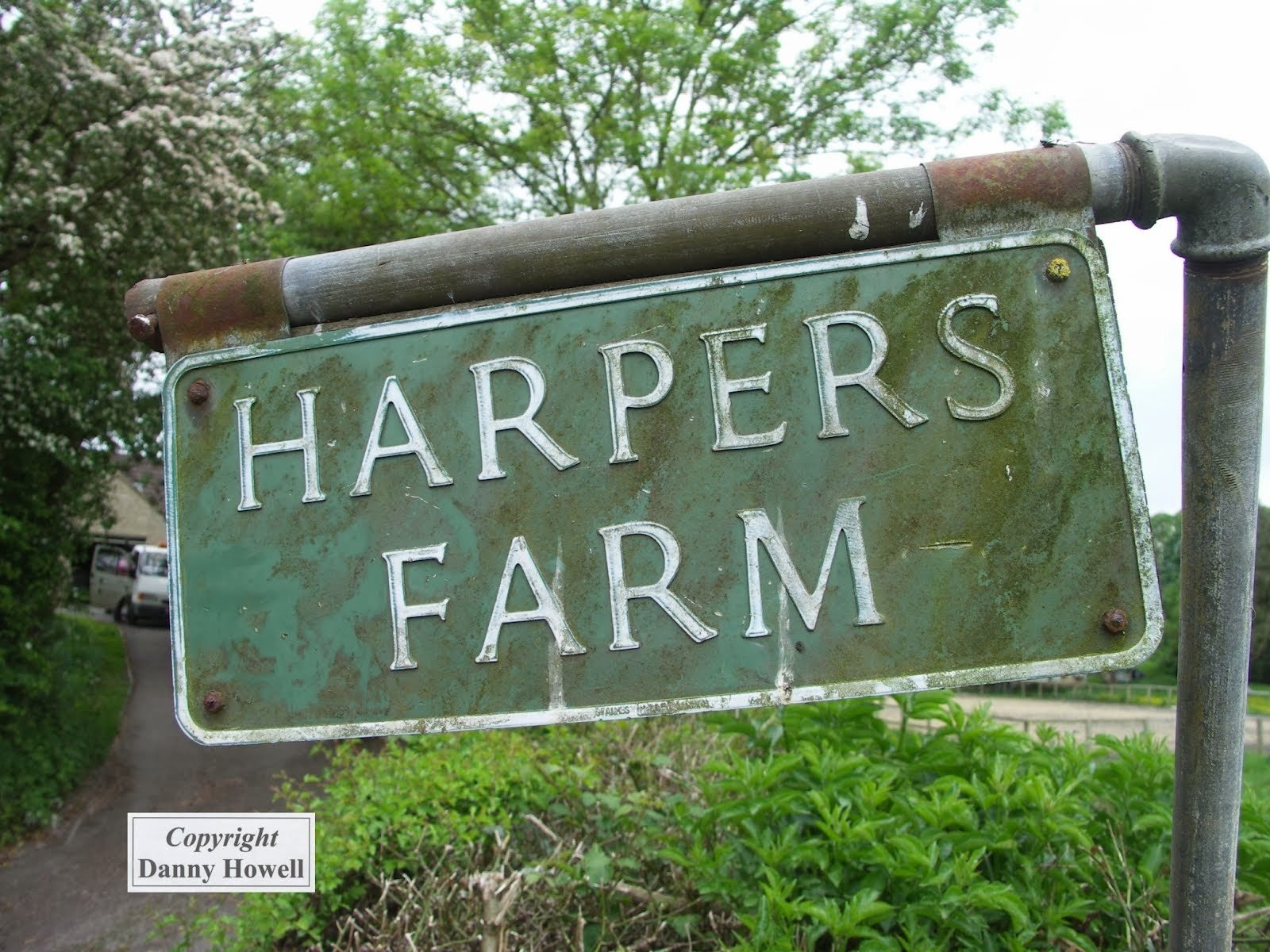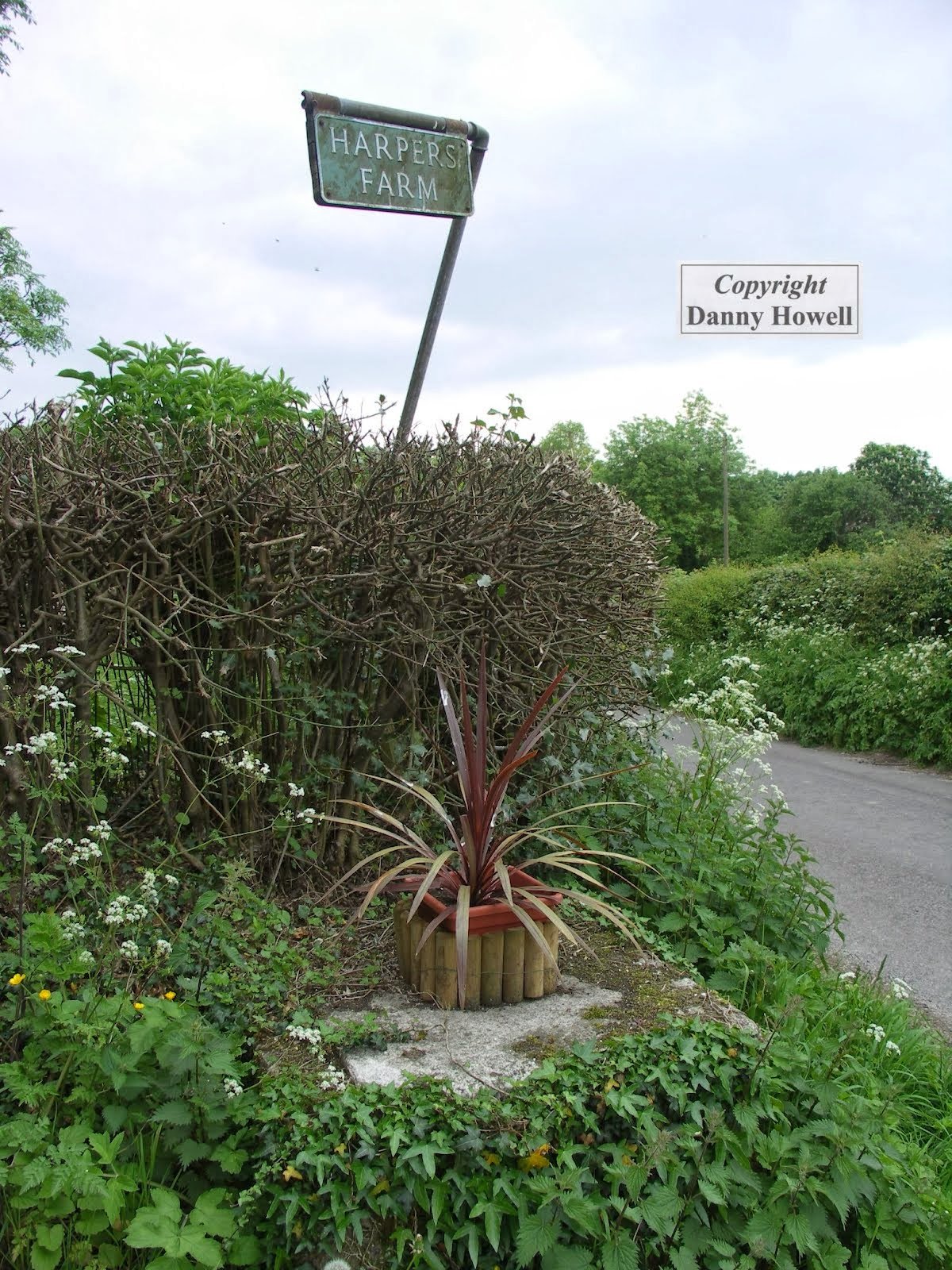

The access road to Longhedge Farm, Corsley.
The photograph was taken by Danny Howell
on the afternoon of Wednesday 21st May 2008.
Information and pictures of mostly rural topics and activities.
Wednesday 21st May 2008
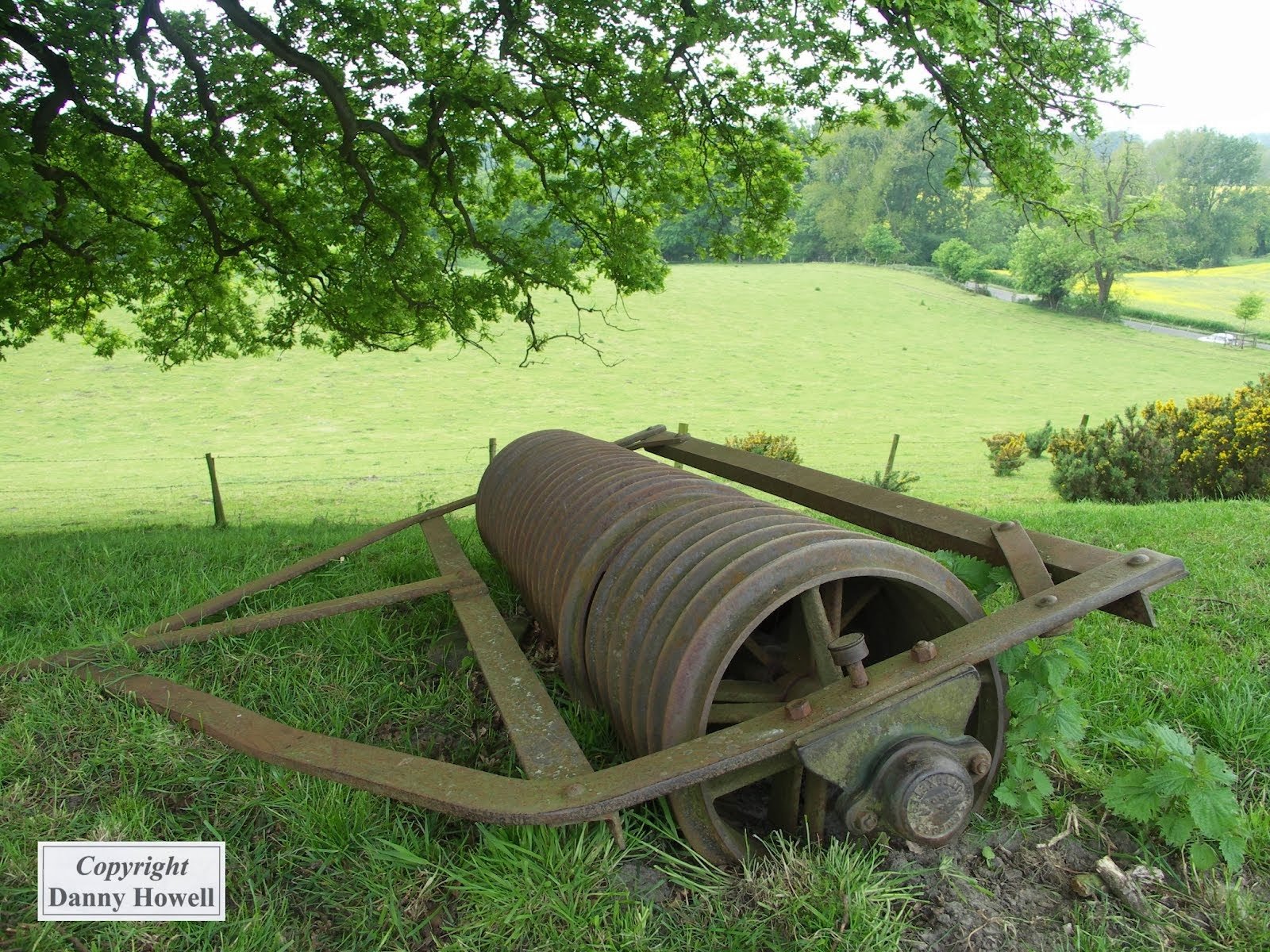
An old ring roller at Whitbourne, Corsley, in a field overlooking the Whitbourne to Longhedge road.
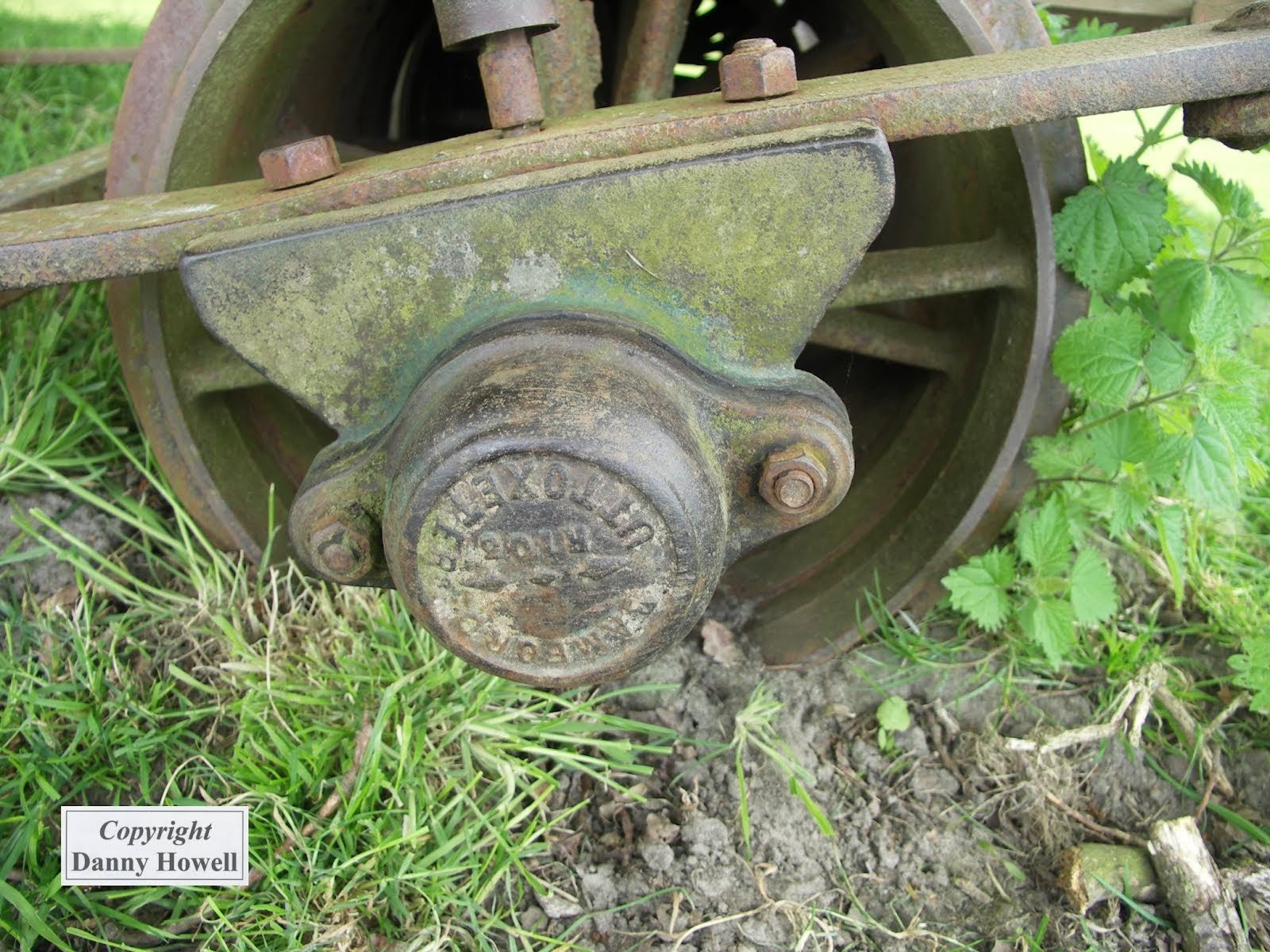
The cover over the axle is cast with the maker’s name: ‘Bamford, Uttoxeter‘ and a number ‘R103’.
The photographs were taken by Danny Howell
on the afternoon of Wednesday 21st May 2008.
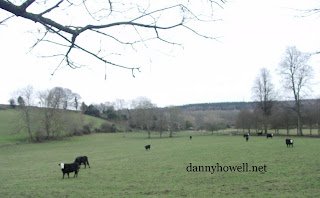
Hereford-cross cattle grazing at Butler’s Coombe Farm, on the southern edge of Warminster, photographed by Danny Howell on the afternoon of Tuesday 1st January 2008.
West Wiltshire District Council’s Warminster Town Centre Conservation Area Character Assessment, Informative Document, Consultation Draft/Cabinet Draft, of December 2006, includes the following notes:
ARCHAEOLOGICAL SIGNIFICANCE
There are no Scheduled Ancient Monuments currently in Warminster Town Centre. However, immediately to the east of the town are the massive earthworks of Battlesbury Camp, an Iron Age hill fort that provides tangible evidence of prehistoric settlement patterns in the area.
The Extensive Urban Survey undertaken in 2001 by Wiltshire County Council compiled from desktop studies of the sites and monuments record that numerous excavations within the Warminster area have revealed prehistoric and later artefacts including:
Neolithic worked flints that have been recovered from a number of sites throughout the town.
Bronze Age artefacts that were found to the rear of George Street prior to the undertaking of modern development in the mid 1990s.
On Weymouth Street, just outside of the conservation area, Roman materials were found during the redevelopment at the Regal Cinema.
Records of the Saxon period suggest that a Saxon church was located on the opposite side of Church Street to St Denys’ Church on ground now belonging to Warminster School adjacent to the swimming pool. Aerial photographs showing crop marks appear to support the documentary evidence of the site of the possible Saxon church. The County Council has not recorded further physical investigation in this location.
Archaeological evidence, including a series of drainage ditches and pottery finds, identifies further Saxon activity around the Emwell and Silver Street area.
During the medieval period there was a large expansion of the town to the east of the original Saxon settlement. The most notable feature that demonstrates clear evidence of this planned medieval growth of the town, are the number of burgage plots that still exist as narrow strips of private land often contained within brick or stone walls, at the rear of property fronting onto East Street, Market Place and High Street. The most notable section is to the rear of buildings on the south side of East Street into Market Place. Any proposals for development in these areas should ensure that these plots are maintained in an identifiable form. This issue will be taken up more fully in the section devoted to the town centre and the Warminster Conservation Area Management Plan.
Many finds and artefacts are now housed in the town museum that is housed within the Library and bear witness, to the thriving community during the past.
Whilst the historic buildings within the town represent an important element of Warminster’s environmental richness, it should be recognised that many of the buildings that display 18th and 19th century frontages are, in reality, earlier medieval and later medieval structures that were simply refronted during the more affluent part of the market town’s evolution.
The industrial heritage of the town is mainly represented by the malting and brewery buildings that are located in and around the principle streets. Many of them have survived although converted, to other uses including; residential accommodation. The most important group still operating are in Pound Street, whilst examples of converted maltings or breweries can be found to the north of Silver Street and south of Vicarage Street.
West Wiltshire District Council’s Warminster Town Centre Conservation Area Character Assessment, Informative Document, Consultation Draft/Cabinet Draft, of December 2006, includes the following notes:
Location And Topography
Warminster is one of the five market towns within the district. Located in the south west of the district on the western edge of Salisbury Plain, Warminster is within the upper reaches of the River Wylye where the River Were joins it. It is well contained within a rural location, which is attractive and gives the town a sense of isolation, particularly since the construction of the by-pass (the A36). The A350 (M4 to Poole) and the A36 Bristol to Southampton roads meet just to the west of Warminster.
Map 2 illustrates the town’s context.
The steeply rising landscape to the north-east and east of the town of Salisbury Plain gives the perception of it being in a valley, though, the surrounding landscape levels out to the south and west. The topography within the town centre is relatively flat, affording a number of attractive views of the surrounding landscape.
Directly to the north and west of the town are wooded scarps of the Plain, which present a backdrop to the town, known as Arn Hill and Cop Heap. This attractive setting for the town has a strong presence within the centre with views northbound along routes such as Portway and Station Road showing open fields and green woodland. This gives the town a rural feel.
The River Were runs to the north west of the town centre, creating a number of water meadows adjacent to Warminster School’s playing fields, and the Minster Church before entering the town from the north. It passes underneath the town centre and emerges south of the town centre, in the Lake Pleasure Park, between the town centre and Warminster Common. Further south the River Were joins the River Wylye.
In terms of geology the main part of the historic town centre lies on greensand although there are some pockets of chalk underneath the town. The scarp slopes of the Plain are also formed on large expanses of chalkland.
Wednesday 23rd March 2005
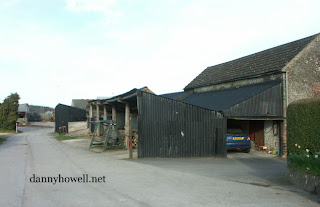
Sandhill Farm, at Longbridge Deverill,
photographed by Danny Howell
on the afternoon of Wednesday 23rd March 2005.
Wednesday 4th August 2004
A letter from Paul Marshall:
About two years ago there was a proposal to build a National Archaeology Centre near Warminster. I recall being at a meeting, when an archaeologist and another man tried to get support for the idea.
If my memory serves me right they said the Centre would be very successful, because a lot of people were interested in archaeology, hence the big viewing figures for the Time Team tv programme.
I’m not sure that I followed this thinking, as there are lots of other programmes that get far more viewers. Eastenders and Big Brother come immediately to mind. So why not a centre for them somewhere?
Something else that intrigued me, although it didn’t surprise me in this day and age, was the amount of money they said would be needed to build this Archaeology Centre. They were talking about millions of pounds.
Why is it that everything you hear about these days costs millions and sometimes tens and hundreds of millions? And, more often than not, goes millions over budget to ensure completion, or runs out of millions and is not even brought to fruition.
There has recently been a mention again about this Archaeology Centre. It was obviously wishful thinking of me when I expressed the hoped it had been shelved. It would undoubtedly be a silly use of money that would be better spent on something else, like a decent hospital for Warminster.
Excuse the pun but can I assume (and really hope) that the plans for an Archaeology Centre will be laid to rest and buried forever in the dust.
Monday 5th July 2004
Valuable horse harnesses and treasured rosettes stolen.
Report by Danny Howell:
Well-known horse ploughing champion Jack House, of Wilton, at the eastern end of the Wylye Valley, is heartbroken following the theft of valuable horse gear and prize-winning mementos from his farm at Quidhampton.
82 year-old Jack has been involved with horses all his life and is known nationwide for his immaculate ploughing at matches and shows. Now, following a robbery between 11 am and 2 pm on Wednesday 23rd June, Jack and his shire horses Captain and Punch are virtually redundant, despite a diary full of up and coming ploughing events.
He’s hoping he will still be able to go to an event in Wilton Park, this month, and he always likes to go to the Great Dorset Steam Fair. Also, in the autumn, is the National Championships. Jack said “The National is held at a different location each year. I’ve travelled all over the country to take part in it. I’ve been as far as Lincolnshire and Cumbria. This year, in October, it’s at Reading, which is much closer and I really want to go to that one, but we’ll have to see now.”
Jack added “The horses will be wondering what has happened. When they hear the lorry start up they immediately know they’re going off to a match. They get very excited. They love it as much as me.”
The callous thieves broke into a padlocked shed, by wrenching a clasp from a door, before removing ancient items of harness and ransacking a trunk full of colourful rosettes and certificates. Ironically, on the shed wall above the trunk, hangs an old framed picture with the words “The Lord Is My Shepherd, I Shall Not Want.’
Among the missing items are a whole set of plough harness and all its decorations including horse brasses, and three big collars plus one or two little ones. The stolen rosettes include the first one Jack ever won – for ploughing at a match at Rockbourne in 1938, and a special one gained for showing horses at the Royal Show in 1970. There were over 1,000 rosettes and certificates taken.
Jack said “I can’t see what they would want the rosettes for. They’re of no interest to anyone except me. I don’t know why they would want to take them.”
Jack is more concerned about the harnesses and collars. He said “I’ve been using those for years and years. They’re very old. I would estimate the value of all the horse items to be at least £4,000, probably more, because when things like that are offered at auctions the price goes up and up because they’re so hard to come by. You’ve got a job to get them.”
On discovering the theft, Jack’s initial reaction concerning those responsible, was to say “I feel like pitch-forking them.” A friend said “That shows how bad he feels about what has happened. He’s very upset inside. He told us he felt like giving up but we’ve persuaded him not to. You can’t give up when you’re down.”
Friends and others are rallying around Jack though. He said “People are stopping me in the street and talking about it. Other ploughmen have contacted me, showing their sympathy and wondering what they can do to help. A good friend, Ken Selway, from near Frome has offered to loan me some of his harness and tack so I can carry on. It’s nice to know that people care but I don’t know if I shall see my things again.”
People in the ploughing match fraternity are just as keen as Jack to discover who carried out the theft and to locate the whereabouts of the stolen items. A Quidhampton resident remembers seeing two men loitering near the end of the farm lane, about a week before the theft, but it’s not known if they are connected.
Members of the public are being asked to keep their eyes and ears open too. Anyone with any information is asked to contact PC Pete Jung of Wilton Police, telephone 01722 742101 or they can phone their nearest police station.