The Chapel Of Saint Nicholas, Warminster

Victor S. Manley in his Regional Survey of the Warminster District, complied in the 1920s and 1930s, in Volume 7, noted:

The Chapel of St. Nicholas once stood in the grounds of the Manor House in Ash Walk. Only part of a buttress remains in the wall of the stable.

It was founded and endowed by the Mauduits and may have been discontinued when they added their chantry, now the Lady Chapel, in the Parish Church, in Tudor times.

St. Nicholas, being the patron saint of children, the idea of family heirs suggests itself.

It was in use as early as 1268 (see History of Warminster, page 124). “The Chaplain received certain rents, he held meadow, pasture, and arable lands, with right of feeding pigs in the lord’s woods, and sheep on the Common; he was allowed a liberal supply of fuel, and took his principal meal at the lord’s table.”

Speculation on the origin of the name “Warminster” led Hoare to state:- “Tradition, however, has preserved it from oblivion, the spot being called “THE NUNNERY’ and a walk up the side of the neighbouring down being called “THE NUNS’ PATH’.” The question arises of the origin of the tradition, was it ancient or invented by the speculators. (See History of Warminster, page 123).
Spectral Figure At 45 East Street, Warminster

Victor Strode Manley, in Volume 10 of his Regional Survey of the Warminster District, compiled in the 1920s and 1930s, includes the following:

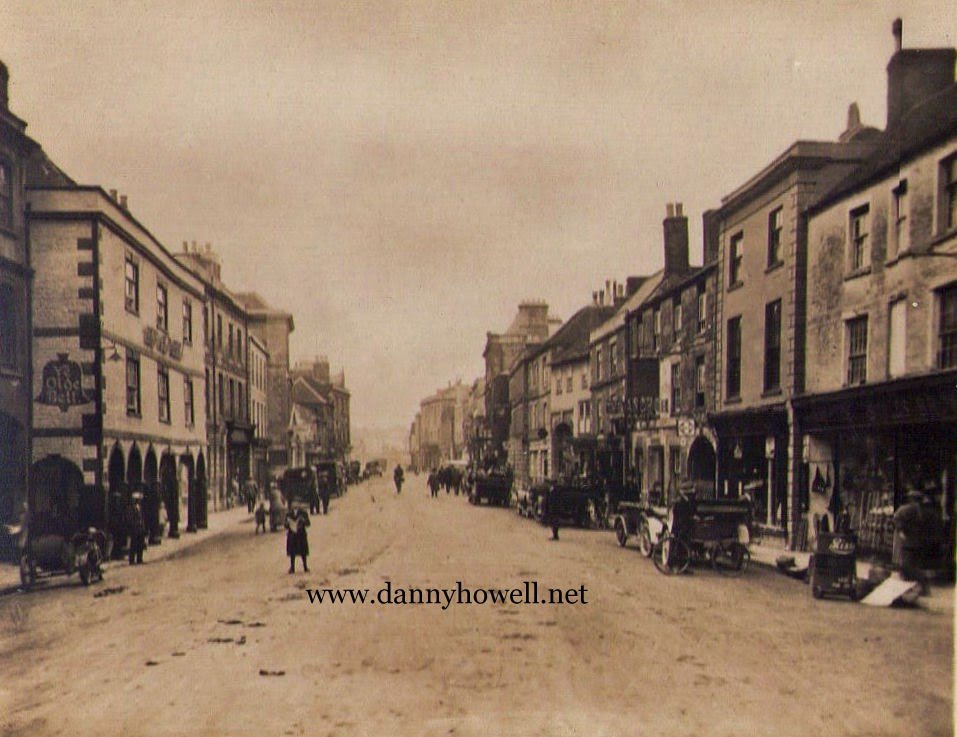
45 East Street, Warminster has the reputation of being haunted as stated by several persons.

In May 1931 I was given two incidents by Mrs. – who used to live in the terrace adjoining the house. It was about eleven o’clock one night when she was going home, and near the house she could see a woman with long sleeves. The stranger gave her a poke in the back and was asked if there was not room for both on the pavement. The stranger crossed the road and then rose from the ground and passed out of sight.

Her father was going to work very early one morning and is positive he saw a spectral figure come from the house, cross the road, and disappear up the lane by the posts.

George Strode Manley informs me he remembers a Mr. Petherbridge living there. He was engaged in making ploughs.

No explanation has been offered.

Battlesbury Gold Legend

Victor Strode Manley in Volume 8 of his Regional Survey of the Warminster District, compiled in the 1920s and 1930s, refers to a gold legend associated with Battlesbury Hill, Warminster.

On page 650 Manley noted:
Gold Legends, tradition of a gold table or chair.
Battlesbury – A resident of the Furlong in 1928 told me he had often heard of a gold table (not chair) being buried here.

And on page 654 Manley noted:
Battlesbury. 10 June 1928. Mr. Bazley, junior, of Boreham Farm, told me of a folk-tale of a gold chair buried here. I have asked for more details.

No Explanation By Manley About The Name Of Chancery Lane, Warminster

Victor Manley, in his Regional Survey Of The Warminster District, Volume Five, compiled in the 1920s and 1930s, listed and attempted to explain the meaning of several local place names. He included Chancery Lane in his list, but gives no history or explanation of the name, only that it is a “continuation of Chain Lane,” crossing Boreham Road, “to Woodcock.”

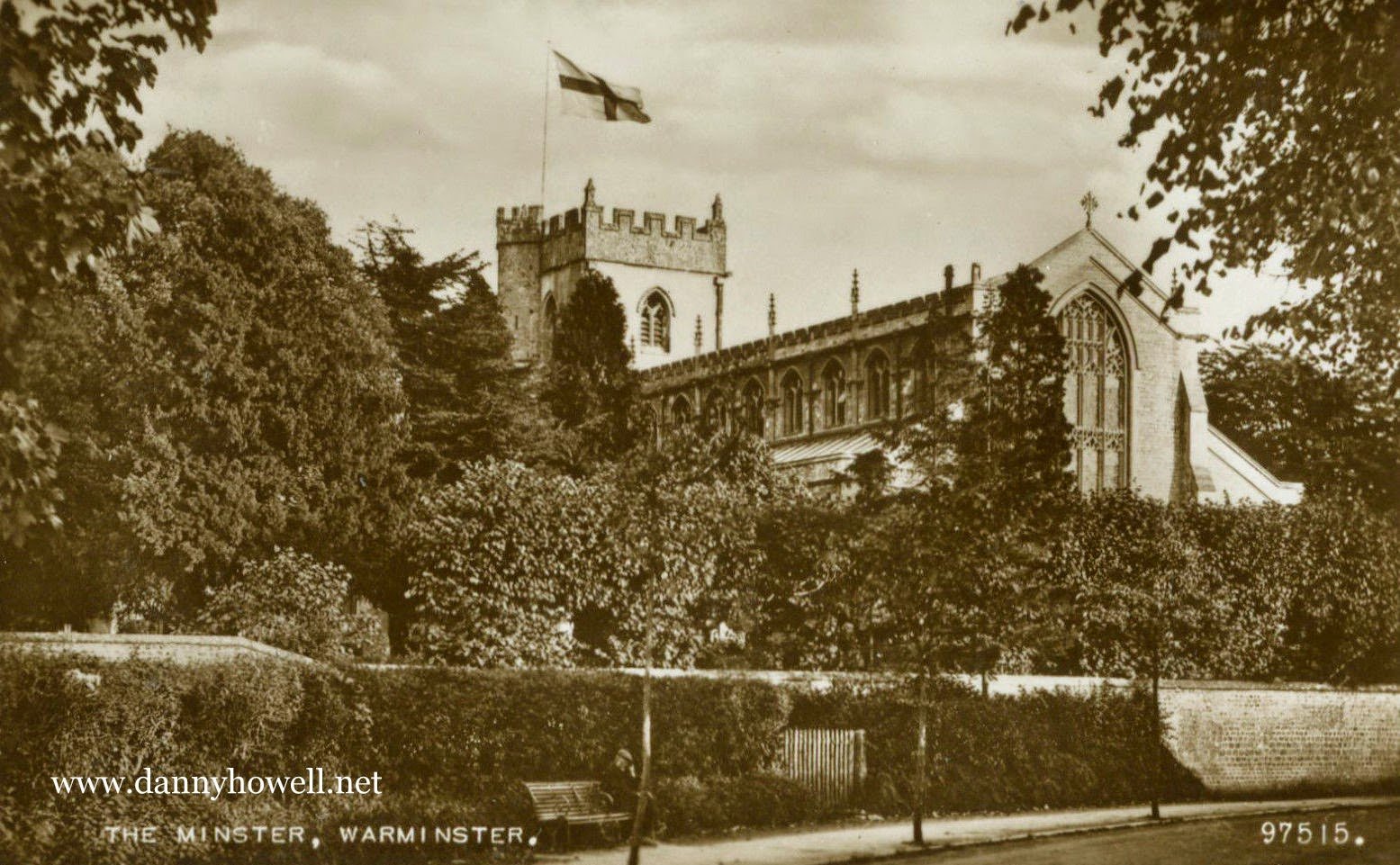
Flying The England Flag At The Parish Church Of St. Denys, The Minster, Warminster, Circa 1930

The England flag of St. George flying on the
tower of The Parish Church of St. Denys,
The Minster, Warminster, in this postcard view
from the Bath Road, circa 1930.

Furlong, Warminster, Name Explanation By Victor Manley

Victor Manley, in his Regional Survey Of The Warminster District, Volume Five, compiled in the 1920s and 1930s, listed and attempted to explain the meaning of several local place names.

He included the Furlong in his list, writing that it was “a lane with cottages from East End House to Fairfield Road.”

He went on to state that a furlong is “Not necessarily land of an eighth of an acre but a place name often where under the field system of village communities there were groups of strips naturally connected.” He added that “along the heads of the strips ran vacant lands used for turning the plough.”

Several Sarsen Stones At Broadway, Warminster

Victor Manley, in his Regional Survey Of The Warminster District, Volume Five, compiled in the 1920s and 1930s, listed and attempted to explain the meaning of several local place names. He included the Broadway in his list, giving its location as: “Warminster Common, junction of Pound Street, Fore Street, Mission Lane, and Folly Lane, with Rehobath.” Manley adds that there are “several sarsen stones here.”

Rehobath And Sarsen Stones

Victor Strode Manley, in his Regional Survey Of Warminster And District, compiled in the 1920s and 1930s, referring to place names, noted:

Rehobath, between Warminster Common (Broadway) and Cannimore. Of doubtful origin. If ancient, it is a Bot- or Beth- name. See Battlesbury. Beth means ‘saored stone’ and in the field opposite on the Bugley footpath is a sarsen stone (my photo). Prehistoric. Also at least three other sarsens at Broadway and the large one at Nutball not far off making five sarsens in the vicinity which supports a genuine Beth- theory and not a modern name. Ra = sun. beth = house. Cornish both-el = a sarsen stone.

Building Plans For The Teichman Memorial Hall, Boreham Road, Warminster ~ 1930

Building plans for a Memorial Hall at Boreham Road were submitted by Major Teichman to Warminster Urban District Council, in 1930. These plans can be found in the archives at the Wiltshire And Swindon History Centre at Cocklebury Road, Chippenham, Wiltshire, SN15 2QN. The reference number is G16/760/257

error: Content is protected !!