Tony Lyons of the Bourne Valley Historical Society, writes ~
Like many historical societies throughout the county, we are compiling a detailed account of the men from our area who gave their lives in the two world wars and we have a problem. I wonder if any of your readers knows of an Edward Albert Wrixon who lived in Porton, near Salisbury? He died of natural causes at Salisbury Infirmary in 1942, aged 24, and is buried at Porton. His name appears on the local war memorial but we can find nothing whatsoever about his service details. From a photograph he was clearly in the army but there the trail ends. Local and family anecdotal evidence suggests that he may well have been wounded at Dunkirk and invalided from the army, but nothing more. We hope we can trace someone who knew him. If you can help I would be most grateful if you could contact Tony Lyons on 01980 842907 or email lyons.william@sky.com
Dear Danny Howell, I found your website whilst researching for my dissertation on brickwork and craft at Oxford School of Architecture, Oxford Brookes University. I am from Crockerton and used to work at Lakeside Garden Centre, whilst there I remember Steve Cripps mentioning that the lake used to be an old clay pit and decided to look into this whilst working on my dissertation. That lead me to this post on your website http://www.dannyhowell.net/1990/11/crockerton-on-airwaves.html.
I am interested in learning more about the history of brick making in Crockerton and the reasons for the Brick and Tile Works’ closure, however the only other source I could find for such information was one paragraph on Wiltshire Council’s website. I was wondering if you knew anything else about the subject or would be able to suggest where I may be able to find this information? Many thanks, James Palmer.
Danny Howell replies ~
Thank you James for your enquiry. You are quite correct about the ornamental lake at the Lakeside Garden Centre, Crockerton, being formed out of an old clay pit that serviced the Crockerton Brickyard. The history of making things out of clay goes back a long way in the village – hence its name “Crockerton” and the derivation of local place names there such as “Clay Street” and “Potters Hill”. The Crockerton Brick and Tile Company closed in 1954, after a period “suffering severe competition from Bedfordshire bricks”.
Fortunately, I can provide you with the information you are seeking, and include here some notes of interest from three different sources.
Firstly, Bruce Watkin, who lived in Crockerton for many years, did some considerable local history research. Among his published work is the chapter on ‘Industry In The Deverills’ which he contributed to the book ‘The Deverill Valley‘, first published by the Deverill Valley History Group in December 1982. In that chapter he relates pottery making, brick and tile making, milling, cloth making, and silk spinning. The pottery trade, he notes, was in evidence as far back at the 13th century. You can get a lending copy of The Deverill Valley book at Warminster Library, so I won’t repeat the whole chapter, but here are the relevant notes by Bruce about brick production at Crockerton:
“It is clear that by the 19th Century the ancient industry was in decline. Colt Hoare refers only to the production of coarse earthenware, and the Tithe Assessment Survey of 1839 identifies but two potters, one in the garden of Well House, then owned by William Butcher who was by then making bricks at Polebridge, and the other on a nearby plot of land occupied by Thomas and Henry Butcher. None are listed in any later census, so the long tradition was obviously and finally broken.”
“There was, however, one later link through the brickworks at Polebridge, for a Glastonbury potter worked there in a disused tile shed from 1946 to 1949 and his work is still [1982] continued by Maurice Hankey (son of the last brickworks owner) at the Bell Pottery in Warminster. Quite independently of this, another potter, A. W. Gould, started work in the craft centre at Bull Mill in 1973.”
“As has been noted, two of the 18th century potting families, the Millards and the Butchers, moved sideways from potting to brickmaking probably in the early 19th century. Neither attracted the attention of the Land Tax Assessors (1780 to 1832) but the Tithe Assessment surveyors record their two brickyards. The upper was Thomas Millard’s three-acre field called ‘Barter’s Orchard and Dry Piece’, a short way west of Broadmead Lane on the north side of the valley. It was never extensive and the excavation is almost unnoticeable today.”
“The lower brickyard was on a site of twenty-two acres east of the Shaftesbury road which was listed as ‘closes and brickyard near Bull Mill’ owned by William Butcher, although the use is described as ‘pasture’. William was a man of many parts, for in 1841 he was the publican of the ‘Bath Arms’, in 1851 he was an ‘innkeeper and brickmaker’, while in 1861 he was listed as being a farmer on 200 acres (where he employed sixteen men and four boys), and also a brickmaker. In 1868, by which time he was over seventy, he finally sold his farm and went to live at Polebridge Cottage, adjoining his brickyard.”
“William’s son, Robert, succeeded to the yard, but when his lease expired his new interest in a firm of builders in Warminster was clearly more attractive, and a new lease was acquired by Francis George Harris who worked it until after the First World War, when his widow and his son George took over the business under the title of Mrs Fanny Harris & Co., brickmaker. Employment in the yard seems to have been small. William Butcher had only two clay-diggers in 1851, and Robert in 1871 had five brickyard labourers (unspecified) although in 1871 some were described as brick or tile moulders.”
“Herbert Hankey, manager of the Warminster branch of coal merchants Birds and Bryer Ash, acquired the works in 1926 and incorporated them as Warminster Brick and Tile Co. In 1932 this was absorbed in a larger company, the Wiltshire Brick Co., formed with the Yorkshire Brick Co. of Doncaster, to acquire the Crockerton and two Chippenham works in order to increase the Yorkshire company’s production in southern England. They acquired a variation in the lease from the Longleat Estate to allow for a further forty-four years’ working from 22nd June 1932.”
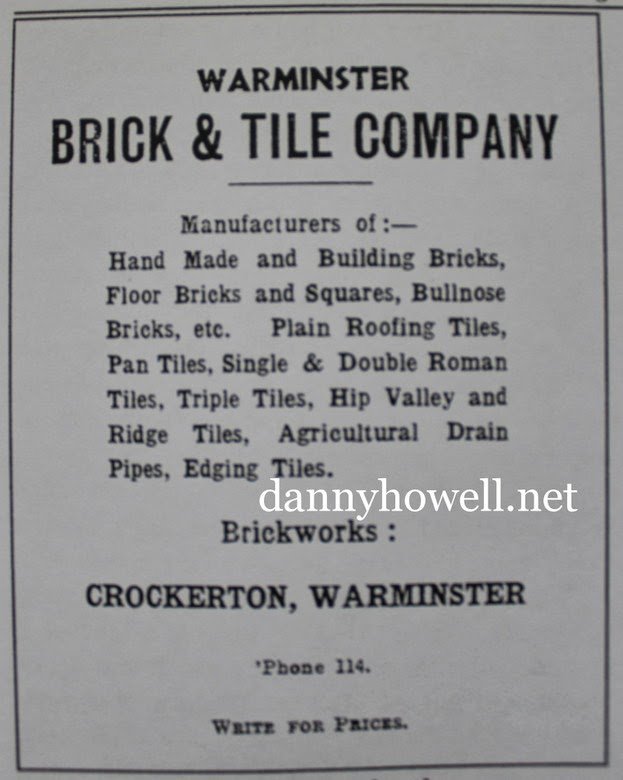
Advertisement for the Warminster Brick And Tile Company, at Crockerton, 1931.
“By the end of the 19th century there was a shallow two acre pit under the site of the present [1982] ‘Crockerton Warehouse’, with a long range of sheds to its west, and newer kilns on the site of the present garden centre’s glasshouse. By the end of Harris’s tenure, sheds had been extended over the old pit and three new acres to the east had been excavated to a greater depth; Hankey extended the pit further east and north, but never employed many men at one time. The second World War undid much of Hankey’s endeavours, for the Chippenham works had to close for lack of labour, and the Crockerton works were only reprieved after Dunkirk when the army released former brickmakers to produce new bricks for new barracks at Longbridge and around Salisbury Plain. The permanent buildings were not much altered, but the pit was extended and deepened to north and east. Middlebrook (in Warminster Journal, 1950) describes the scene not long after the war and says ‘the pit had three foot of sandy soil, then a deep pit of blue and grey clay well below river level’, while the works had small gauge railways, a mechanical excavator, and a ‘ramshackle collection of brick and timber buildings dominated by a squat chimney’. The outside observer, particularly looking at it from the Polebridge side, would probably have been surveying a scene which had changed very little in the previous fifty years.”
“The works were by then employing between twenty and thirty men and producing in a good year some two million bricks. Royalties were £75 per annum and one shilling per thousand bricks made. There was also a small royalty paid on a sand pit west of Crockerton Church (now [1982] ‘Badgers Holt’), which was associated with the brickworks, but this was little used as there is a fair proportion of sand in the local clay. A wide variety of bricks and tiles were made, together with tile-drains for the War Agricultural Committee which was one of the biggest customers. The Company was able to acquire the freehold of the works and sandpit for £3,500 in the [Longleat Estate] sale of 1947, but it was already suffering severe competition from Bedfordshire bricks whose clay has the built-in advantage of 10% carbonaceous matter. The works staggered on, but finally closed in 1954 when the site was sold to G. Nicholas, to be used first as a milk depot and then as a super-market and garden centre. The brick buildings disappeared beneath newer sheds and a car park, after the clay pit was moulded to make the present ornamental lake. The long history of Crockerton crocks was over.”
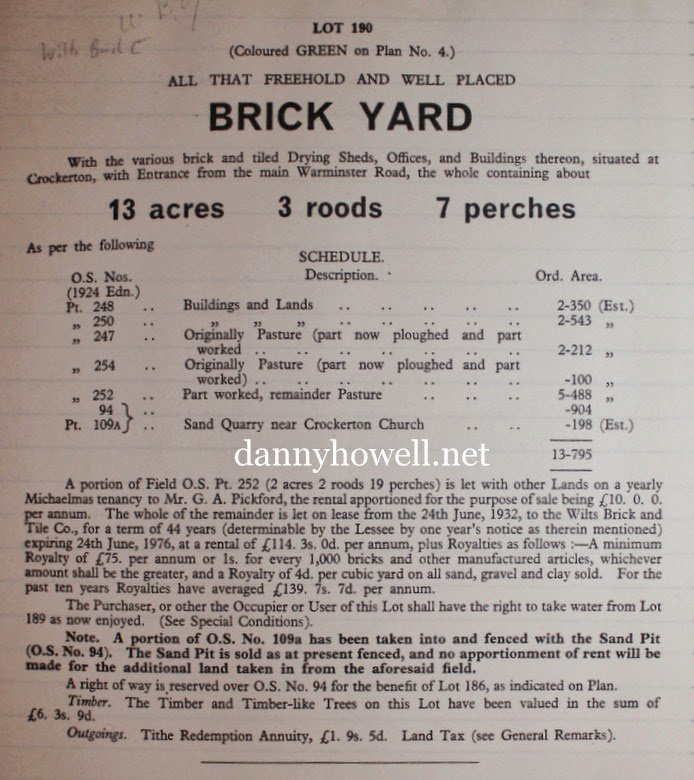
Details for the Crockerton Brickyard in the Longleat Sale Catalogue of 1947. The property sold by auction for £3,500.
Danny Howell adds ~
Middlebrook quoted in the above article, was Wilfred Middlebrook. In November 1949 he began a serial called ‘The Wylye Valley’ in the Warminster Journal, in which he portrayed a semi-imaginary journey through the valley, with himself as ‘Bernard Gullible’ and a companion he called ‘John Pertwood’. Gullible and Pertwood visited Crockerton en route and this is what they saw and said about the Crockerton brick works:
After a brief rest and a smoke, while the hot sun quickly removed the damp feeling from Gullible’s sock, they made their way to the corner of the field and the Wylye bank. Under cover of a perfect nest of trees, completely invisible from the opposite bank as Pertwood had said, the Shearwater stream emptied itself quietly and unobstrusively into the Wylye. At this point there was only a few feet between the river and a wire fence, and Gullible was astonished to find beyond the fence a deep and huge clay pit or quarry. Pertwood viewed his astonishment with obvious enjoyment.
Invisible from any point but the immediate vicinity of the fence, this clay pit, which had obviously been worked for centuries, was a surprise indeed. A short top section of sandy soil, no more than three feet deep below the turf, then solid blue and grey clay and flint dropping sheer to the depths below, where a network of small-gauge railway lines, a collection of tiny trucks with a long hauling ramp that raised them to the opposite summit of the pit, a couple of wooden huts and a mechanical excavator that bit deeply into the clay as though anxious to take time by the forelock and make a bigger hole in less time than heretobefore; the whole so far below the river level, indeed, that the railway lines and the trucks looked like a child’s playthings in a miniature sandpit. On the far side, where the railway ramp topped the chasm, a ramshackle collection of brick and timber buildings, dominated by a squat chimney stack, revealed itself as the factory that was fed from this gaping pit beneath.
“This must be Crockerton brick works,’ exclaimed Mr. Gullible, when he had absorbed the unusual scene before him. “I’ve seen it from the road of course, but never realised they had a clay pit as big as this. It must have been worked for hundreds of years to make a hole this size.”
Danny Howell notes ~
Wilfred Middlebrook went on to say that the Brick And Tile Company, at that time, 1949, were also making pottery, having re-introduced the pottery making trade in recent times, and that “some fine work comes from the kilns.”
Danny Howell adds ~
On 31st July 1998 I made a tape-recorded interview with George Blagdon (born 21st November 1914). George grew up at Crockerton. After leaving school he worked for Norman White at White’s forge at Weymouth Street, Warminster, but between 1934 and 1949 George worked at the Crockerton Brickyard. I included the transcript of the conversation George spoke to me, in one of my books, Wylye Valley Folk, Volume One (published by Bedeguar Books in July 1999). The book is now out of print but Warminster Library have a lending copy. And George’s recollections, from the book, are online on my blog, click here. The following notes, from the book, are what George had to say about his time at the Crockerton brick works:
“I worked at White’s for about five years. I got a wage rise of a shilling every year. The first year I was there I got eight shillings. By the fifth year I was getting thirteen shillings. My mates were working at the Crockerton Brickyard. They were getting more than me, so I asked Mr White for a rise. He said ‘No, I’m sorry I can’t afford to pay you any more. If you want more money you’ll have to get another job.’ I said ‘Fair enough. I’ll look for another job.’ He said ‘Yes, you better do that.’
“On the way home that night I called in at the brickyard at Crockerton and saw the foreman Jimmy Pinchen. I said ‘Any chance of a job?’ In those days the brickyard was a seasonal occupation. They used to shut down in the winter and open up again in the spring. They used to dry the bricks in the open and they couldn’t dry the bricks in the winter. Jimmy said ‘We are sure to put some staff on when we start up again. How can I let you know?’ I said ‘Let Percy Bundy know.’ Percy worked at the brickyard and lived next door to us. I said ‘Let him know and I’ll come and see you again.’
“About a week after, Percy came and saw me. He said ‘Will you come and see Jimmy in the morning? He’s got a job for you.’ I said ‘Right, I will.’ I went and saw Jimmy. He said ‘When can you start?’ I said ‘I shall have to give White’s, where I’m working now, a week’s notice.’ I told Mr White. I said ‘I’ve come to give my notice in.’ He said ‘What?’ I said ‘I’ve come to give my notice in.’ He said ‘What’s up then?’ I said ‘I’ve done what you told me to do. I’ve got another job.’ He said ‘How am I going to manage then?’ I said ‘That’s too bad, you’ll have to manage without me.’ He said ‘What are they going to pay you?’ I said ‘I’m not worried about how much exactly they’re going to pay me. It doesn’t matter as long as it’s more a year than you pay.’ He said ‘I’ll have to get someone else in then to work for me.’ He got Bill Stokes after me. Bill lived at Chapel Street but I think he got killed in the Second World War [William Stokes died on 12th February 1944].”
“The job I got at the Crockerton Brickyard was temporary to begin with. As I said just now, brickmaking at Crockerton was only seasonal, from April to October because they dried the bricks outdoors. They told me they would be having a new kiln built the following year and then they would be making bricks all the year round. They were going to have a drying shed built, with boilers. I was happy to start temporary. I was happy to have any job to survive. I started in April and worked until October. They couldn’t make bricks after that because of the frosty weather. It had to stop then. I got laid off and I was without work for about a month.”
“I had to sign on the dole. The Labour Exchange was in the Market Place. It was where the estate agents [Taylor’s] are now [closed December 1998], next to where the traffic lights are. There were a couple of rooms there. The Council Offices were there as well. There were quite a few men on the dole. There wasn’t much work about in those days. The farmers were getting rid of their horses and going mechanised with tractors. A lot of men, like the carters, got pushed off the farms. A farmer would get a tractor driver who would do the work of three or four men.”
“I signed on three times a week, on Mondays, Wednesdays and Fridays. I got a few shillings a week, about ten, when I was on the dole. It was paid to me at the Labour Exchange. Mr Pullin was in charge and he would send people out looking for work. If they found a job for you they would send you off to it. They had nothing for me. I didn’t get sent anywhere. I wasn’t worried about not getting a job because I knew the brickyard at Crockerton would start up again the following spring.”
“I was coming home from Warminster one day and the manager of the Crockerton Brickyard, Mr [Herbert] Hankey, stopped me. He said ‘Mr Blagdon, could you do a job for me?’ I said ‘I could.’ He said ‘I’ve got a job which would suit you temporary.’ As well as running the Brickyard he also used to run the Birds & Bryer Ash coal yard at Station Road. He wanted help with the coal in the winter. He said ‘If you help there, I’ll promise you a job when the brickyard starts up next year and that will be permanent.’ He promised me that.”
. . . . “I got on very well with Mr Hankey. I used to have the odd argument with him now and then but on the whole we got on alright. He always treated me with respect and he kept his word about getting me a job at Crockerton Brickyard when it re-opened in the spring. Once the Brickyard had its new kiln Mr Hankey finished with Birds & Bryer Ash. He gave the coal business up.”
“I started at the Brickyard the following April. The new kiln had been installed. It was a big continuous one and they made bricks all the year round from then on. They fired bricks in one chamber before moving on to the next chamber. It had 20 chambers. When they got to the twentieth they started again in the first one. They made millions of bricks. The clay was dug out of a pit. There were three or four chaps digging out clay all the time. I can remember Herbie Dyer, Bill Maslen, and Cecil Ladd doing that. They were from Deverill and Sutton Veny. The clay was put into skips. The skips were wheeled on rails out of the pit to the turntable. The pit was 16 to 20 feet deep and the skips were pushed by hand. They were then winched from the turntable, with a machine winch, to the top.”
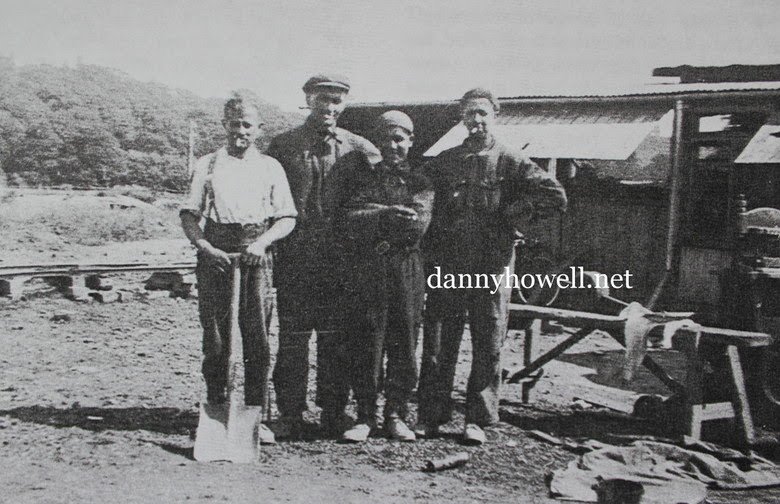
This photograph shows workers taking a break during boiler cleaning at the Crockerton Brickyard during the 1930s. Left to right: Eddie Marsh, Cyril Lapham, Mr. Bristow, and George Blagdon.
“The clay was put through the brick-making machines. It went into hoppers where it was chopped up into little bits. Then it went through a series of rollers and was pressed down through some more rollers into a die. It came out of the end of the die in the shape of a brick. They used to come out on to a slab and ended up as so many bricks on a table. There was a hand machine with a lever which poured water over a set of bricks and then they went into the dryers to be dried. They spent ten or 12 days in the dryer and then they were ready to go in the kiln. The kiln was fired with coal. The bricks were built up in the kiln about 12 or 14 feet high. They covered the top with sand. Along the sand there was a series of holes through which the coal was poured down into the bricks. The fire was drawn up through. The bricks were in the kiln for 10 to 14 days. Then they were taken out and stacked up to cool.”
“All the bricks went out by lorry. The Brickyard had two lorries of its own and Billy White, who had a haulage business in Warminster, used to send a lot of lorries in. Builders also used to bring their lorries and collect. The bricks were loaded by hand on to lorries. Very often the bricks were still hot. The men wore rubber pads on their hands when they were loading. The pads were made out of old tyres. You didn’t hold the bricks in your hands for long when you were loading because you had to get the loads out as quick as you could. The drivers didn’t want to hang about. They couldn’t get the bricks out of the yard fast enough. I’ve seen lorries going out of the yard on fire because the bricks were so hot. The lorries would turn round and come back to the yard to get some water to put the fire out.”
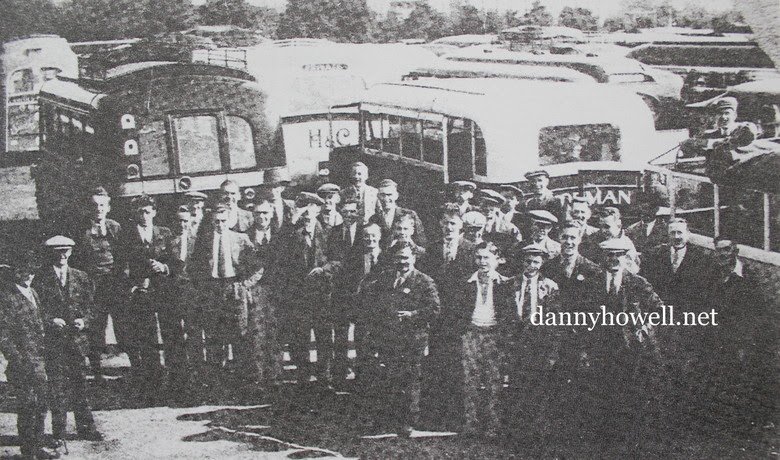
Staff from the Crockerton Brickyard on a coach outing in 1938. The photo is thought to have been taken at Weymouth The coach was supplied by Cruse’s of Warminster. Among the men in the picture are George Blagdon, Di Bowen, Les Hardiman, Ralph Rogers, Charlie Waters, Sidney Waters and “Boxer” Billy White. One of the men standing in the open-top coach, on the right of the picture, is Jack Trollope.
“Before the Second World War started there were a lot of bricks in stock at Crockerton. At one point they told us they had a million and a half bricks on stand-by. When the Second World War was imminent they started to build barracks on Salisbury Plain for the soldiers. Within about two or three months every brick in that brickyard had gone.”
“During the War there were some Italian prisoners of war working at Crockerton Brickyard. They were useless. The first thing they wanted to do when they got there in the morning was go off to the banks of the river Wylye getting willows. They would bring them back and start making baskets. That’s all they wanted to do all day long. They didn’t like making bricks. They were from a prisoner of war camp at Westbury, where the West Wilts Trading Estate is now. There were about six Italian prisoners working at the Brickyard. There was no soldier to see over them. One of the Italians was put in charge of the others. They were not considered a threat. They had to look after themselves. One or two of them could speak English. They didn’t bother me. I didn’t have a lot to do with them.”
“Some German prisoners came after the Italians. Those Germans were the best workers. They were worth their weight in gold. They did a lot of work. To begin with they dug clay out by hand with spades but the boss bought an excavator. I was driving it in the clay pit one day, digging some rough stuff out. I was swinging the excavator round when an accident happened. I looked up and I saw something coming down towards me. That was a fall of clay. It smashed the excavator up. These four Germans came running across straight away and got me out. They saved me. They dug me out. I didn’t pass out but it shook me up. I broke my ankle and bruised the other one. I had a lucky escape. It could have been a lot worse. I got taken to Warminster Hospital to have my foot seen to. Dr Graham Campbell treated me. I was off work for about two months. I got some sick pay through the union. They fought the case and got me some compensation. One of the German prisoners was a blacksmith. He got the excavator repaired and mended.”
“Mr Hankey was in charge of everything. There were a couple of women in the office. In fact, they had come from Birds & Bryer Ash’s. One was called Wagstaffe and there was someone called Gray. They did the paperwork and saw to the wages. There were about 30 blokes working at the brickyard. I started off on a machine, slicing the bricks through. The foreman, Jimmy Pinchen, came to me and said ‘I’ve got a job that would suit you.’ I said ‘What’s that, Jim?’ He said ‘I want somebody to look after the boiler and tend to machinery.’ I started doing that. It was a good job. The only thing was I had to work 12 hour shifts, from six in the morning until six at night, and it was seven days a week. There were no holidays. You didn’t have holidays in them days. It was rather monotonous but you had to do it otherwise you’d lose your job. Sometimes they’d come up in the middle of the night to my house and say ‘George, the boiler fire’s gone out.’ They’d shout through the window to try and wake me up. My wife would say ‘Don’t take no notice of them.’ I used to have to go to the yard and sort things out. I only had to go across the fields to get to the Brickyard.”
“The Crockerton Brickyard was a big concern at one time. It came to an end, like a lot of places came to an end for the same reason. It started off as a small job. It was known as the Warminster Brick And Tile Company. It got took over by the Wiltshire Brick Company. Of course they had different ideas. They sacked a lot of the chaps who had been there. The new company had its own way of doing things. They could produce bricks cheaper. A lot of the bricks were made with waste ashes and clinker. I saw millions of bricks during the 15 years I worked at Crockerton Brickyard.”
Danny Howell concludes his reply ~
I sincerely hope, James, that all of the above will give you a really good insight into the history of brick making at Crockerton. Maybe too, it will prompt readers of dannyhowell.net to let us know if they have recollections, further information and/or any photographs or documents about the Crockerton Brickyard, which we can share online, on this blog, helping swell our local history archive. Our email address is dannyhowellnet@gmail.com
Salisbury NHS Foundation Trust. The Staff at Salisbury District Hospital would like to contact relatives of Mr. Bronius Griskonis, or anyone who knows him. If you can help, you are asked to contact the Customer Care Department, telephone 0800 374208.
Ray Ford, who has been a resident of Canada for 40 years but was born in Lancashire, is returning to England in September for a holiday and a family get-together. He tells us he has arranged a stay in Salisbury for a couple of days and intends taking the bus along the Wylye Valley to see the villages where his ancestors came from: the House family from Sherrington and Heytesbury, the Withers family from Sutton Veny, and the Snelgrove and Dyer families from Heytesbury. He says he may even visit East Knoyle, the home of the Fords, if time permits.
Ray has made the following enquiry to dannyhowell.net ~
“Hello Danny, I wonder if you have any information on older buildings in Heytesbury? I have an ancestor in my family tree named William Snelgrove who was the innkeeper of the White Lion Inn in Heytesbury, approx. 1700. However, in searching on-line records, I have never been able to find any reference to a White Lion Inn at Heytesbury, only the Red Lion and The Angel. I suspect it may have been lost in the Heytesbury fire. Do you have any other thoughts? Thanks, Ray.”
Danny Howell replies ~
“Hello Ray. Thank you for your enquiry. The fire at Heytesbury was in 1765, of course. The earliest record I have for public houses in Heytesbury is ‘An Indexed Summary of the Alehouses named in the enrolled recognizances of licenced victuallers 1747 – 1757’. (Fifty years before you say your ancestor William Snelgrove was an innkeeper, and eight to eighteen years before the fire). That index lists three pubs in Heytesbury – the Angel, the Red Lyon, and the Unicorn. But no White Lion.”
“The Unicorn existed where Unicorn Cottage now stands on the corner of Park Street and Park Lane, adjacent the old A36 – the hill part of the old A36 leading east out of the village was known as Unicorn Hill.”
“Interestingly, the landlord of the Red Lyon at the time of the 1747 – 1757 Indexed Summary is listed as John Snelgrove.”
“Seventy years later, ‘An Indexed Summary of the contents of the Register of Alehouses, 1822 – 1827’ records the Angel, the Red Lion and the Unicorn again, but still no White Lion. The landlord of the Red Lion is then named as Sarah Snelgrove. So, alas, no mention of an alehouse or pub called the White Lion in Heytesbury in those indexes or anywhere else that I can see.”
“One could ask if, perhaps, the White Lion changed its name to the Red Lyon (or Red Lion) between 1700 and 1747? If so, there could have been a continuity of landlords called Snelgrove there. But I’m only speculating.”
“1700 is some 27 years before the Salisbury Journal was founded, so no point looking in back issues of that for any advertising for a White Lion at Heytesbury.”
“I suppose you would need to see if any early Heytesbury Borough records exist, or 18th century Heytesbury Estate records exist, maybe in the Wiltshire And Swindon Record Office at Cocklebury Road, Chippenham. If so, they might provide some White Lion information. If you find any more clues or unravel this puzzle, please let me know. With best wishes, Danny.”
Since Danny Howell wrote that, Ray Ford has been in touch again. Ray writes ~
“Hello Danny. Thank you so much for writing back about my inquiry. I’ll pursue the leads you have provided. William Snelgrove senior does have public records (his will, etc.) in the Wiltshire And Swindon Records Office which I have viewed and from the assets listed (such as tables, napkins, and beds) I’m wondering if the White Lion was more of a hostelry than a tavern or alehouse? I’ll send a follow-up email if I find any answers. Thanks for your help. Kind regards. Ray.”
Ms. Fitz-Henry is trying to locate Andy Dobson, an Australian national, approximately 35 years old, who has lived in Wiltshire for two years approx. up until earlier this year. If anyone has any information please telephone 01722 438165.
Austin Thorp, Chairman of the Salisbury Group of Artists, writes:
Every year at our Summer Exhibition, the Salisbury Group of Artists (SGA) awards a trophy – affectionately known as ‘the chicken’ – to the artist whose picture is judged Best in Show.
The trophy, more properly known as The Edwin Young Trophy, is a small, delightful bronze sculpture of a chicken and her brood.
It was sculpted by Ann (or Anne) Singleton. Apart from that, we know very little about it.
I have been told that she grew up in Broad Chalke and studied at Goldsmith’s College, where her father was a lecturer, or alternatively, that he was in the services.
Ann allegedly had an exhibition in Salisbury Library in the 1950s (or the 1960s or 1970s!).
The Chicken was one piece that did not sell and she generously presented it to either Wiltshire Council or the Library or the SGA; thus we do not know how it came to be in our hands or who christened it the Edwin Young Trophy.
Apparently, Ann may later have gone to Italy, where she became a well known and successful sculptress of small animals and birds. I have not been able to authenticate any of these suggestions.
If anyone can tell me more about Ann Singleton, and shed any light on the provenance or history of this trophy I would be most grateful?
Caroline Hardman has recently been in touch with dannyhowell.net
Caroline tells us her grandfather, Charles Davis, was the Headmaster at St. John’s School, Boreham Road, Warminster, circa 1957 to 1967. Caroline says she is doing some research into Charles’ life and career, with a view to eventually writing a book, partly about him and partly about the history of primary schools in the UK, including whether they may or may not have changed over time.
Caroline says she has been able to consult the St. John’s School log book, which has proved helpful, but is keen to get a better idea of what day-to-day life would have really been like for the headmaster and the pupils. She tells us she has been reading about the fascinating Warminster UFO mystery which occurred during the period. This has prompted Caroline to wonder how primary school pupils reacted to this and how the teachers coped ~ did the teachers have to address any concerns of the pupils about it or whether they ignored it and just got on with the business of teaching and learning.
We think it would be best if Caroline could hear first-hand from some of the ex-St. John’s School’s pupils from 1957 to 1967 about their own personal memories of Charles Davis and the school at that time, or from pupils from 1964 to 1965 when the UFO phenomena was first making worldwide headlines for Warminster. If you were a pupil at St. John’s School, Warminster, during those times, and have memories or information which Caroline may find interesting, please email us on dannyhowellnet@gmail.com We will gladly pass your snippets and stories on to Caroline.
Dear Danny Howell, I am trying to confirm whether a gamekeeper with the surname Watts was ever at the Keeper’s Cottage in Crabtree Woods, Longleat? Hoping you can help.
Danny Howell replies –
The 1911 Census records the following persons at Crabtree Cottage, 10 Crabtree Road, Warminster ~ Albert John Watts, head of the household, aged 39, married (for 10 years), gamekeeper, born at Warwick, Warwickshire. Annie Watts, wife, married, age 34, born at Dorking, Surrey. Dorothy Watts, daughter, aged 8, born at Romsey, Hampshire. Alfred James Watts, son, aged 7, born at Romsey, Hampshire.
Glyn Scott has contacted dannyhowell.net. He writes ~
I am tracing my family tree. My grandfather, William Whatley, was born in Crockerton in 1880 and moved to 11 King Street, Warminster, when he married Sarah Jane Brown in 1904. At that time he was involved in the coal trade and there is a mention of him in a book I found in Warminster Library, written by a local man who worked with him and subsequently wrote of his memories of Warminster. ~ “The coal came from Radstock but father didn’t have to go and collect it. It came in by train. . . . . As far as I can remember, Bill Smith drove one horse and cart and Billy Whatley had the other one. Bill Smith lived in Bread Street and Billy Whatley lived at King Street.”
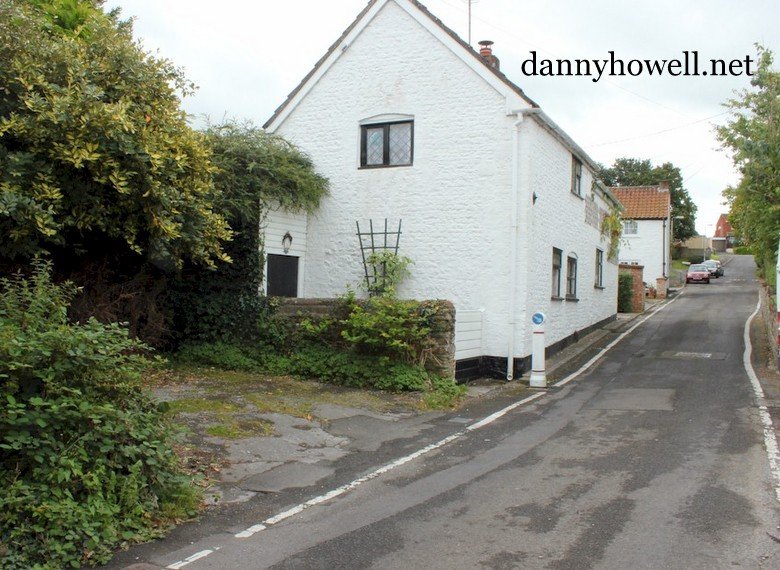
I visited King Street a few weeks ago but No.11 has been demolished. There is now a small bungalow there behind the greenery that fronts the site. I wonder if one of your books has a picture which includes No.11 King Street? Attached is a picture of the site:
King Street, Warminster, in 2012. The former home of William Whatley, back in the early 1900s, was situated on the far left.
I would be very interested in any information which throws light on my grandfather. Incidentally he moved to the Rhondda Valley sometime after 1917 when the coal trade started to run down. He became a miner and ended his working life as the safety man for his pit in Treorchy. He died in about 1954.
Danny Howell has replied:
Hello Glyn, Thank you for your email regarding 11 King Street, Warminster, the former home of your grandfather William Whatley and his wife Sarah Jane. I don’t think I’ve included a photo of that property in any of my books, so no luck there. I do have photos taken at Warminster Common, including maybe King Street, so I’ll have a look through to see if No.11 is among them and if I find one of 11 King Street I’ll gladly get a copy to you.
I presume you know the following info about the Whatley family:
A marriage of Benjamin Whatley to Emma Crofts is registered in the Warminster district during July August September 1879.
1881 Census, Potters Hill, Crockerton Benjamin Whatley, head of household, married, age 30, shepherd, born Crockerton. Emma Whatley, wife, married, aged 25, born Crockerton. Benjamin Whatley, son, aged 10 months, born Crockerton.
The death of Emma Whatley, aged 31, is registered in the Warminster district during January February March 1887.
There is a marriage of Benjamin Whatley to a Ruth Clifton, registered in the Warminster district during January February March 1889.
The 1891 Census, at No.43 Sand Street, Longbridge Deverill Benjamin Whatley, head, married, age 40, shepherd, employee, born Longbridge Deverill (Crockerton). Ruth Whatley, wife, married, age 34, born Hill Deverill. William Whatley, son, age 10, agricultural labourer, born Longbridge Deverill (Crockerton). Frank Whatley, son, age 5, born Longbridge Deverill (Crockerton).
The 1901 Census, Church Street, Longbridge Deverill (near the School House): Benjamin Whatley, head, married, age 47, shepherd on farm, worker, born Crockerton. Ruth Whatley, wife, married, age 44, born Longbridge Deverill. William Whatley, son, single, age 20, cowman on farm, worker, born Crockerton. Walter C. Whatley, son, single, age 18, horse keeper on farm, worker, born Crockerton. Cecil F. Whatley, son, single, age 16, shepherd on farm, worker, born Crockerton.
1901 Census, 11 King Street, Warminster William Whatley, head, age 30, married for 7 years, no children, coal porter, worker, born Crockerton. Sarah Jane Whatley, wife, age 27, born Warminster Wiltshire.
Do keep in touch. Cheers, Danny Howell.
Glyn Scott has responded:
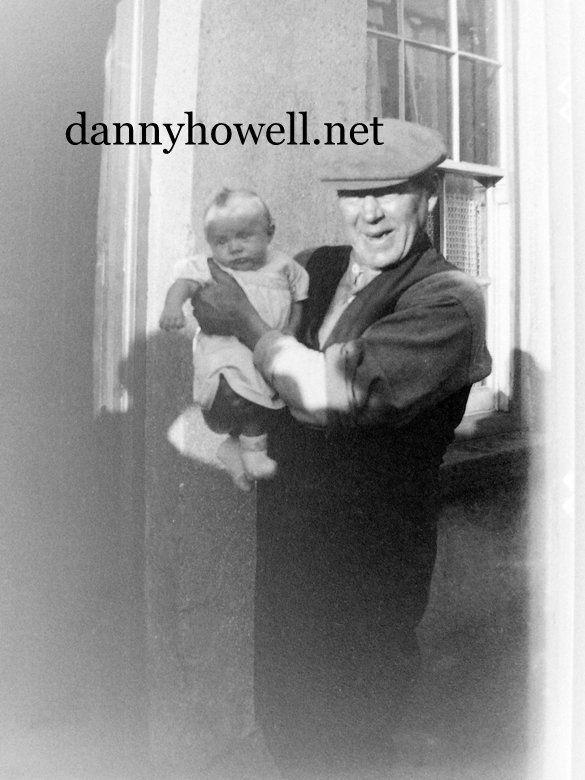
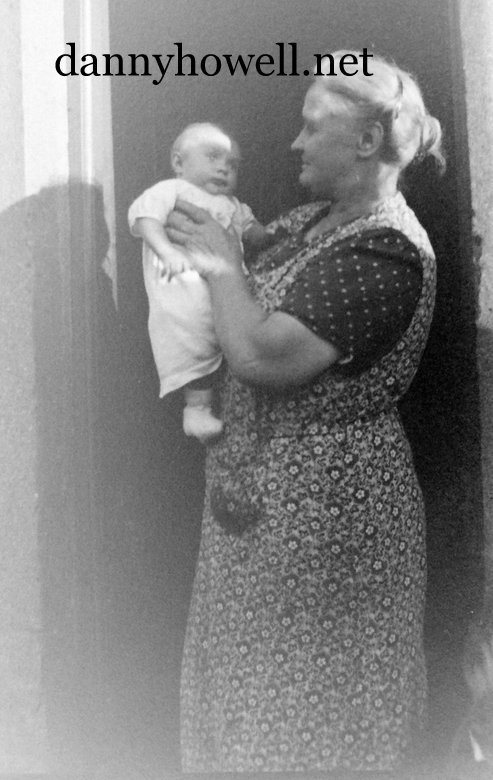
Dear Mr. Howell, Thank you so much for your email. Well, so much information. I am very grateful to you. I had got as far as the death of Emma and the remarriage to Ruth. My sister, who is 7 years older than I (the war got in between us!) informed me that Sarah Jane was born in Street, Somerset, so I had not looked at Warminster and therefore had not been able to find an address showing all of the siblings. Thank you for offering to look through your photos. I have attached three pics:
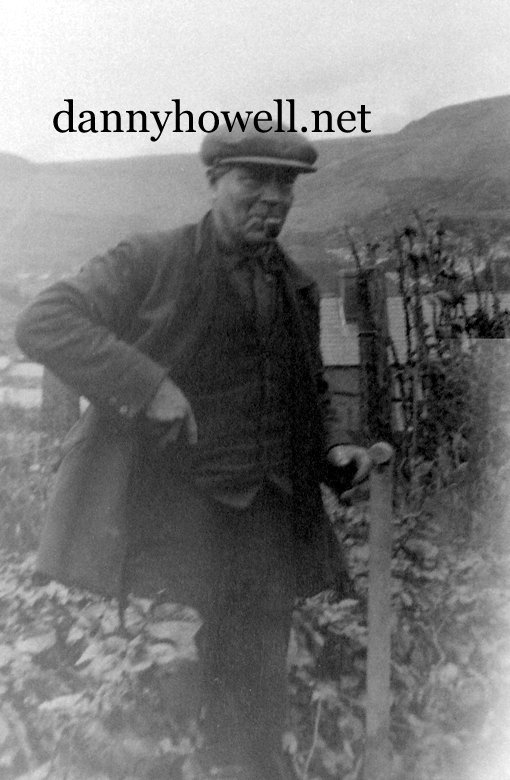
William Whatley holding his granddaughter (Glyn’s sister) in 1940.
William Whatley’s wife, Sarah Jane Whatley, holding her granddaughter (Glyn’s sister) in 1940.
Jean Wilson, of Trowbridge, is seeking information about her grandfather, Edward John Fletcher, who was the Headmaster of Edington School, circa the early 1900s. Jean may be contacted via post: 10 Knightstone Court, St. Stephen’s Place, Trowbridge, BA14 8AH, or by email: paj781@hotmail.com