From Morgan’s Drove, Boreham, To The Great Ridge

Sunday 19th May 2013

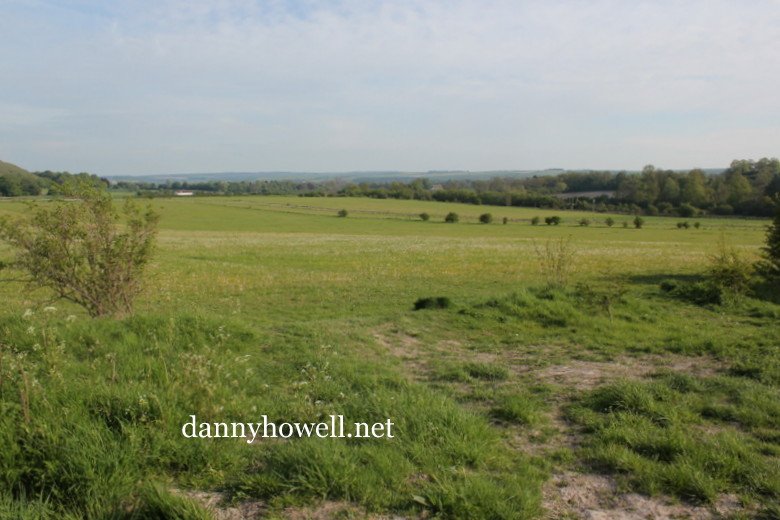
The view south-east from Morgan’s Drove,
Boreham, looking over the lower part of
70 Acres and Long Close
(fields of Bishopstrow Farm)
to the Great Ridge Woods on the horizon.

The white building (left of centre of picture)
is Railway Cottages, Bishopstrow.

The photograph was taken by Danny Howell
on Sunday 19th May 2013.

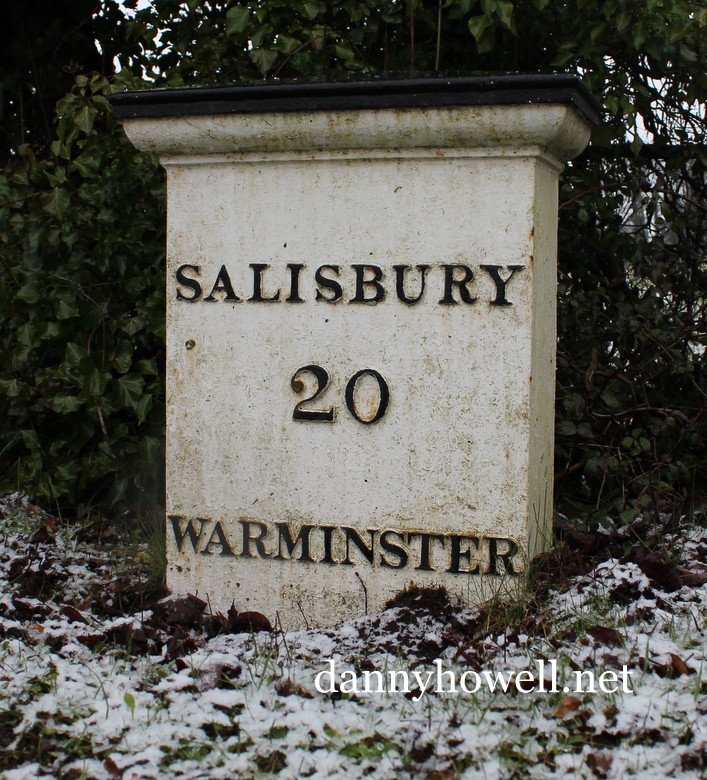
The Milepost At Boreham, Warminster ~ Salisbury 20 (In The Snow)

Sunday 17th March 2013

The cast-iron milepost which stands a few yards west of Boreham Crossroads, Warminster, photographed by Danny Howell during the snow on the morning of Sunday 17th March 2013.

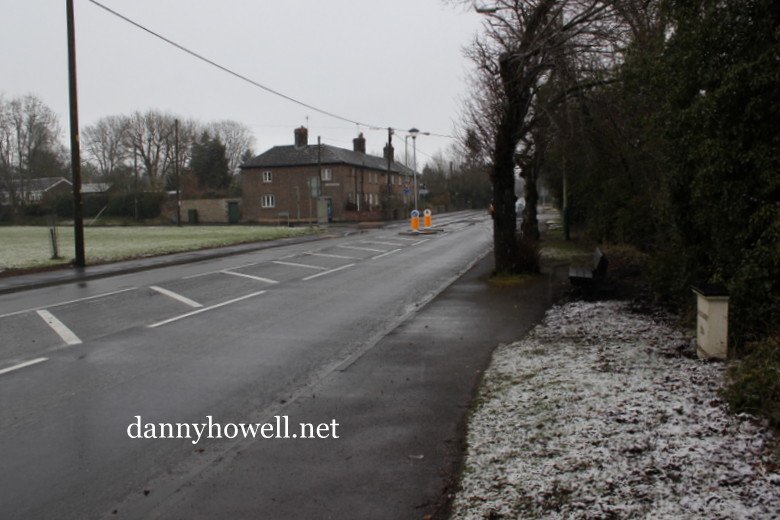
The view east along Boreham Road, looking towards Boreham Crossroads. The milepost is on the right of the picture.

Where Have The Boreham Signs Gone And Why Was The Warminster Sign Moved Further East?

Monday 22nd October 2012

Is the name Boreham being erased?

A resident of Boreham, who tells us she was born there and lived there all her life, has contacted dannyhowell.net, having observed how a couple of ‘Boreham’ signs have mysteriously disappeared, while the ‘Warminster’ sign which was always near Boreham Crossroads has been transfered to a different location. She wonders if someone has deliberately set about removing the name Boreham as a way of ensuring the area becomes  known as just another part of Warminster.

She says: “For many years there was a ‘Boreham’ nameplate fixed to the wall at the top of Boreham Hill. There’s no sign there now and no-one seems to know who removed it or why.”

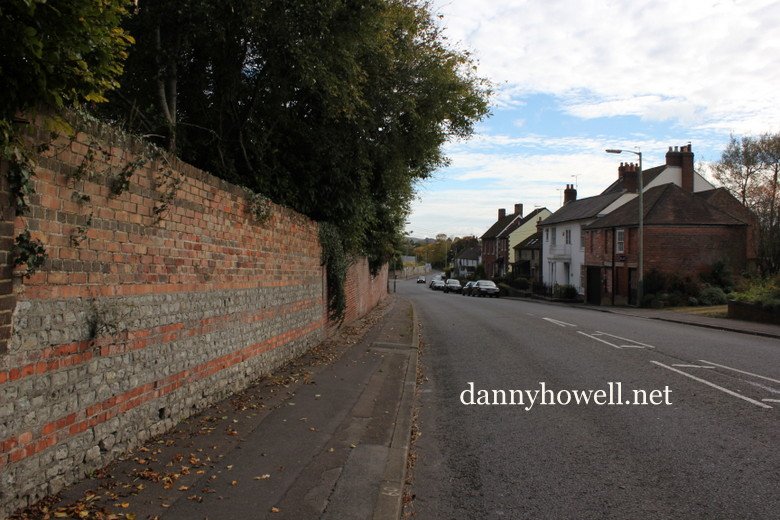
A nameplate denoting ‘Boreham’ used to be attached to the wall at the top of Boreham Hill but it’s not there now. 

She continues: “And between the entrance to the road to Home Farm and Weirs Cottages, at the far end of Boreham Road, against the stone wall alongside the pavement, was a parish boundary marker, denoting Boreham to the west and Bishopstrow to the east. This marker has also gone, and again no-one seems to know who removed it or why.”

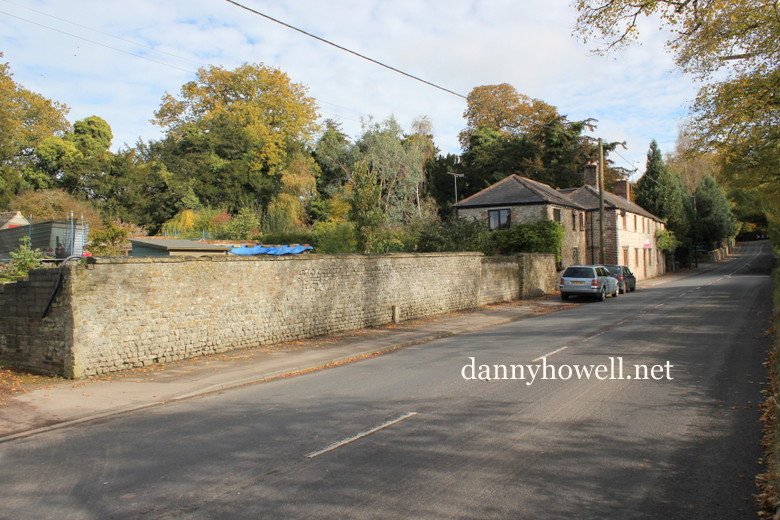
A parish boundary marker, showing where Boreham met Bishopstrow, once stood against the wall between Home Farm drive and Weirs Cottages, but it too has disappeared

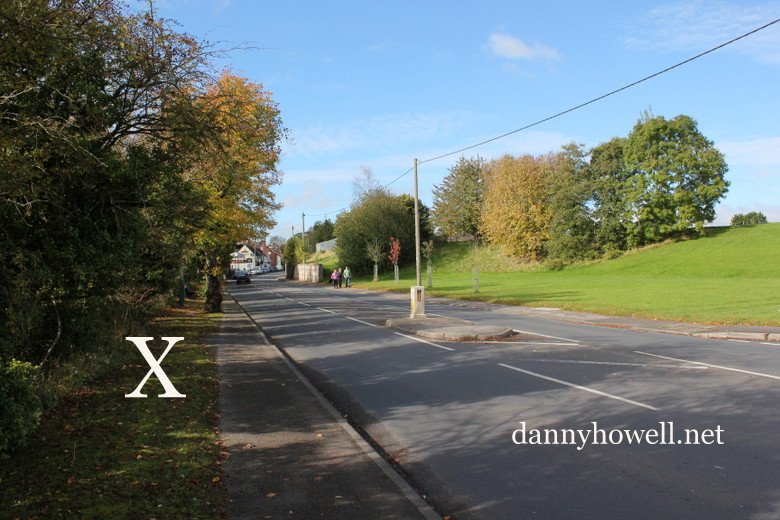
The lady has also made another observation. She says: “For years the sign for Warminster was just a few yards on the Warminster side of Boreham Crossroads. But it’s not there now.”

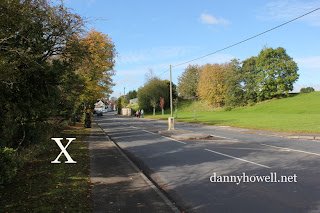
The ‘X’ on the left of this photograph shows where the sign for Warminster was located for many years, just a few yards west of Boreham Crossroads. 

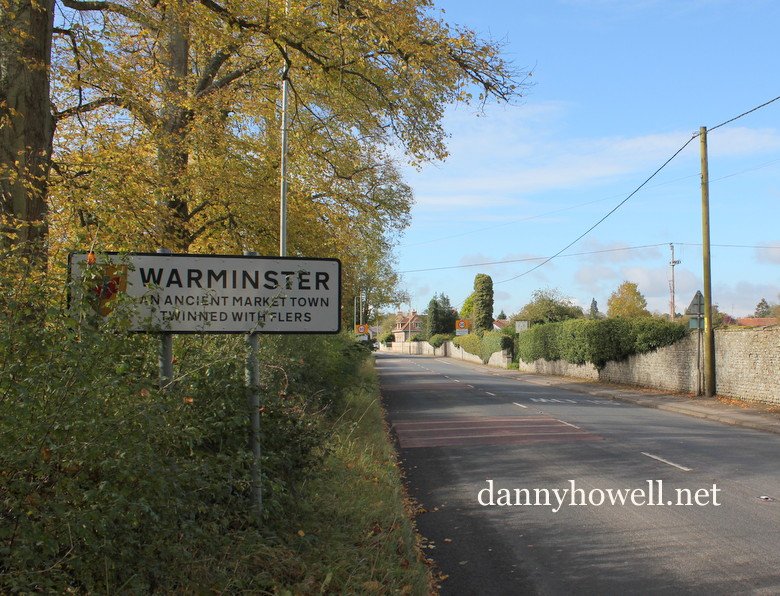
She adds: “Instead, another sign for Warminster, to replace it, was erected at the far end of Boreham Road, nearly opposite Weirs Cottages. It’s as if Boreham has been “wiped out” in favour of being just another part of Warminster. According to the current location of this Warminster sign, Warminster now starts near the boundary with the parish of Bishopstrow. ‘Boreham’ it seems, is no longer in between Bishopstrow and Warminster.”

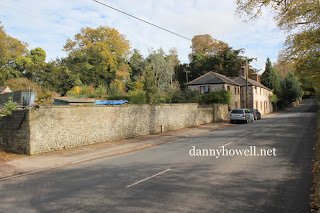
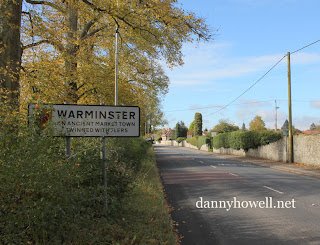
The sign for Warminster is now located close tothe Bishopstrow boundary, nearly opposite Weirs Cottages. 

The lady asks: “Who did away with the Boreham signs and who was responsible for moving the Warminster sign much further east? By whose authority was this done and for what purpose?”

Photographs taken by Danny Howell on Sunday 21st October 2012.

Temple’s Plantation (Primrose Wood), Boreham, In Early Autumn

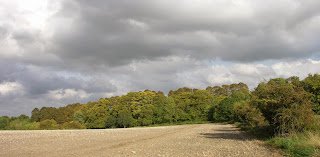
A view looking east across the Camp Ground at Boreham, towards Temple’s Plantation (Primrose Wood) on Friday 16th September 2011, just as the leaves on the beeches and other trees are beginning to change colour. The Camp Ground of Boreeham Farm in the foreground.

Photograph taken by Danny Howell.

Meeting Of Residents Affected By Suggested Development At Home Farm

Thursday 23rd October 1997

Meeting of residents affected by suggested development east of The Dene (Home Farm). WAR/D/5037. The Way Forward.

Venue: Bishopstrow Hall.
Time: 7.30 p.m.
Date: Thursday 23rd October 1997.

To report all of the further developments of the Town Council Meeting (20/10/97), in order to gather information, formulate letter of opposition and plan our further efforts. Please try to attend. We need as many people and ideas as possible in order to fulfil our goals.

If you care about potential problems that this suggested development will incur, re: schools, traffic, drainage, right on your doorstep then please attend.

(If you came to the prelininary meeting on Sunday, please attend on Thursday also).

Meeting – Thursday 23rd October 1997 – Agenda

1) Welcome.

2) Results of Town Council Meeting on Monday 20th October 1997.

3) Speakers:
Rev. Denis Brett – Power of voices in unison. Contact with Councillors.
Danny Howell – Historical Perspective.
Astrid Elstow – Status of planning applications.

4) Appointment of Committee officers (Chairman, Secretary, Committee members).

5) Action to be taken – Letters of objection. Any other suggestions.

6) Date and time of next meeting.

Occupants Of 4 Boreham (Later 4 Bishopstrow Road, Warminster)

A list of occupants of 4 Boreham, Warminster (later re-addressed 4 Bishopstrow Road, Warminster). The list was compiled by Danny Howell in 1991.

1880 Directory. No details listed.

1889 Directory. George Wickham, wheelwright. Boreham.

1895 Directory. George Wickham, wheelwright. Boreham.

1895 Directory. George Stephen Wickham, wheelwright. Boreham.

1899 Directory. George Stephen Wickham, wheelwright. Boreham.

1903 Directory. George Stephen Wickham, wheelwright. Boreham.

1907 Directory. George S. Wickham, wheelwright. Boreham.

1910 Directory. George Stephen Wickham, wheelwright and carpenter. 4 Boreham.

1911 Directory. George S. Wickham, wheelwright. Boreham.

1915 Electoral Roll. 4 Boreham, Stephen Wickham.

1918 Electoral Roll. 4 Boreham. Henry Thomas Zebedee. Florence Kate Zebedee.

1919 Electoral Roll. 4 Boreham. Henry Thomas Zebedee. Florence Kate Zebedee.

1920 Electoral Roll. 4 Boreham, Archibald Yeates.

1921 Electoral Roll. 4 Boreham, Archibald Yeates.

1922 Electoral Roll. 4 Boreham. Ivan William Arthur Jay. Emily Alice Jay.

1923 Electoral Roll. 4 Boreham. Ivan William Arthur Jay. Emily Alice Jay.

1924 Electoral Roll. 4 Boreham. Ivan William Arthur Jay. Emily Alice Jay.

1925 Electoral Roll. 4 Boreham. Ivan William Arthur Jay. Emily Alice Jay. William Arthur George Jay.

1926 Electoral Roll. 4 Boreham. Clara Sylby Penny. 4a Boreham, Ivan William Arthur Jay. Emily Alice Jay. William Arthur George Jay.

1927 Electoral Roll. 4 Boreham. No details listed.

1928 Electoral Roll. 4 Boreham. Clara Sylby Penny.

1929 Electoral Roll. 4 Boreham. Clara Sylby Penny.

1930 Electoral Roll. 4 Boreham. Clara Sylby Penny. Grantham Augusta Smith.

1931 Electoral Roll. 4 Boreham. Clara Sylby Penny.

1932 Electoral Roll. 4 Boreham. Clara Sylby Penny. Dudley Benjamin Pearce.

1933 Directory. 4 Boreham. Mrs Penny. D.B. Pearce (apartment).

1933 Electoral Roll. 4 Boreham. Clara Sylby Penny. Dudley Benjamin Pearce.

1934 Electoral Roll. 4 Boreham. Dudley Benjamin Pearce. Betsey Irene Pearce.

1935 Electoral Roll. 4 Boreham. Dudley Benjamin Pearce. Betsey Irene Pearce.

1937 Electoral Roll. 4 Boreham. Dudley Benjamin Pearce. Betsey Irene Pearce. Robert Hardy. Lilian Jane Hardy.

1938 Electoral Roll. 4 Boreham. Arthur Douglas Roberts. Winifred Marion Roberts.

1938 Directory. 4 Boreham. A.D.L. Roberts.

1939 Electoral Roll. 4 Boreham. Hilda Florence West. Monica Ann West.

1945 Electoral Roll. 4 Boreham. Hilda F. West. Gwendolen B. West. Monica A. West.

1949 Directory. 4 Boreham. Mrs. H.F. West.

1951 Directory. 4 Boreham. Mrs. H.F. West.

1956/57 Directory. 4 Boreham. No details listed.

1960/61 Directory. 4 Boreham. Mrs. H.F. West.

1963/64 Directory. 4 Boreham. Mrs. H.F. West.

1966 Directory. 4 Boreham. Mrs. H.F. West.

1968 Directory. 4 Boreham. No details listed.

1978 Directory. 4 Boreham. Clive W. Larkin.

1981 Directory. 4 Boreham. Clive W. Larkin. Norah B. Cotton. Mark Swann.

1991 Electoral Roll. 4 Bishopstrow Road, Warminster. Richard Larkin.
Boreham Slide Show Raised Funds For The British Heart Foundation

Monday 20th March 1989

Wet and windy weather on Monday 20th March 1989 did not deter local residents from venturing to the meeting room at Warminster Library and Museum to hear local historian Danny Howell give a talk and slideshow. The event was held on behalf of the Warminster branch of the British Heart Foundation and Danny spoke for two hours about Boreham, the ancient hamlet on the eastern side of the town.

The history of Boreham, he said, can be traced to the 13th century. The name was recorded in 1251 as Buriton Delamere; the suffix coming from the Delamere family, who lived at Nunney Castle, near Frome. They owned several pieces of land in Wiltshire and Somerset, including the village of Fisherton Delamere in the Wylye Valley.

The mediaeval village of Boreham was situated in what is now a field, north of the Boreham Road, between Grange Lane and the road to Home Farm. When the field was ploughed in 1977, the late Robert Smith of the County Council’s archaeology department was able to walk it. He discovered thousands of potsherds which are now deposited at the Dewey Museum. The pots are thought to have been made at Crockerton but none date after the 14th century, which suggests that the village of Boreham had expanded outwards before that time.

The house known today as Boreham Manor (200 Boreham Road) is not the original manor house which stood on the same site. When William Temple bought the manor in 1821, he did not like the house and because he had already built a new residence for himself further east (Bishopstrow House in 1817) he had the old manor house demolished. Four cottages were built on the roadside but these were replaced by the present house in Victorian times. The only reminders of the previous house are the old manorial fishponds between the road and the River Wylye.

Mr. Howell’s slides took the audience on an “armchair’ tour of Boreham, looking at many of the houses. He also spoke about Boreham Mill and some of the millers, particularly Edward James Bradfield and Neville Marriage. Mr. Marriage sold the mill to a syndicate in 1929 and it became part of the Marshman’s set-up. One slide showed members of Marshman’s staff on a charabanc outing to Cheddar Caves during the 1930s.

The site of the Warminster Wheel and Wagon Works is now occupied by a modern garage. They were established by Robert Exten in the 1850’s. Mr. Howell read out a letter written in 1862 by Robert Exten’s children. It was discovered hidden in a bottle in the wall of the Exten’s home, Wheel Cottage, during demolition work in 1966. The works were later acquired by Alfred Edwin Down, who was also landlord of the Yew Tree Inn and a sub-postmaster.

Other highlights included the forge at what is now 215 Boreham Road. The Fitz family, who hailed from the Nadder Valley, were blacksmiths there from 1865 onwards. Another smith at Boreham was Thomas Slade who died in 1847. He was known as “the intelligent blacksmith” and could play several musical instruments. He was often appointed bandmaster at local festivities and acted as umpire during disputes among musicians. Thomas Slade made the railings which can still be seen around the grounds of Bishopstrow House.

A vote of thanks was given by Jean Pike. There was no admission charge but a collection at the evening raised £65 for the British Heart Foundation.

Boreham ~ An Isolated Hamlet

Wilfred Middlebrook, in The Changing Face Of Warminster, first written in 1960, updated in 1971, noted:

Boreham hamlet is said to have been the home of Robert le Bore in the time of Edward The Second. He was also a lord of Hill Deverill and founded a chantry there. At one time Boreham was called Burton de la Mere.

Many different families have held Boreham since the days of le Bore including the Osbornes, the Giffords and the Slopers – one of the Slopers, it may be remembered, occupied a house in Ash Walk, sometimes known as Sloper’s Walk.

In 1820 the reputed manor or tithing was sold to William Temple, who left the old mansion, which stood near the river, and built a new house on higher ground.

In olden times, Boreham was an isolated hamlet, like most of the villages of both the upper and the lower Wylye Valley, with a long stretch of open fields separating it from Warminster.