Tuesday 20th May 2025

Should the last remaining gas lamp post (currently at Ash Walk, Warminster) be saved?
Tuesday 20th May 2025
Should the last remaining gas lamp post (currently at Ash Walk, Warminster) be saved?
Thursday 14th January 2016
We recently drew attention to a cheese press made by Carson & Toone of Warminster, for sale on eBay, for a ‘buy it now’ price of £1,200.

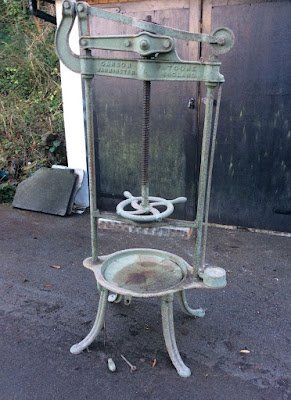
There’s now another Carson & Toone cheese press, a different model, for sale by auction on eBay. It has been listed by a seller with the user name dc3tmp52.

He describes it as: “A vintage iron & cast iron cheese press made by Carson & Toone from Warminster Wiltshire. Carson & Toone manufactured goods between 1860 & 1903.”
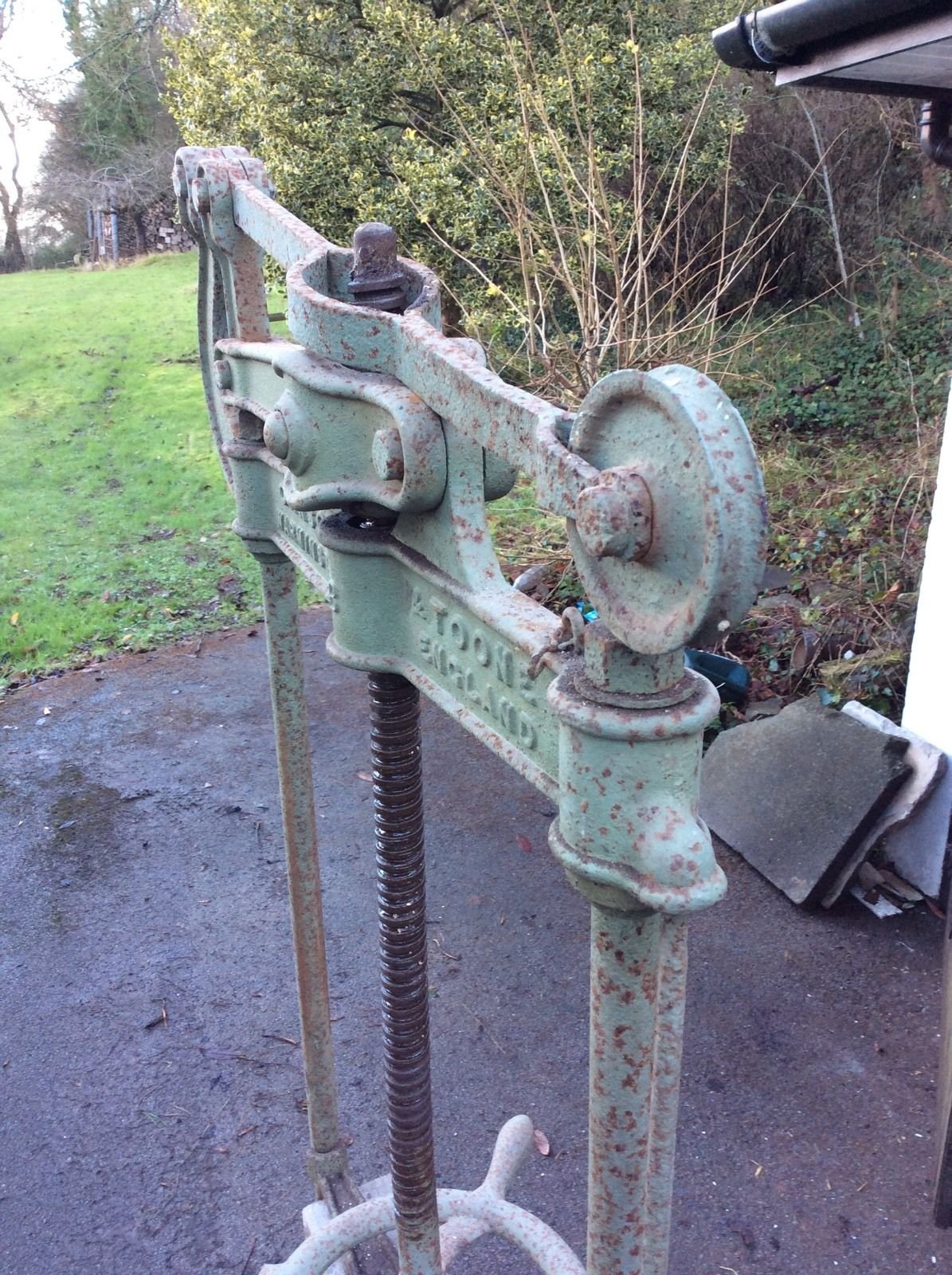
The seller adds: “As far as I know only two bits are missing 1) the chain which connects the weight to the overhead lever & 2) one of the cast iron handles which is used to put initial pressure on the cheese. One cast iron handle has broken but could be welded back on.”
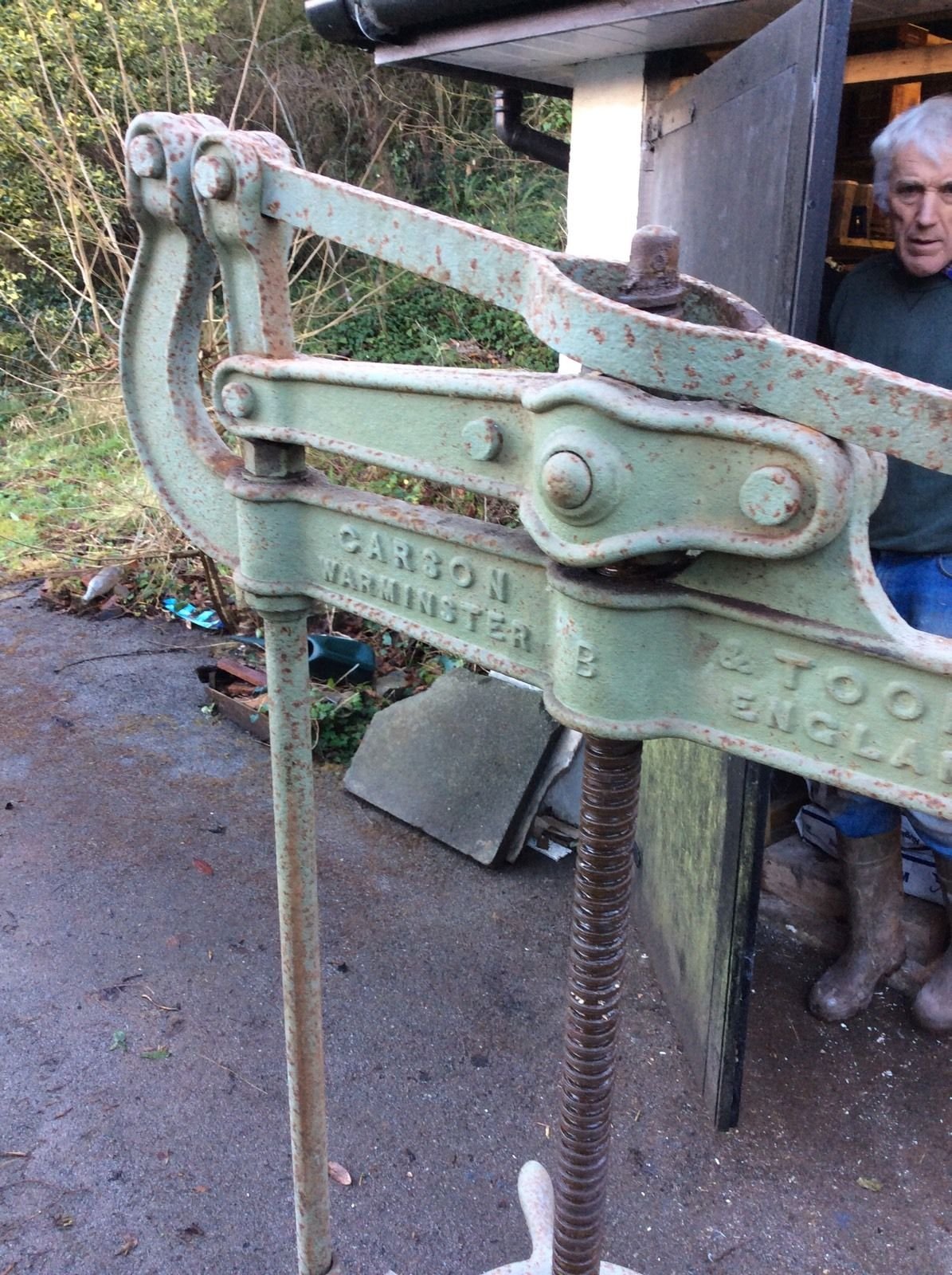
“The threaded rod, which operates freely to put initial pressure on the cheese has a slight bow in it, this does not affect the operation. The rod which connects to one end of the missing chain needs welding to the weight. There is some rusting to the press.”
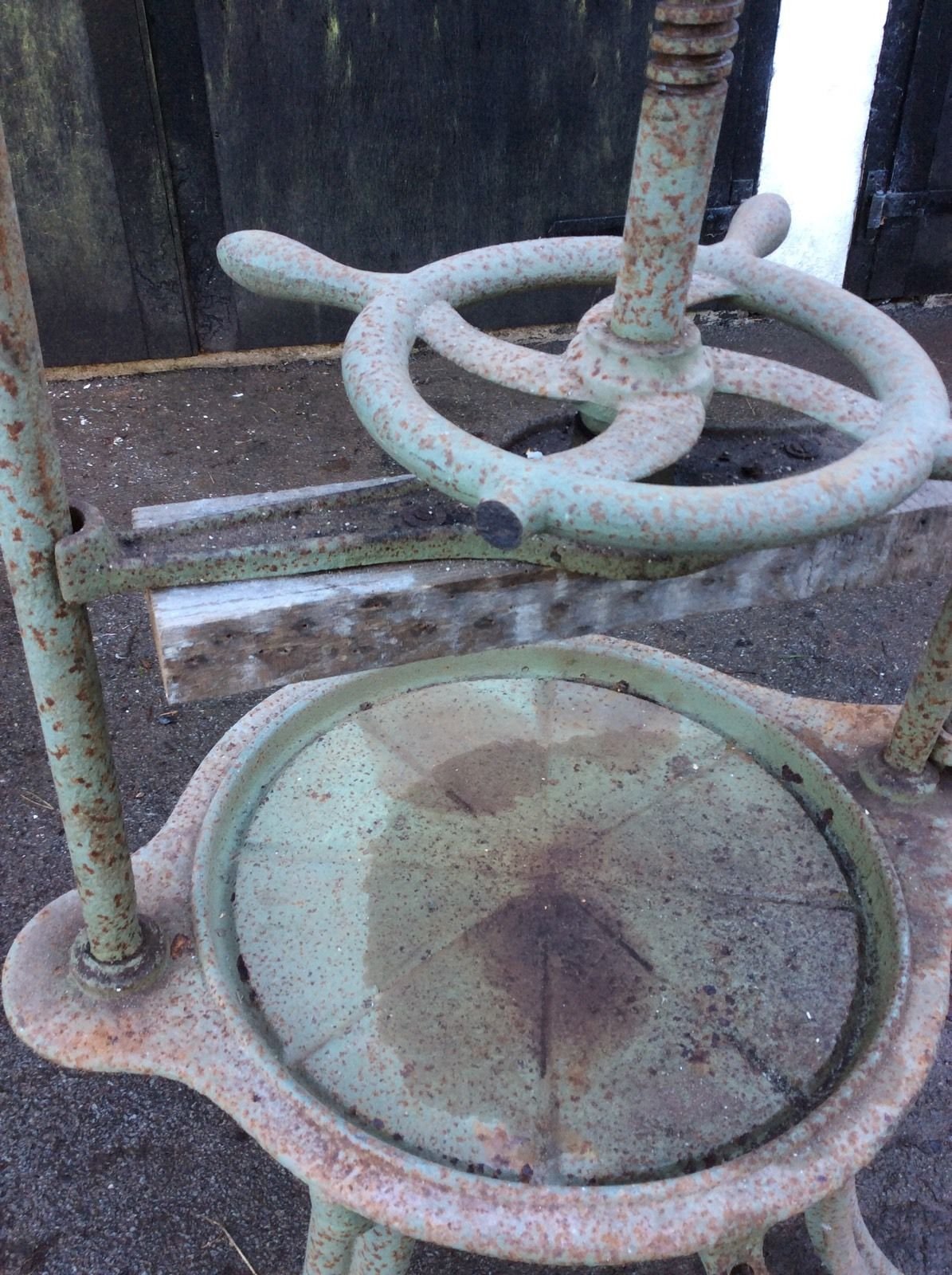
There has already been a starting price bid of £50. Bidding closes at 7.32 p.m. tonight, Thursday 14th January 2016.
Payment within 72 hours of auction ending. The auction to run full period.
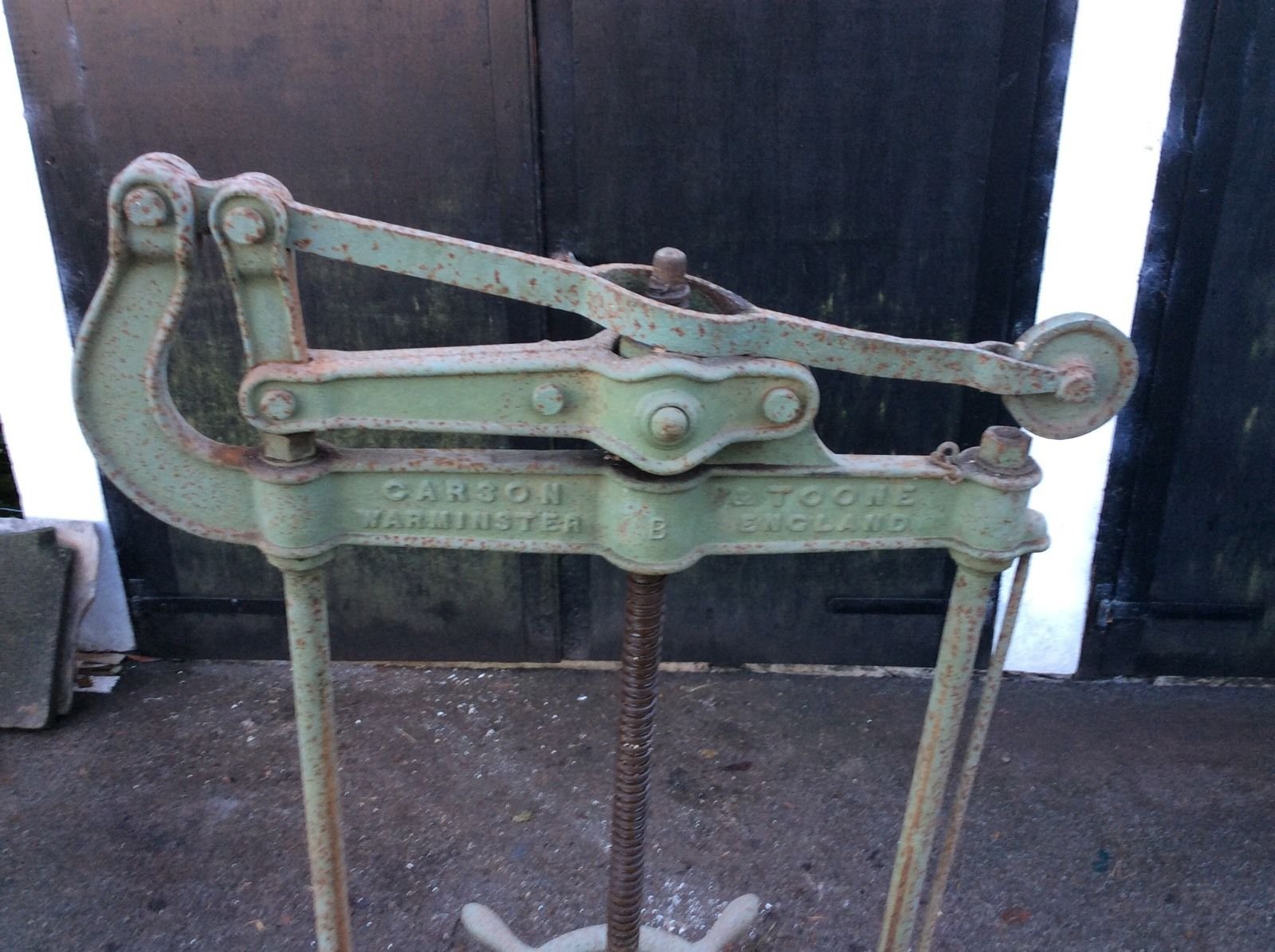
The cheese press is in Winscombe, North Somerset. The buyer will have to collect it in person or arrange collection within seven days of the auction ending unless an alternative arrangement has been agreed before the end of the auction.
Â
Friday 1st January 2016
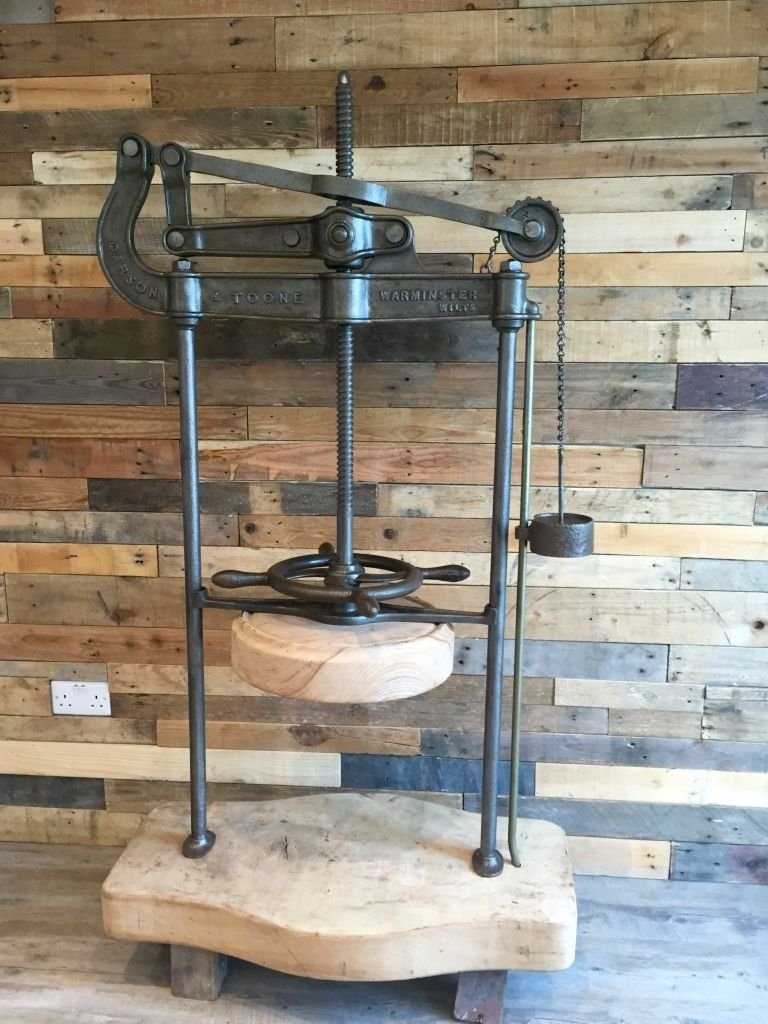
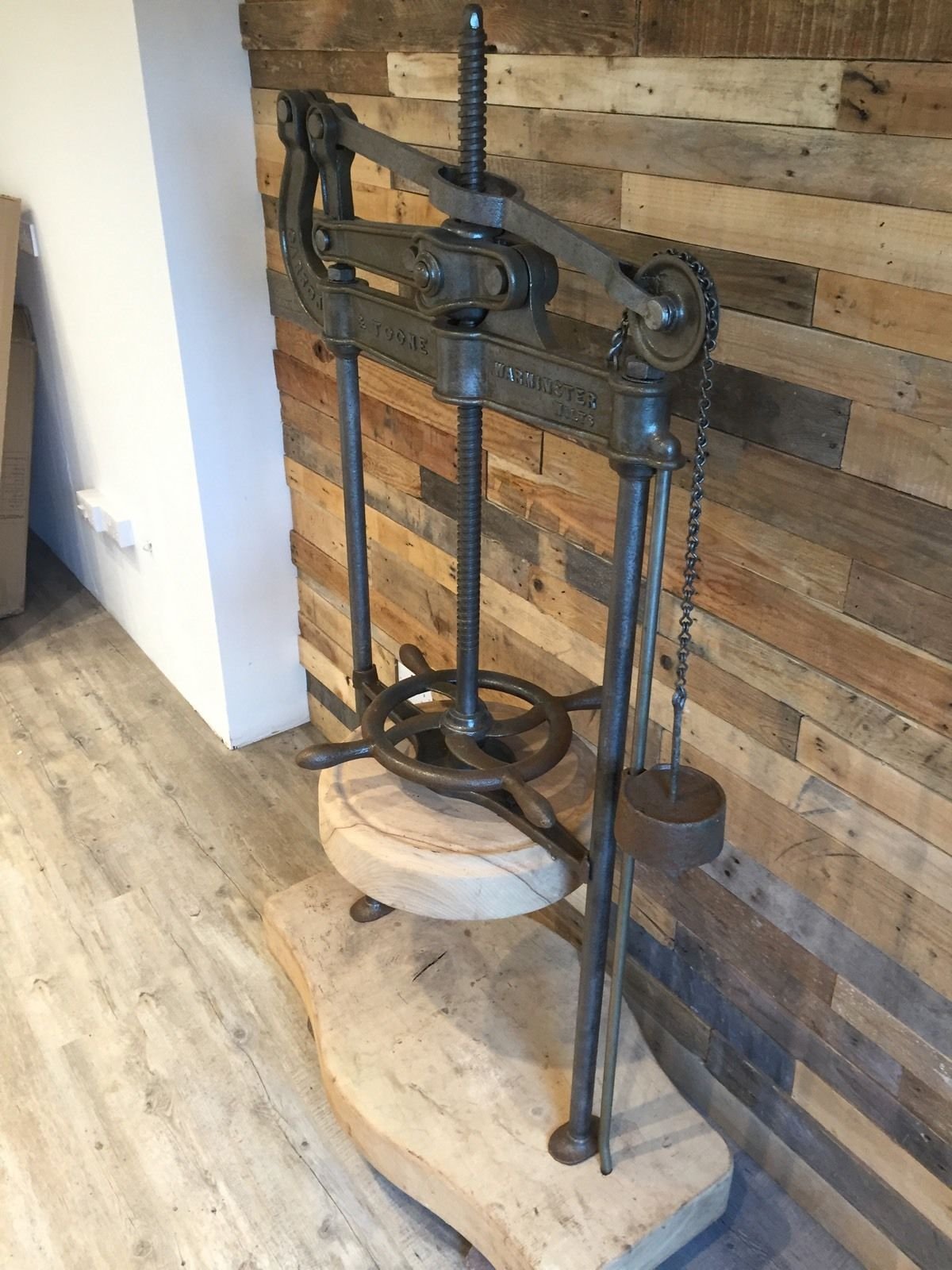
A cheese press made by Carson & Toone at the Wiltshire Foundry, Carson’s Yard, Warminster, is for sale on eBay, at the “buy it now” price of £1,200. There is the opportunity to make an offer.
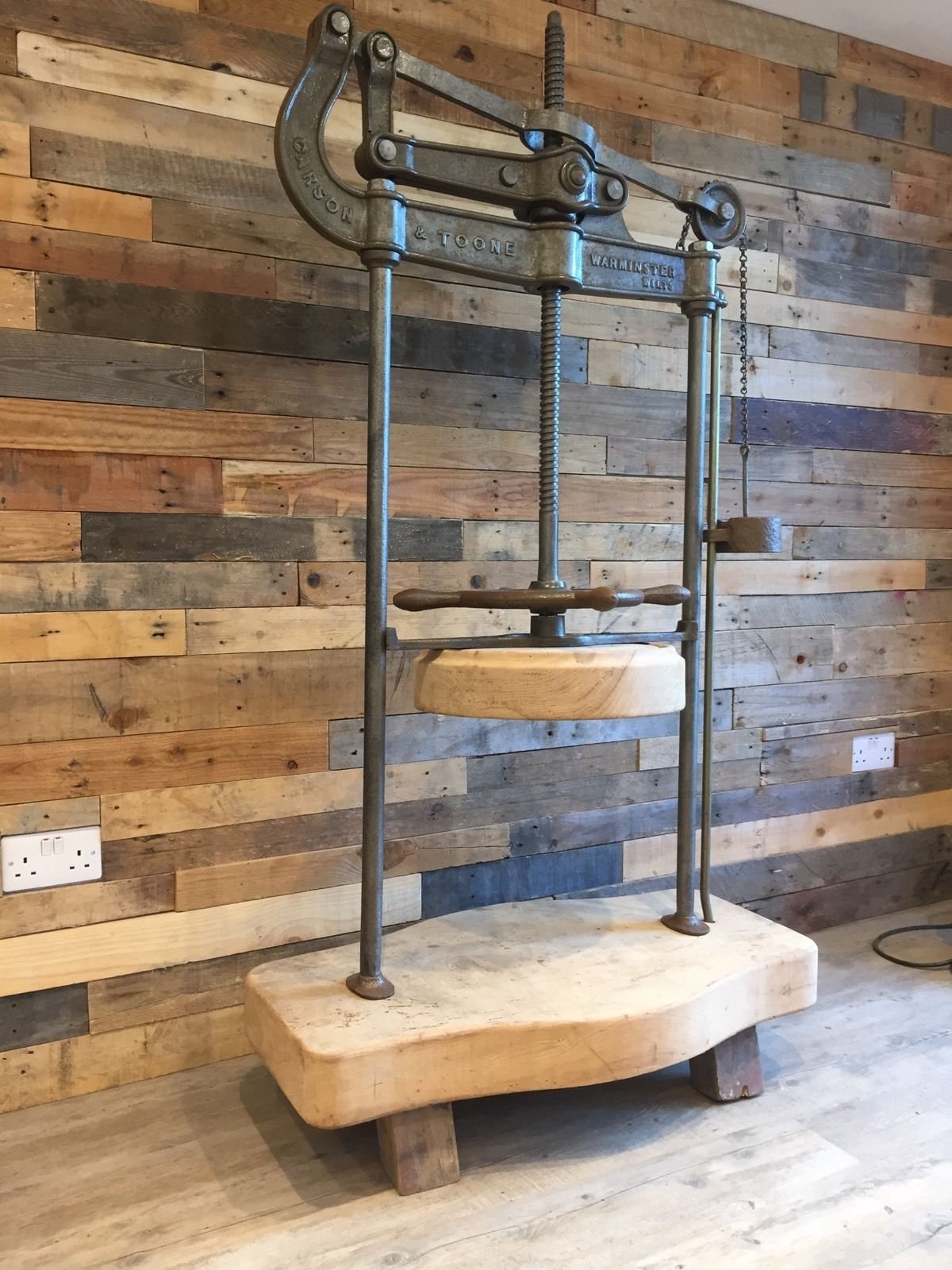
The cheese press is located in Salcombe, Devon. Delivery is not offered to the purchaser, so “collection in person” will be required.
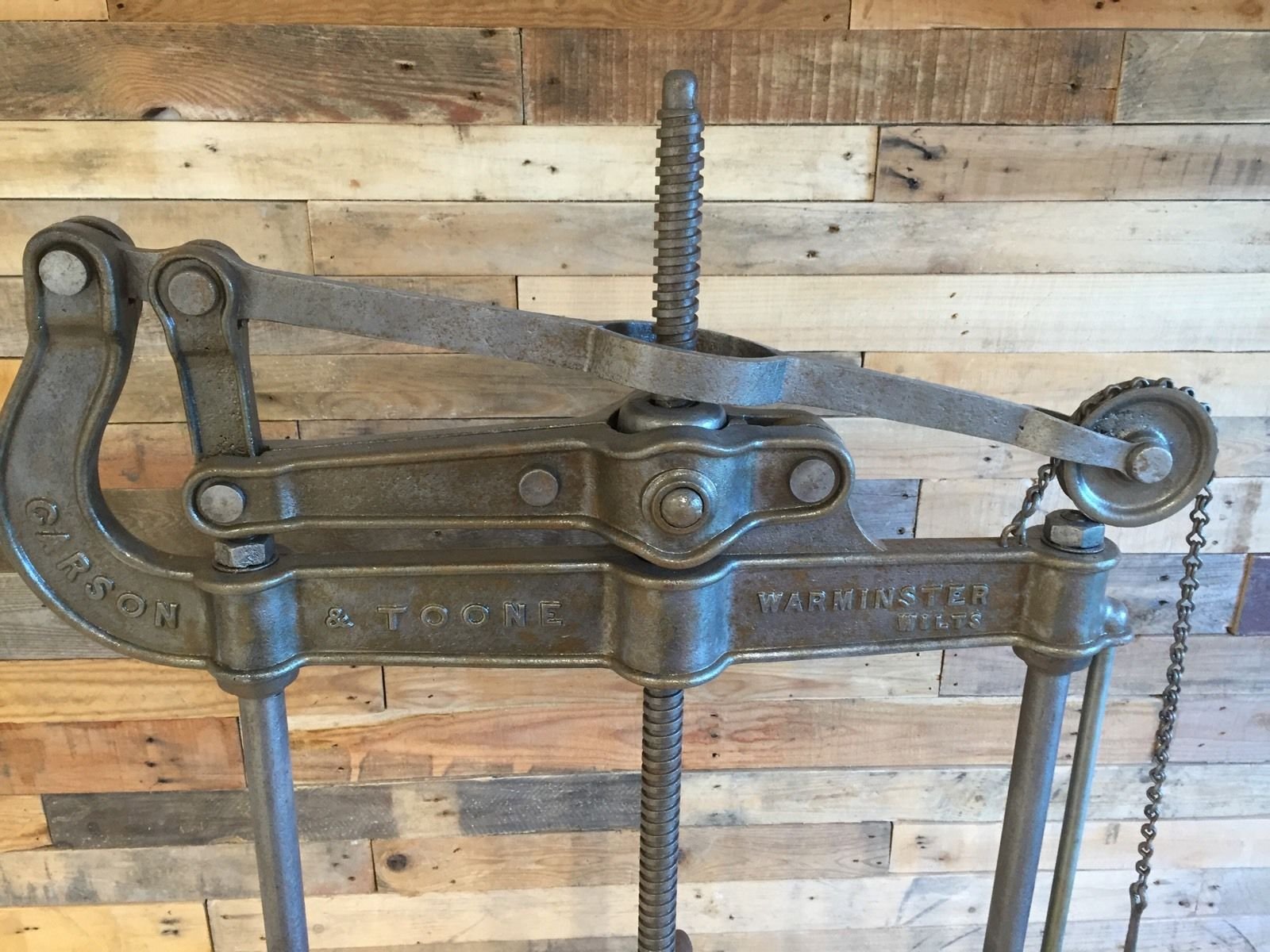
 The seller, with the name Siderdfas, describes the cheese press as follows: “ANTIQUE CHEESE PRESS CARSON & TOONE WARMINSTER WILTS A beautiful vintage and functional Cheese Press will make a stunning feature.  Unfortunately I do not know much about this as its been given to me. As you can see its been refurbished and looks lovely. Please call me if you have any questions: 07977553130.”
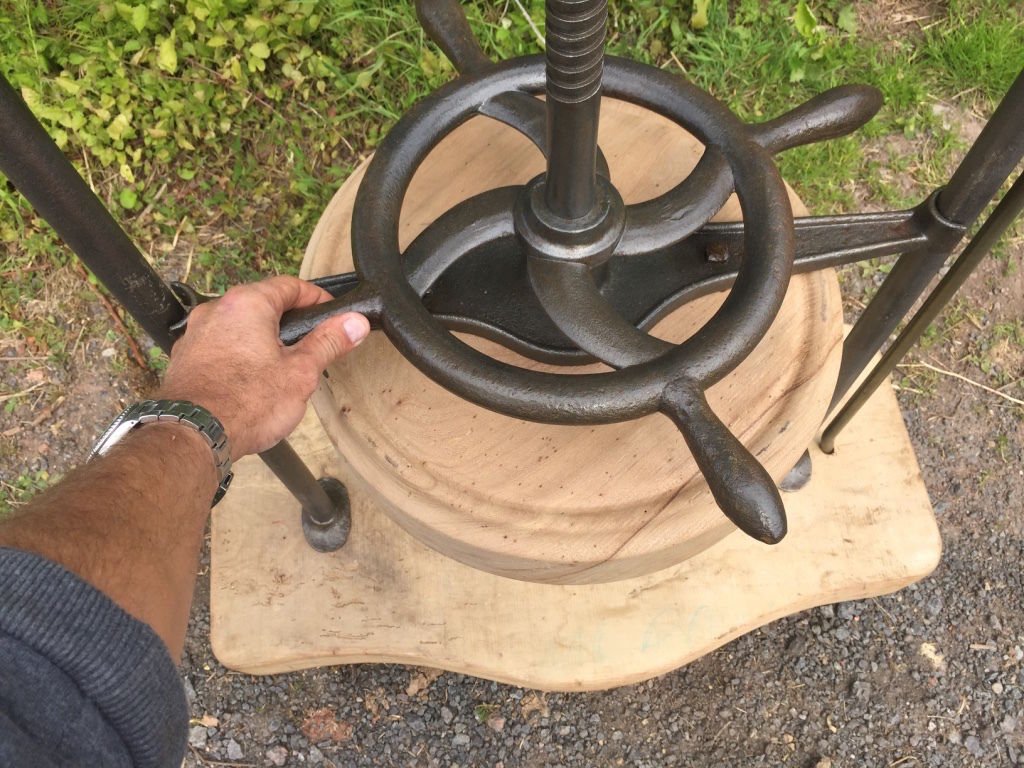
The cheese press is listed on eBay until 8.00 p.m. on Saturday 30th January 2016.
Thursday 8th January 2015
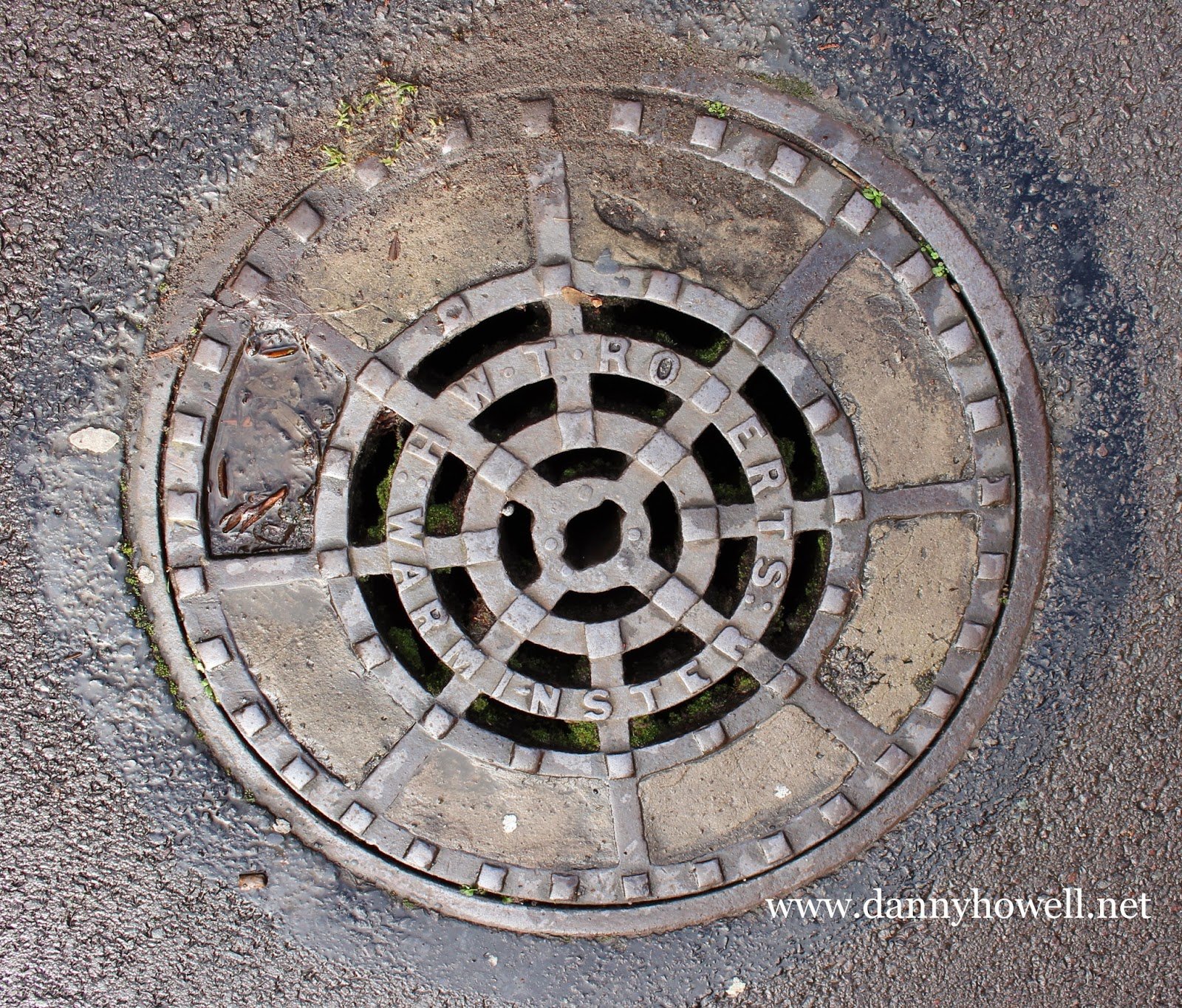
Drain cover at North Row, Warminster. It was made by H.W.T. Roberts at the Boreham Road Foundry, Warminster, circa 1900 – 1902. Photograph taken by Danny Howell on Thursday 8th January 2015.
Tuesday 16th September 2014

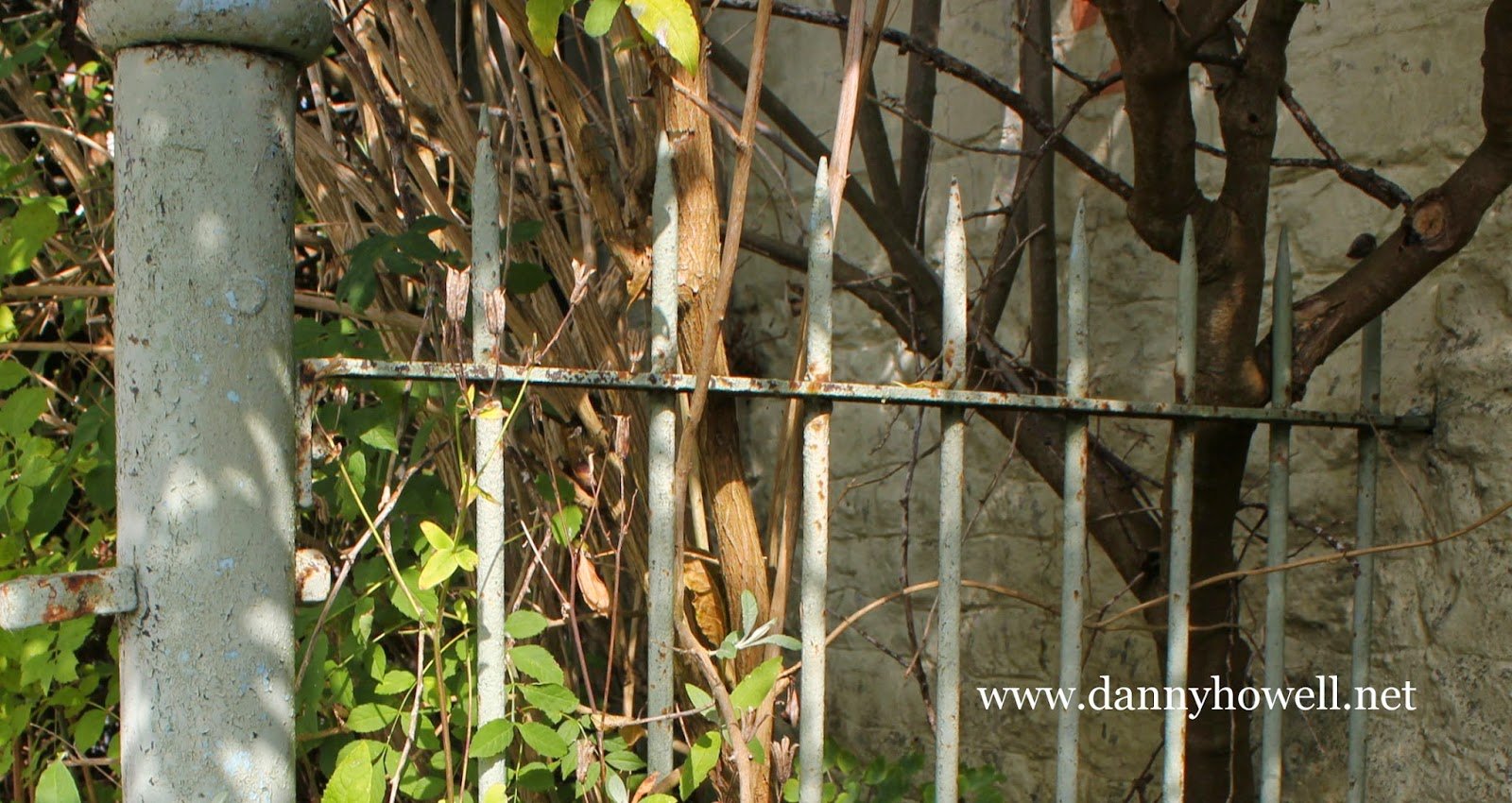
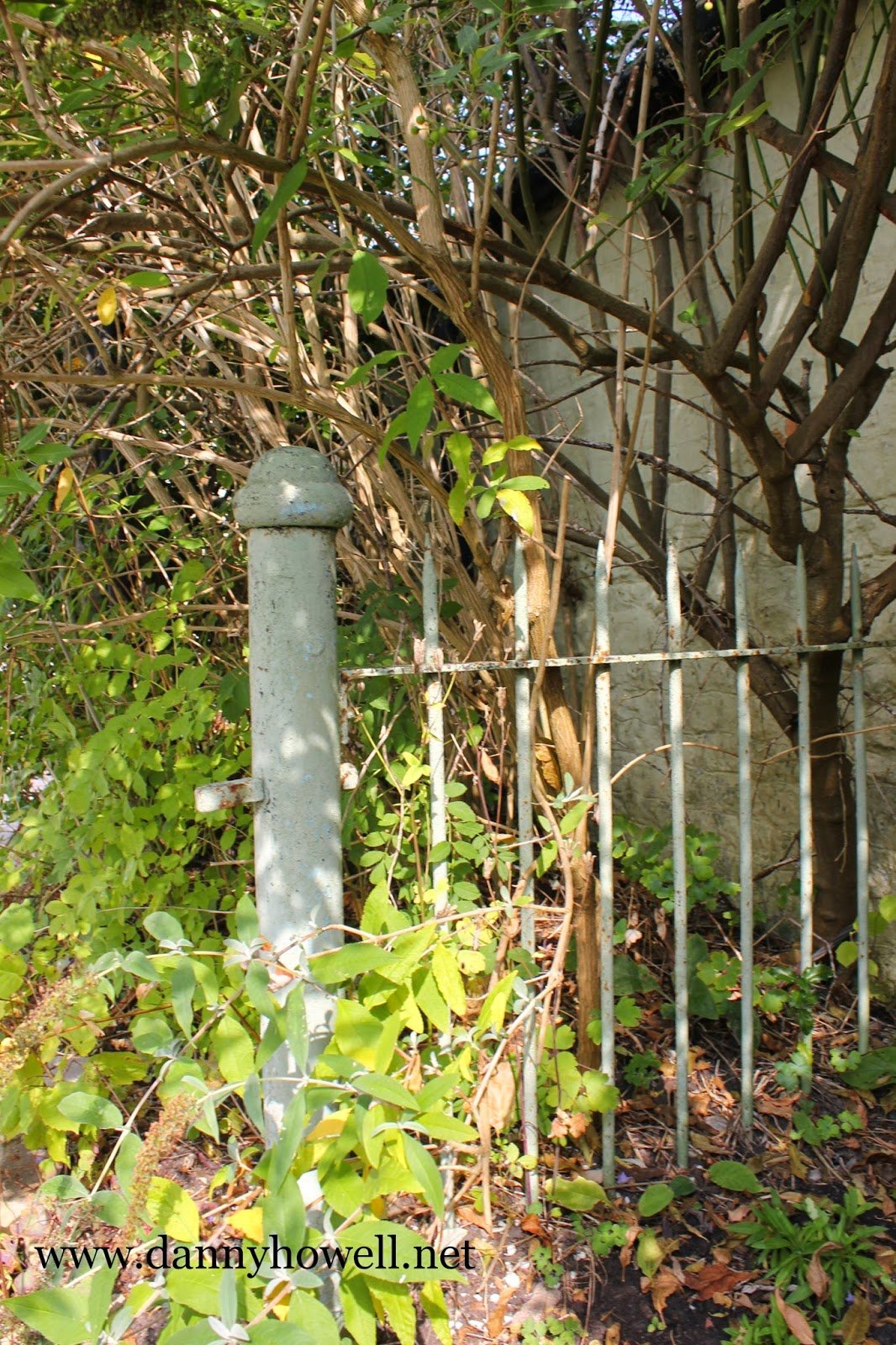
A cast iron post with a section of pointed railings at Smallbrook Lane, Warminster.
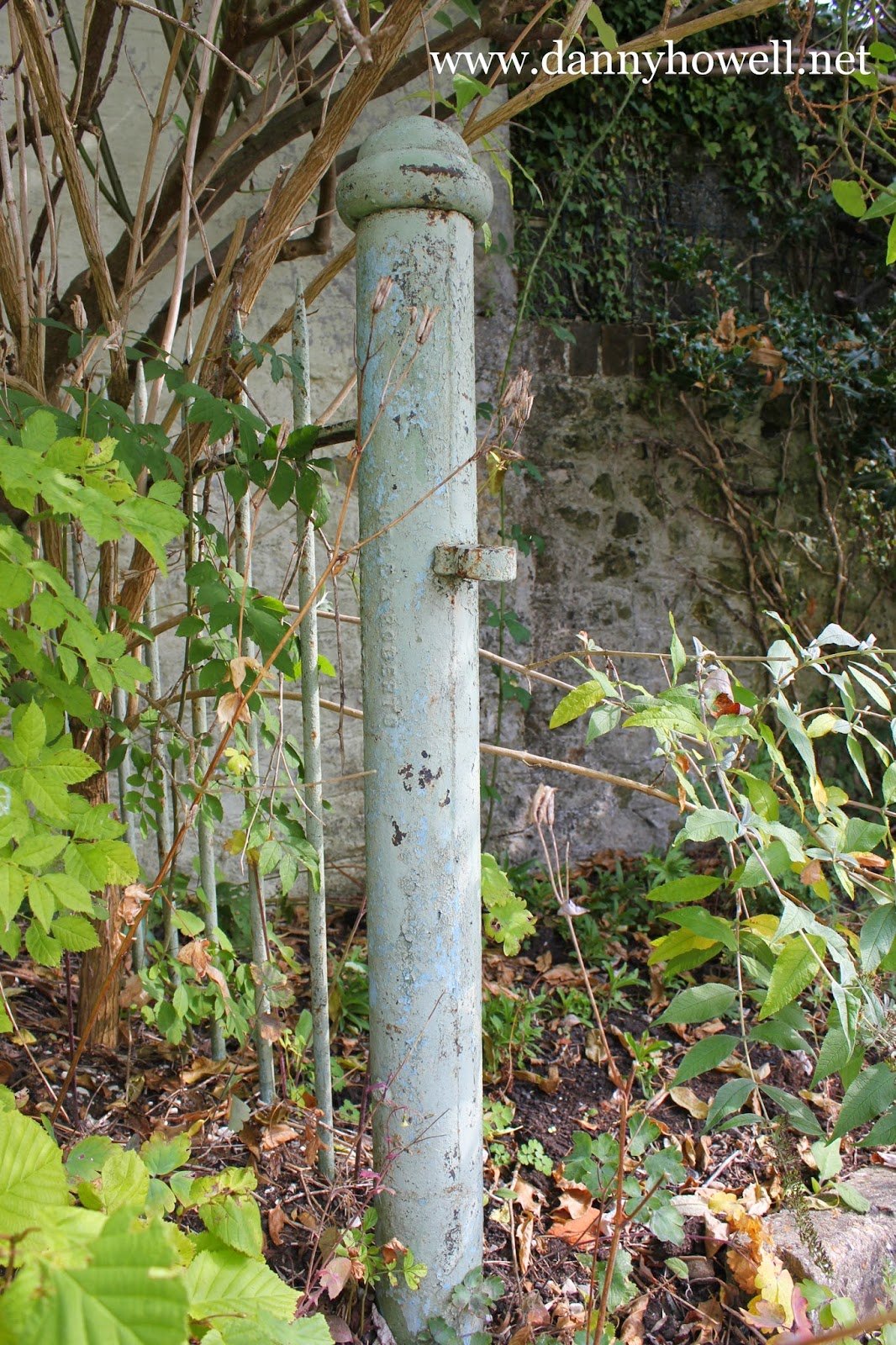
It stands next to the gateway at the rear entrance to 170 Boreham Road, Warminster.
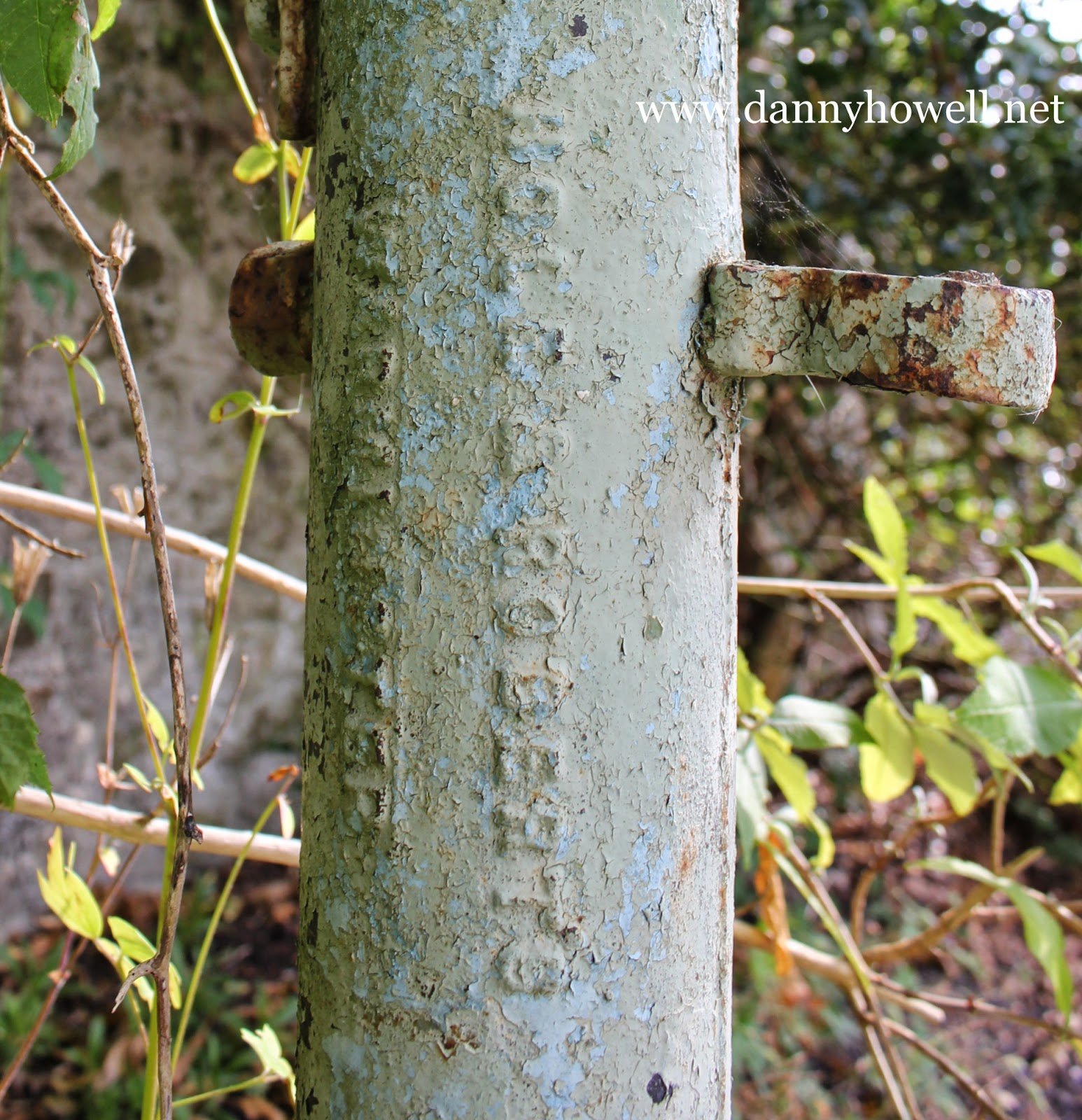
‘Hole & Roberts Warminster’ is inscribed on the post.
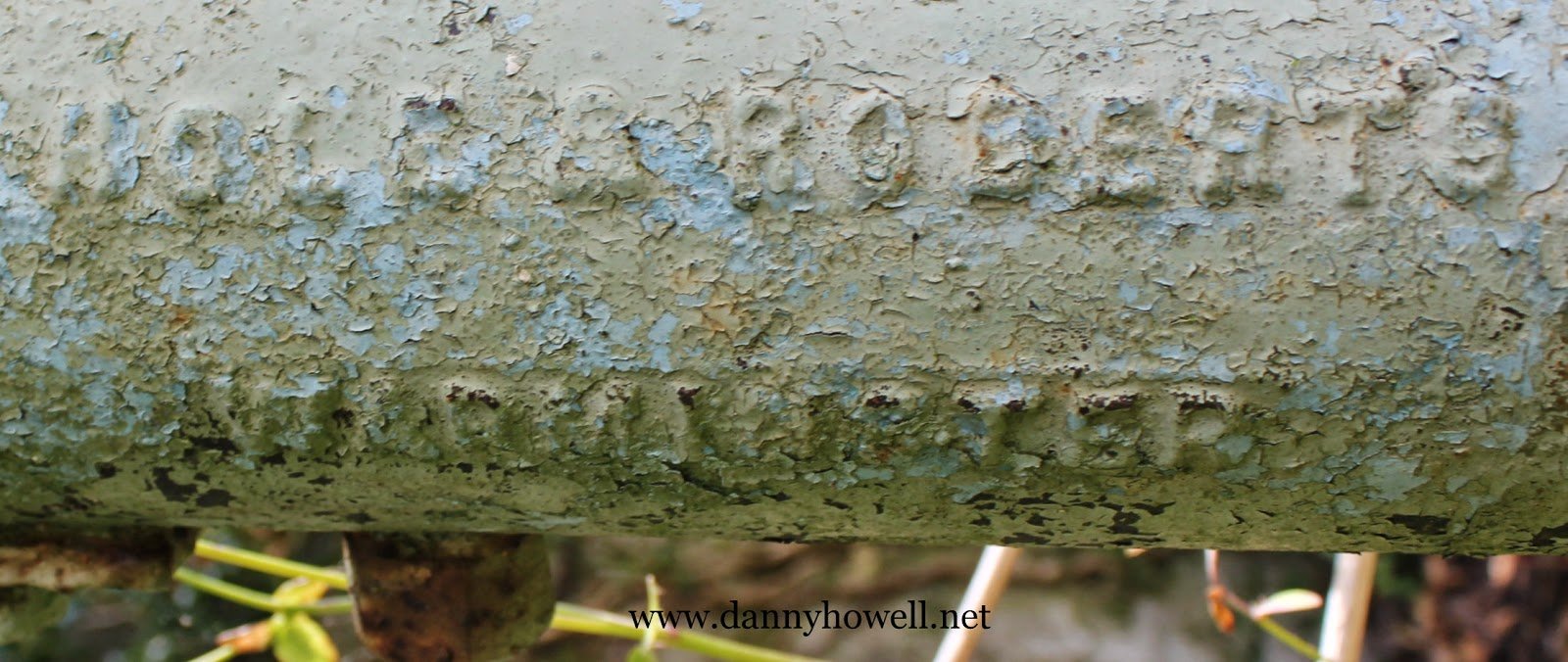
The image rotated 90 degrees, showing the ‘Hole & Roberts, Warminster’ inscription.
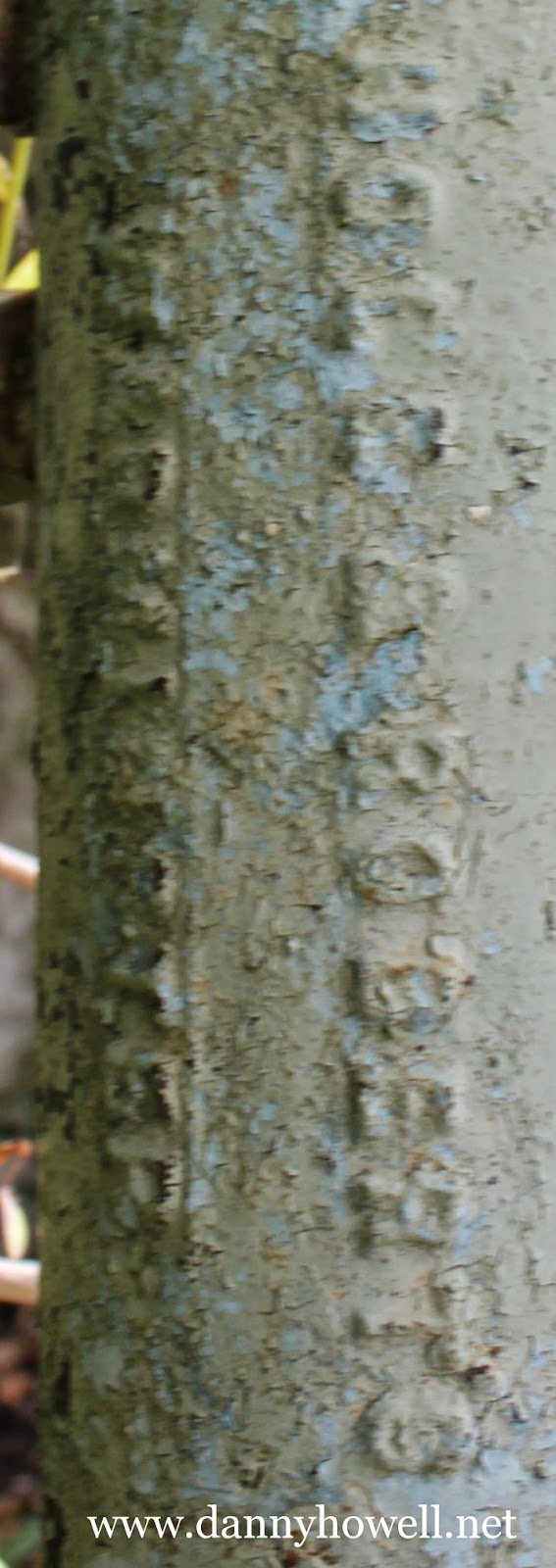
H.J.G. Hole and Herbert Roberts were the proprietors of the Boreham Road Foundry, Warminster, from 1903 to 1906.
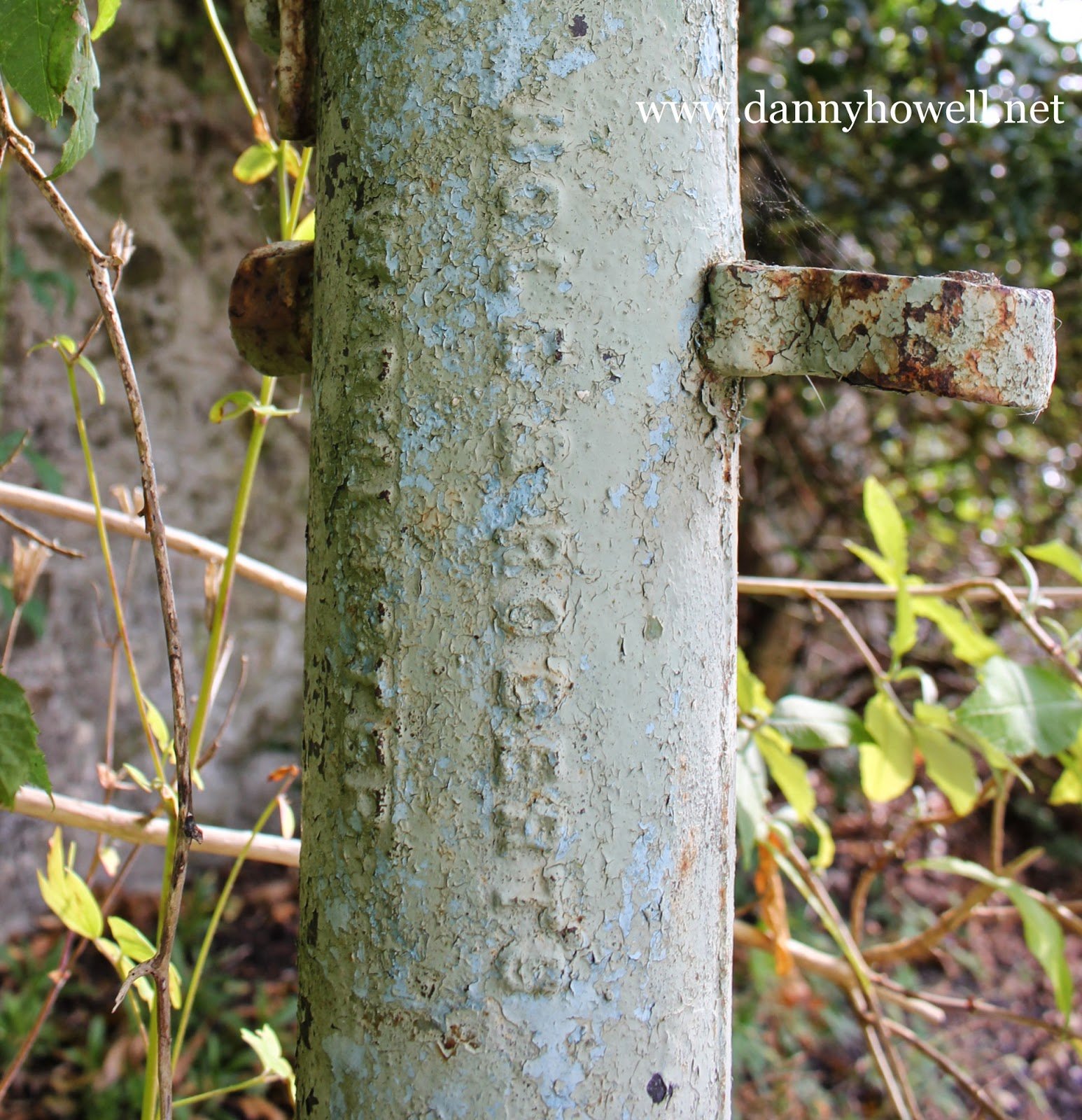
 Photographs taken by Danny Howell on Tuesday 16th September 2014.

A cast iron manhole-cover in the pavement at St. George’s Close, Warminster, photographed by Danny Howell on Saturday 2nd February 2013.
Thursday 12th July 2012
Cheese Presses, Including Carson & Toone models, seen recently.
Bob Burgess, of Heytesbury, has kindly informed us that he has recently seen some cheese presses at Frome Reclamation, at Station Approach, in Frome. He says “At least three are made by Carson and Toone, plus one by a Devizes maker. One is assembled, the others are in pieces. Complete with all weights, etc – it looks like they have just come out of a farm cheese room.”
The name Carson and Toone is synonymous with cheese presses and agricultural implements. Their foundry was at Carson’s Yard, off East Street, Warminster from the mid 1800s to the end of the 19th century. They manufactured many cheese presses during the 1870s, many of which were exported all around the world.
Our thanks to Bob for letting us know three presses are now at Frome Reclamation awaiting new owners.
The Wiltshire Times And News, Friday 24 March 1989, reported:
Warminster’s resident historian Danny Howell travelled to Bradford on Avon to talk to members of the West Wiltshire Industrial Archaeology Society. At their request, Mr. Howell, with the help of slides from his personal collection spoke about the rise and fall of the Wiltshire Foundry, which was situated at Carson’s Yard, off East Street, Warminster.
The Foundry was owned by William Ewens in the 1790s but was acquired by Hugh Carson and Henry Miller in 1816. Trading as Carson and Miller they produced agricultural implements to export to New Zealand, France and Germany.
Another part of their output was the manufacture in 1840 of cast iron mileposts, and several of these still survive in the Warminster area. Good examples can be seen at Parsonage Farm, Lord’s Hill and on Sutton Veny Common.
Something else made by Carson and Miller are the gates and railings at the Nonconformist Cemetery, Boreham Road (1828), and they were also responsible for the supply of bedsteads, cooking equipment and fire grates to the Warminster Union Workhouse at Sambourne (1836).
Hugh Carson’s son and son-in-law, William Hugh Carson and John Vidler Toone, took the foundry to new heights in the 1860s and 70s. Ten different sizes of cheese presses featured in their range of farm machinery which also included chaff cutters, horse hoes and troughs. These items carried the name of Warminster all over the globe.
Mr. Howell showed slides of several Carson and Toone implements that had come to light in the past year. Among these were a sheep trough found on a market stall at Devizes; a chaff cutter found in an old bakery at Silver Street, Warminster; and a one-row horse hoe discovered at Starr’s Farm, Crockerton.
The Toones sold the foundry in 1903 and emigrated to Maryfield, Saskatchewan, Canada, where they took up a new and equally successful career as wheat farmers.
Mr. Howell was contacted by the Toones’ descendants last year; they have since sent him from Canada several photographs and extra information. One item that Mr. Howell was delighted to receive was a copy of the sale catalogue of the Toone’s house, Inglebury, which was situated at East Street, behind the Old Post Office. Dated 1903, it lists the entire contents of the house and shows how the Toones furnished their home. Inglebury, which was later used as a shop by George Bush and Co., was demolished in 1968 but the site is still awaiting redevelopment today.
A vote of thanks was provided by John Sawtell, and Danny Howell then answered questions from the audience. Some were pleased to say that they had Carson and Toone artefacts, including a lamb-creep and a pig trough, in their own private collections.
Next month the West Wilts Industrial Archaeology Society will visit the Tithe Barn in Bradford on Avon to see the Croker collection, which includes a Carson and Toone cheese press!
From Warminster And District Archive magazine, No.2, Spring 1989:
In November 1987 Archive Editor Danny Howell published in book form his researches into the Wiltshire Foundry, which was situated during the 19th century at Carson’s Yard, on the south side of East Street, Warminster. The Foundry, which had been in the hands of Hugh Carson since 1816, passed into the sole-ownership of his son-in-law John Vidler Toone in 1880. The Toone family continued to run the Wiltshire Foundry until January 1903, having emigrated to Canada the previous autumn to take up wheat farming. The change was prompted by William Carson Toone’s health.
At the time of the book’s publication, Danny Howell knew little of how the Toones fared with their new life in Canada. He knew they took up residence at Maryfield, Saskatchewan, but was not sure whether any of descendants were still alive. Needless to say, news of the book soon spread to Canada and Danny received letters, photographs and documents with regard the Toone family from William Carson Toone’s descendants. He also received information from a Maryfield family who remembered the circumstances that the Toones experienced on first arriving on the prairies. A lady living in Basingstoke, who was a cousin of the Toones, also responded.
So much so, that Mr. Howell could probably write a sequel to his book. A follow-up about the Toones does not seem imminent, so Archive now features, by permission, some of the post-publication information received. The following articles are, therefore, intended as a postscript to the book (which should ideally be read first).
Mrs Freda Page, nee Smith, of Box 354, Maryfield, Saskatchewan, SOG 3KO, wrote to say that her brother, William Smith, and his wife, live in Maryfield; and that the Smiths and the Toones were neighbours for many years.
William Smith, who is now 88 years old, told Mrs. Page: “I remember Mrs. W.C. Toone, her son W.H.C. Toone, and Ellen Toone. They were left by the man who had brought them from Elkhorn, Manitoba, at an old deserted house, if you could call it a house. This was 22 miles south-west of Elkhorn, into Saskatchewan. One day my father was combining by this old house and saw that people were living there. He called in to see who they were, as there were very few people in this area then. The house was just a shelter overhead, no doors or windows in place, just openings. My father invited them to come home with him and stay at our place till they could get something better.â€
“My dad and mother’s place was very small, a kitchen and living room in one, and a bedroom with a curtain across the center to make two rooms. It was very crowded with five adults and two children; anyway they made do as those first settlers did. Toones stayed until fall or October. My dad sent Bill (William Toone) out to harrow, when he finished he asked what he could do, so my father sent him out to harrow it over again.â€
“The Toones finally found a house that two bachelors used to have, they fixed this up and lived there all the winter. Bill made a sleigh that he pulled by hand and used it to haul willows. The willows grew around the sloughs. He cut them by hand and used them for wood to help keep them warm. Next Spring the Toones built a small house, and a few years later they built a bigger and better house. In the meantime they had broken up some land and were growing a small crop. Conditions today are a far cry from 85 years ago (1903).â€
Mrs. Page and her husband, George, took some photographs of the Toone cemetery in Maryfield, noting that Mrs. W.C. Toone is not buried there. Nor was Mrs. W.H.C. Toone. Mr. Reg Toone, they say, was buried there but they could find no marker. Mr. and Mrs. Page also sent Danny Howell some photographs of the Toones that Mr. Page’s parents, Mr. and Mrs. M. Page, had. Some of these photographs are reproduced here, accompanying this article.
Reginald John Toone’s second wife, Mrs. Lily Holland, of 1006-575 St. Anne’s Road, Winnipeg, Manitoba, corresponded with Danny Howell in December 1987. She wrote “I am enclosing pages from the Maryfield History Book, that’s in Saskatchewan where the Toones and the Holland family lived. We were friends for years. Reg’s wife died in 1963 and my husband died in 1966. Reg was living on the farm, a quarter section of land, at the end of the road. No one passed by and the only sound of civilisation was the trains which passed by about a quarter of a mile away. In later years Reg was not able to work the farm, so he paid a neighbor to prepare the land for crops, plant and harvest, haul the grain to elevator for sale, then plow ready for next year’s crop. You will realise by the time this was done there was very little left for the owner. Two and a half years after we were married we sold the farm to the neighbor.â€
“In the winter time Reg was with one of his family – his son Jack one winter and daughter Olive Morton the next. In gthe meantime I lived in Kelowna, British Columbia, but drove back to the prairies to my cottage at Carlyle Lake, Saskatchewan, which is 45miles from Maryfield and 1,000 miles from Kelowna. While visiting Maryfield I heard that Reg wasn’t too well. I visited him during the summer and we talked of marriage but hesitated.â€
“My daughter lived in Winnipeg and I visited there for Christmas. Reg and I met again and we decided to tell the family. All agreed that it was a good idea. To make a long story short we were married on 4th January 1973 and left for Kelowna by train that night. Reg loved Kelowna with its mild winter, better if any snow, beautiful summer, all kinds of fruit, and on the edge of a 70-mile lake.â€
“We made one trip by car back to the cottage, the farm, and Winnipeg, but the travelling was too much for Reg. He was 85 years old and using a cane. We had two and a half very happy years. He was a very fine man. He played the organ and sang in the choir in his earlier years. Reg and I had much in common. Then he had a slight stroke and some memory loss which gradually got worse, and he spent the last six months in intensive care in hospital. I was only five minutes away, so was with him every day, and for the last week all the time. He was in a coma but still would tighten his fingers on my hand when I tried to take it away. He died on 27th May 1975. Cremation followed and the service was at Maryfield on the 15th June.â€
“When the railway went through it cut into Reg’s land – so they allowed him another few acres. This is where the Toone family cemetery is. There wasn’t a cemetery there when the Toone’s first daughter died. The cemetery is a huge oval surrounded by huge evergreens. William Toone St., son William, Helen their baby daughter, Emma, and Reg are all buried there. It is a lovely peaceful spot.â€
“I visited Stratford when we were in England in 1961. I have a picture of the house in Stratford where Emma (Reg Toone’s first wife) lived. We didn’t get to Warminster. We got a car and spent six months from John O’Groats to Land’s End, Ireland, Wales, and a tour of Europe. We had intended to spend the year but my husband, shall I say, got homesick!â€
The following information about the Toone family is taken from the Maryfield History Book, as sent to Danny Howell by Lily Holland:
TOONE, William Hugh Carson and Merton Ann (Pilbeam). William Hugh Carson Toone, who was born February 19, 1880, in Warminster, England, the son of William Carson and Ellen Louise Toone, came to Canada in the fall of 1902 with his mother plus their belongings. The other members of the family, William Carson Toone, Reginald and Ellen came later.
They rode from Elkhorn with the mailman to their homesteads, E 2-10-30. It was in October. There was no house so they were taken farther down the road to an old shack which had no windows and only an opening for a door, where they were left with their belongings. The weather was beautiful, Canada was lovely and they thought they could live in this place until they built something better on the homestead.
They had been there only a few days when Mr. Fred Smith, who was returning from Elkhorn with his winter supplies, saw smoke coming from the chimney and called to see who was there. He took them to his home where they stayed until another deserted shack in the district could be made liveable for them. They remained there until a dwelling could be erected on NE 2-10-30, and they moved to the homestead in the spring of 1903.
Hugh Toone and Merton Ann (Nancy) Pilbeam were married in February, 1915, and lived at Inglebury Farm, as the homestead was named, until his death in September, 1939. They had one daughter, Jean, whom they adopted in 1927.
Mr. and Mrs. Toone were members of the United Church and he was an Elder for many years. In the early years Mr. Toone took services at Hillcrest School and from time to time at Heron School. Mrs. Toone, who taught school prior to their marriage, served on the Hillcrest School Board for a number of years.
In the fall of 1940 Mrs. Toone rented the farm to Ian Will and moved to Winnipeg. Prior to going to Kenora to live she taught in the Indian Residential School in Elkhorn. Mrs. Toone died at Kenora in December, 1960, at the age of 76 years. The farm was sold to Roy and Marie Burman and is presently owned by Henry Klassen.
Jean and George Robinson. Jean (Hart) Toone, the chosen daughter of Mr. and Mrs. Toone was born in Northern Ireland. She attended Hillcrest School and lived on the farm until she moved to Winnipeg with her mother in 1940.
Jean was married in 1942 to George William Robinson, then serving in the RCAF. In 1945 they moved to Kenora where they lived for 25 years before returning to Winnipeg. George worked for the CP Rail.
Jean and George have two children, William, a carman welder with CP Rail, and Heather, who is a Major in the Canadian Forces, stationed at the CF Base in Camp Borden.
TOONE, John Reginald and Emma (Acock) – submitted by Olive (Toone) Morton. Reginald, the second son of William Carson and Ellen Louise Toone, was born June 6, 1884, at Warminster, Wiltshire, England. He attended Lord Weymouth Grammar School and won several scholastic awards. His father owned an iron foundry in Warminster and he worked there for a short time before coming to Canada.
Mother, Emma Acock, was born at Stratford-on-Avon, England, on July 20, 1876. She was a saleslady in a dry goods shop after completing school and a course in elocution. Her mother died when she was 12 years old, and she lived at home taking care of her father until he died, before coming to Canada to marry Dad in 1906.
Mother and Dad were married at the home of Dad’s sister, Ellen MacPherson and her husband Stuart in Souris, on October 17, 1906, shortly after Mother’s arrival in Canada. Dad had come from England previously with his father and sister to join his mother and brother.
While living with his parents and brother, William Hugh, Dad built a small house in the same yard at Inglebury Farm; my parents began their marriage there until Dad built a larger home on his newly acquired section, NW 2-10-30 of the Toone home section which they titled West View Farm.
Their first child, Helen Mabel, died in 1910 at the age of seven months. When the CPR came through the area, about an acre of the farm was separated from the farm by the railroad, and the company granted Dad corresponding land on the north side of the railroad tracks. There being no cemetery in the area when my sister died, Dad received government permission to use an acre as a family cemetery, and Helen Mabel was buried there. It remains in the Toone name and the tall evergreens surrounding it are a real landmark today. My paternal grandfather, William Carson Toone, my parents, and Uncle Will Toone are also buried there. My maternal grandparents died some years before Mother came to Canada, and Dad’s mother, Ellen Louise Toone, died in Brandon and was buried there shortly after I (Olive) was born.
Grandpa, William Carson Toone, moved into Maryfield some years later. He had an insurance business and was the village secretary for several years. He enjoyed spending time visiting with the families at West View and Inglebury Farms several times each year, and was indeed, a welcome guest, and a very special Grandpa to Jack and me.
The coming of the railroad to the community brought benefits to the early settlers and the sounds of the trains’ whistles during the long, cold winter days must have assuaged many a lonely night for them. Prairie fires in the dry summer seasons were often a dreaded threat, and some of these were started by stray coals and sparks from the coal-fired train engines. However, with true community spirit, everyone banded together to protect homes, crops, etc., from the ravages of these fires.
With the arrival of more settlers each year more social gatherings were enjoyed, and when Hillcrest School was built it became a community centre as well as a place of learning for all residents.
Dad’s love of trees was evident, not only at West View but also in the rows of trees surrounding the school yard which he was instrumental in planting and nurturing.
Both of my parents were musical, and they shared these talents in the social programs and events in the district held during the early years. They were always active in the church and community life. Mother was one of the first presidents of the Homemaker’s Club and later held offices in both the Ladies’ Aid and Women’s Missionary Society groups of the church. She enjoyed sewing and knitting and contributed many pairs of knitted sox and other articles to the Red Cross Society for shipment overseas to the soldiers on active duty during World Wars I and II. In the years following, her knitting needles were kept busy making various articles for families and friends. Despite the pain and immobility of her later years, Mother continued to be a source of inspiration, faith and strength to members of the family and many close friends.
Dad’s health improved considerably after coming to Canada; he had suffered frequent bouts of bronchial infection during his youth in England, and doctors there had advised a move to a drier climate which prompted the Toone family coming to Canada. He enjoyed an active life on the farm and was a long-time member of the church choir, as well as serving on the church and school boards. During his last years on the farm he was the only homesteader of the district still residing on his farm.
Among fond recollections of my early childhood are very happy Christmas family gatherings first held at “Inglebury†farm, when after a sumptuous Christmas dinner we were ushered into the parlor where we were greeted with a huge Christmas tree laden with gifts for everyone. Of course we young ones had earlier been visited by a generous Santa Claus overnight and found our stockings well filled when we wakened at home.
In later years after the Gooderham family arrived from England to settle on the adjacent quarter section our Christmas Day festivities were held in turn at each of the three farm homes. My brother Jack and I were happy to have the Gooderham children, Connie and Douglas, as nearby playmates, and of course our parents enjoyed having Mr. and Mrs. Gooderham as neighbors, newly arrived from the “Old Countryâ€.
During Christmas holidays one year I recall our family visit at the Dick Johns’ farm in the district, when their daughter Doreen and I decided we would enjoy a little more of the delicious hard sauce which we had eaten with the Christmas pudding at dinner. So while the grown-ups chatted we invaded the pantry and helped ourselves to the delicacy, a little too generously for our digestive systems however, and the escapade was soon revealed! Strangely enough I still prefer hard sauce with Christmas pudding.
On March 23, 1920, a violent blizzard came up about noon and was so severe that it was necessary for the school pupils and a teacher at Hillcrest to remain overnight in the school building. One of the closest farmers was Clifford Gooderham who undertook to walk to the school to bring extra coal oil for the lamp and more food. As he followed the barb wire fence along the roadside between his home and the school, Mr. Gooderham suffered frost-bitten fingers and lacerated hands, but his foresight in following this route gave a safe arrival and needless to say how thankful and welcome we were to have him with us during that stormy night. Next morning the weather had cleared enough for parents to arrive and take all of us safely home for the day. Truly those early days on the prairies had many “unsung heroes†among the pioneers in all walks of life.
Winter holidays then were of longer duration than present vacations, as it seemed better to avoid school attendance in the cold days of January. During some of these winter vacations I was invited to visit my Aunt Ellie and Uncle Stuart at Souris. It was a highlight of my young days, especially the trip to and from Souris on the CPR “Peanut†when I was in the care of a very genial conductor whose name was Mr. McDonald. Visiting with Uncle Stuart and Aunt Ellie was always a happy time, as well as enjoying my cousins Lindsay and Moray who were quite unaccustomed to having a girl in their home! Aunt Ellie was a talented musician and gave me much help and encouragement with piano lessons. She taught piano and gave vocal lessons while living at Souris, and continued to do so after the family moved to San Francisco, as well as playing the organ in a large church there until shortly before her death. I had not seen either of my cousins, both living in the USA, for many years until Lindsay and his wife Mary visited with us here in Fort Qu’Appelle during the summer of 1980 – indeed a very pleasant surprise.
Many happy recollections come to mind of childhood days on the farm; and I would like to add that Mother and Dad never indicated any regret in having come to live in Canada, and were proud to be citizens of a new country and happy here. To the best of their abilities they contributed to church and community life as well as being truly good parents to Jack and myself, and in later years equally good grandparents who were very proud of all five grandchildren.
Mother died in Winnipeg on December 7, 1963, after a lengthy illness and Dad died in Kelowna on May 27, 1975.
OLIVE AND ERNEST MORTON – submitted by Olive (Toone) Morton. “I was born at Maryfield on May 25, 1912. I attended public school at Hillcrest and took high school at Maryfield, after which I attended Brandon College for one year, finished a couple of high school subjects and took piano theory and vocal lessons. I went in training at Brandon General Hospital in 1930, graduated in 1933 and did private nursing for a while. I was on staff at Manitoba School at Portage la Prairie, after which I took a post graduate course at Fort San in TB nursing. I remained at Fort San until I went to Minnesota where I was night supervisor at the State Sanitorium at Walker. Then I went to Chicago . . . â€
Reginald John Toone’s son, Mr. R.J.C. Toone (Jack), wrote to Danny Howell on 21st December 1987. In a very friendly letter he said “Perhaps you would like to hear about my family. Alice and I were married in Winnipeg in 1944. I had been on the farm up until 1942. Alice has always lived in Winnipeg. We have three children – John, Gail and Mavis. John is married to Pat and they have one boy and two girls. John is a senior partner in the law firm Pitblade Hoskin. His oldest daughter is in last year at University. Gail is married to Guy and they have two boys and one girl. Guy has his own construction business. Mavis is married to Craig and they have three boys, two are twins four years old and the youngest is 14 months. Craig is with London Life Insurance. All our family live in Winnipeg. My own sister, Olive, lives in Fort Qu’Appelle and she has a boy and a girl. Barry has his own store businesses in Barff, Alta, and Lynda with her son lives in Fort Qu’Appelle. Olive’s surname is Morton and her husband passed on about a year ago. Regarding myself, I was in the Automobile and Industrial parts aftermarket until 1983 when I retired at age of 68. I could go on with more information but will wait until I hear from you again. Incidentally, when we were in California last winter I found there were 27 Toones listed in the Utah phone book. They all live in the Ogden area. Utah is chiefly Mormon religion. My folks were Baptist. Dad (John Reginald Toone) died in 1975 at age of 91. He re-married at age of 85 to a Lily Holland. Mother (Emma Toone) died in 1963 at age of 87.â€
Jack Toone’s cousin, Dorothy Acock, who lives at the Greenbank Retirement Home, 16 Cliddesden Road, Basingstoke, Hampshire, RG21 3DU, contacted Danny Howell by letter on 27th October 1987. She wrote:
“I can verify the later facts you give about the Toones as correct but I don’t know the earlier ones. I can’t tell you much more than you already know as my mother’s family (the Churchills of Silver Street) never seem to have had anything to do with the Toones. The Toones were Baptists and the Churchills were Congregationalists. I’m nearly sure that Reginald John Toone lived in a mobile home in a caravan park at Kelowna but died in a sort of big nursing home. Also, I’m nearly sure he was buried in the private cemetery on the farm at Maryfield, Saskatchewan. I’m very hazy about this but think it was West View Farm. Reginald John Toone married my dad’s youngest sister Emmie Acock. We kept up a correspondence with her, then R.J.T. and I now keep a sporadic correspondence with Reg’s second wife Mrs. Lily Holland, the son Jack and Jack’s sister Mrs. Olive Morton. Jack and his wife spent two weeks with me in June 1969. We had a day in Warminster and visited the building where the old foundry had been. The proprietor kindly left off work, showed us round and had a long talk with Jack. I spent very many happy holidays in Warminster before the Second World War and always felt it was like coming home, though it was only my mother’s home. That was why I was able to Jack around without waste of time. Here are some addresses: Jack Toone lives at 132 Handyside Avenue, Winnipeg, Manitoba, R2MOM9, Canada. I’m sure Jack will be very interested to hear from you. Jack’s sister, Mrs. Olive Morton, is at P.O. Box 177, Fort Qu’Appelle, Saskatchewan, SOGISO, Canada. Reginald John Toone’s second wife (Jack and Olive’s stepmother) is Mrs. Lily Holland, and her address is 1006, 575 St. Anne’s Road, Winnipeg, Manitoba, R2M5B2, Canada.â€
Mrs. Olive Morton, granddaughter of William Carson Toone, got in touch with Danny Howell on 25th November 1987. She wrote:
“My grandfather was a very important person to me during my childhood, as he was the town secretary for some years. My grandmother died during my early infancy. My dad’s sister and brother were also a good part of childhood days, although Aunt Ellen did not live nearby. I used to spend some winter school holidays visiting with her and the family, and she gave me piano lessons then, which I kept up with able assistance from my dad for some years. Uncle Will lived on a farm next to ours, so we often visited back and forth with them. Never having had an opportunity to meet any of my mother’s family I am glad that Dorothy Acock and myself have enjoyed a good correspondence over many years. Her father was my mother’s only brother. Photos of my dad are quite scarce as he did not enjoy having any taken. It is truly regrettable that so many of the old photos and snapshots were not marked for easy identification when they were taken, especially that the present generation has no way of doing so with any accuracy. I have always wished that during my younger days I had asked more questions and even been able to write up some family history while my parents and grandparents were living. There seems to be a present trend that this generation is more interested in learning of their ancestry, or that we (of the older generation) are more willing to establish family ties with whatever information is available. I am delighted to learn that you have researched and published a book about the foundry once owned by my dad’s family and relations. My sincere thanks for your interest and endeavours in producing it.
A letter in the Wiltshire Times & News, Friday 6th November 1987:
Dear Sir,
May I beg some of the valuable space in the columns of your newspaper to trace the whereabouts of agricultural implements and other iron products made at the Wiltshire Foundry, Warminster, between 1816 and 1909?
I have just completed researching and writing a book (published on October 23) about this former foundry, which was situated at East Street, here in my home town.
The foundry was purchased in 1816 by a Scotsman, Hugh Carson (1784-1860), and a native of Wiltshire, Henry Miller (1788-1844). They were responsible for many of the iron mileposts and parish-boundary markers still to be seen within a wide radius of Warminster today.
Following Miller’s death, Hugh Carson continued as sole proprietor until November 1860 (one month before his death) when he handed the business over to his son, William Hugh Carson (1827-1880), and his son-in-law, John Vidler Toone (1823-1889).
The latter’s son, William Carson Toone (1856-1925), became the head of the firm in 1889. He emigated with his family to Canada in 1903, after selling the foundry to Messrs. Turner & Gray. They continued, also trading as Carson & Toone, until eventually closing the foundry in 1909.
The making of agricultural implements always remained at the fore of the Wiltshire Foundry’s activities, not only for the home market but also for export to France, Germany and New Zealand.
Among the thousands of items produced were ploughs, horse-hoes, horse-gears, cultivators, scarifiers, rollers, saw benches, sugar cane cutters, cider presses, root cutters and pulpers, and also hoists and pulleys.
One speciality was an automatic creep feeder for sheep, and another was a chaff-cutter complete with sifting and bagging equipment. Cheese presses were also produced, in ten different sizes, available as single, double and triple models.
Among the other items made by Carson & Toone were stoves and domestic appliances, gates, girders, drain covers, lamp standards, and gas and oil engines.
To date, I have found some good examples of the above items, all of which include the names “Carson and Toone” upon them, and I would love to find more of the foundry’s work. Perhaps some of your readers have in their possession, or know the whereabouts of artefacts made by Carson & Miller or Carson & Toone? I would be delighted to hear from them.
Yours sincerely,
Danny Howell,
Warminster.