
Tuesday 30th September 2025

A colourful tree at The Close, Warminster,
on the corner with Chantry Mews.
Photograph taken by Danny Howell
on Tuesday 30th September 2025.
Tuesday 30th September 2025
A colourful tree at The Close, Warminster,
on the corner with Chantry Mews.
Photograph taken by Danny Howell
on Tuesday 30th September 2025.
Monday 2nd December 2024
From the Facebook page of Warminster Community Orchard:
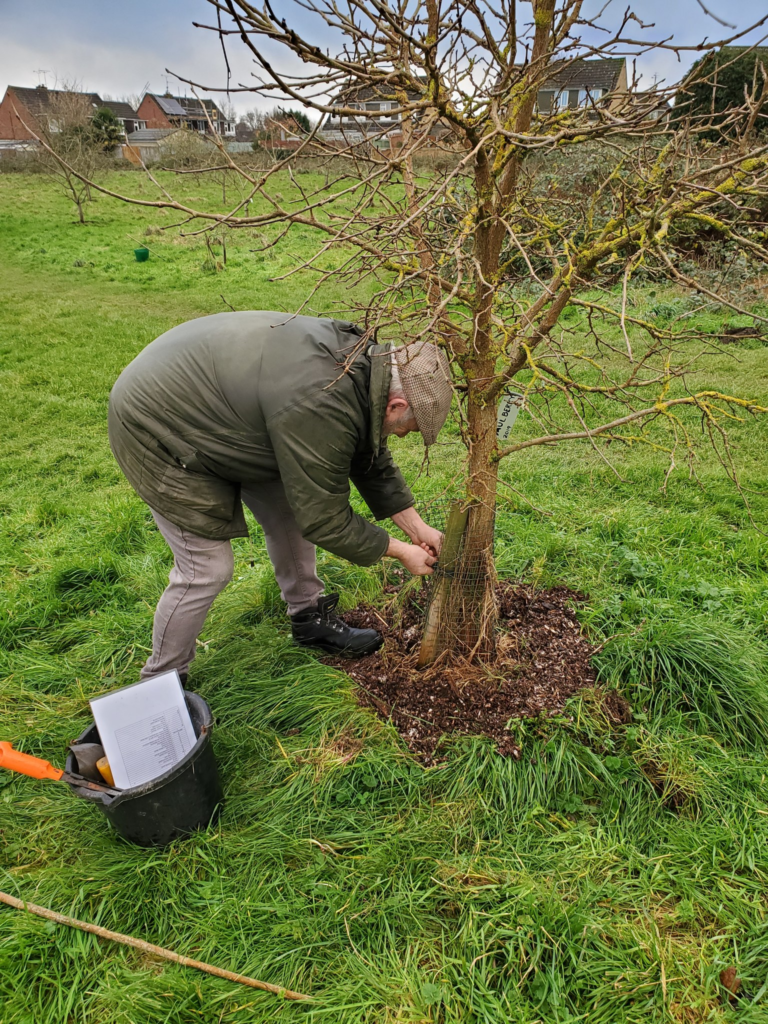
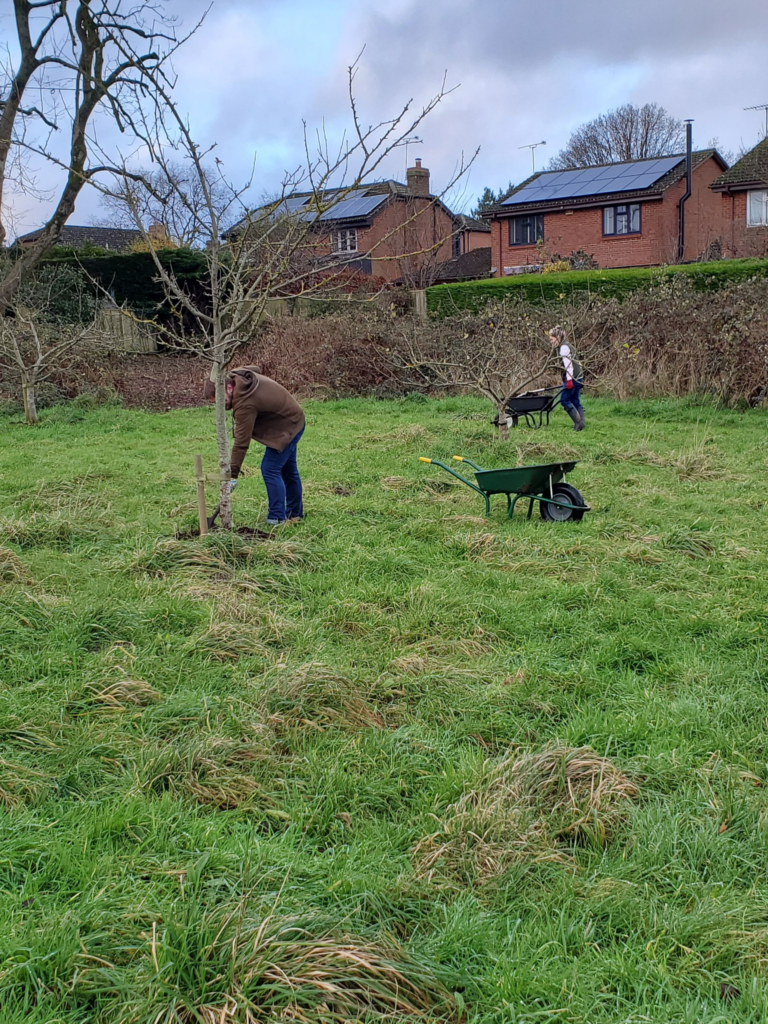
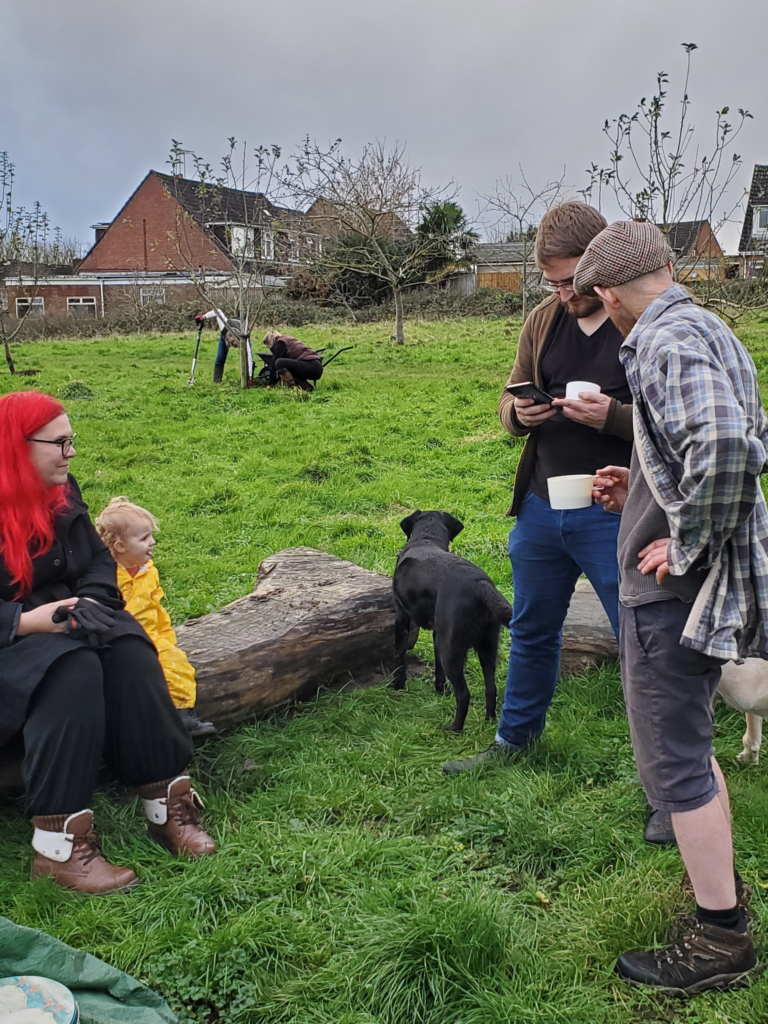
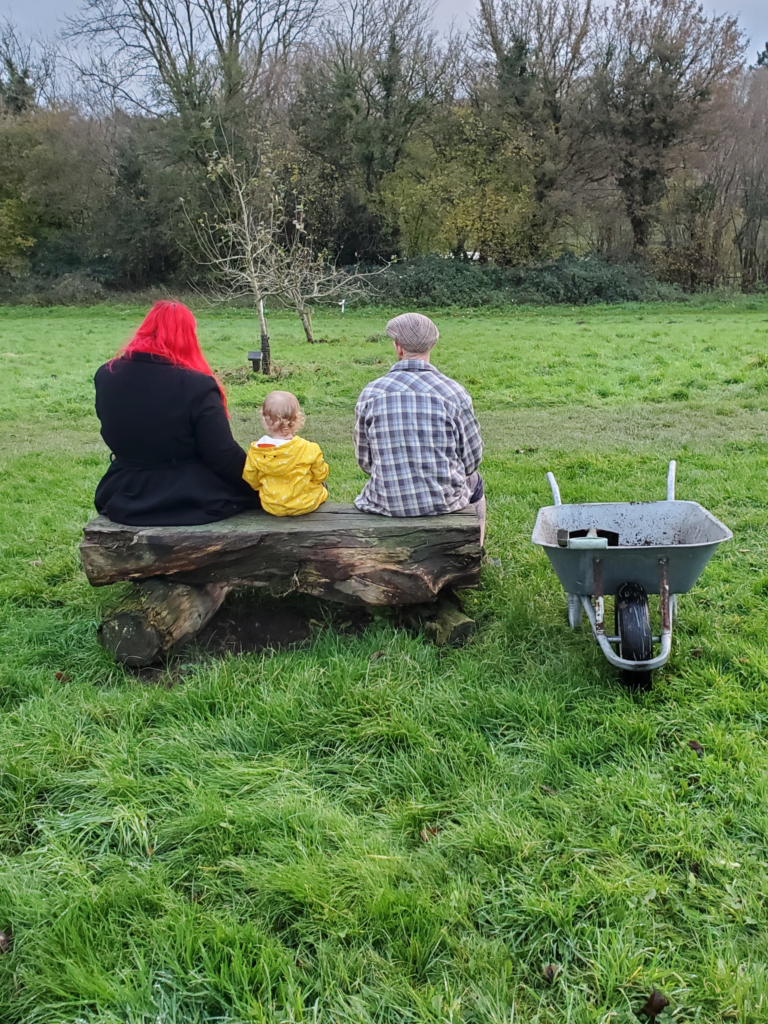
“Last Sunday did see the weather peel back and give us a dry afternoon. Our Chief Yellow Pixie was there to do quality control and over half the orchard trees have been mulched, grass cleared from the bases with unwanted guards and stakes removed. A small group but one that got stuck in, with refreshments at a break. I shall be there tomorrow from 2pm to do some more. Last minute but that’s what this time of year is. If you are free you might need a wheel barrow.”
“By the kitchen door is a sticker that reads ‘When I’m outside, I’m happy inside’. Exactly.”
Friday 17th March 2023
Paul Powlesland @paulpowlesland has tweeted:
With the release of the Sheffield Tree Inquiry Report & recent awful waves of tree destruction in Plymouth, Wellingborough, Haringey & elsewhere, I thought I’d re-post my article on key lessons tree protectors can draw from the Sheffield saga

March 2023
According to the Longleat Forestry website, the number of recorded trees in Longleat commercial forest is 549,020.
www.longleatforestry.co.uk/visitor-info/about
Monday 20th February 2023
Frome Town Council have announced:
On Wednesday 1 March 2023, Friends of the River Frome (FORF) and the Wild Trout Trust will be starting this year’s practical conservation work in Rodden Meadow, to improve habitat for birds, fish and insects as part of the TWIST (Transforming Waterways in Somerset Towns) project.
Historically, the trees along the river in Rodden Meadow were managed by rotational coppicing, but this has lapsed in recent years, so the river has now become too shaded, and even hidden from view. On this volunteer work day, the team will be:
Cutting back overhanging laurel bushes, and carefully thinning other bankside vegetation, to increase the amount of light that can reach the river, and open up better views of the waterway for local people.
Building a dead hedge, using trimmings from our willow pollarding work in October 2022, to create habitat for insects, birds and small mammals, as well as protecting part of the river bank from excessive erosion, and possibly preparing the area to be planted with pollen-rich native plants later this spring.
Planning future habitat improvement works to take place along the river in Rodden Meadow. This will include a small number of ‘tree kickers’; selected trees which will be carefully felled into the river to provide valuable complex habitat for many species, and securely tethered so they won’t wash away.
The overall Rodden Meadow Tree Plan can be found here.
The TWIST project is funded by the Environment Agency.
Monday 13th February 2023
Restoration Ecology have published a research article: New woodlands created adjacent to existing woodlands grow faster, taller and have higher structural diversity than isolated counterparts.
Abstract
Creating native woodland is a policy goal globally, and one strategy to maximize woodland creation benefits in limited space is to target efforts to extend existing woodlands. There is evidence to support spatially targeting habitat creation for biodiversity, however, there is little evidence of how this affects a habitat’s structural development. Here, a space-for-time study using light detection and ranging (LiDAR) data assesses how the structure of recently created woodlands, are affected by the presence of an adjacent older woodland. Recently created native woodlands were identified across the Isle of Wight UK using historical maps and satellite imagery. Canopy height and foliage height diversity were derived for all woodlands from LiDAR data collected at two different time points (2011 and 2021), and linear models were used to test for any differences in these structural metrics between sites with an adjacent older woodland, and those without. The percentage change in woodland height between the two time points was also tested. In woodlands created adjacent to older woodlands, canopy height was found to be higher by an average of nearly 2Â m, and foliage height diversity was found to be on average 4.7% higher, using the 2021 data. Growth rates between 2011 and 2021 were not significantly different between the groups, although young adjacent woodlands grew the most on average. This research shows that creating woodlands adjacent to existing older woodlands reduces the time taken to create tall and to a lesser extent structurally diverse habitat, which may lead to early biodiversity benefits.
To read the full article, click on:
https://onlinelibrary.wiley.com/doi/10.1111/rec.13889#.Y_SivEm1Qw8.twitter
Wednesday 1st February 2023
An Environet map shows that there have been eight occurrences of Japanese knotweed in an area with a 4km radius in and around Warminster.
Wednesday 5th May 2021
Clare Hancock on the Facebook page of Sustainable Warminster writes:
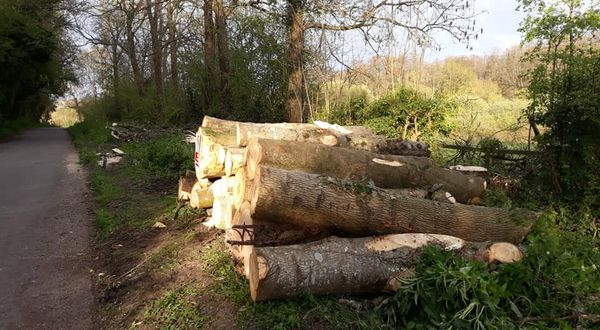
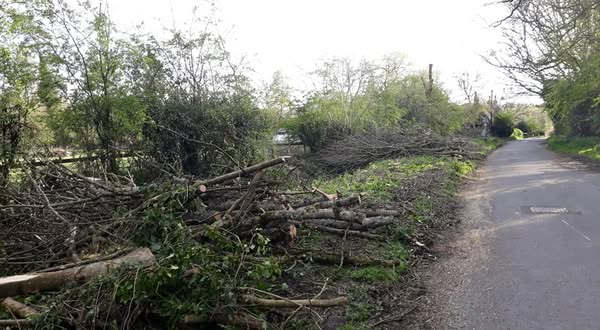
It’s so sad to see the line of ash trees being felled along Smallbrook Road [Warminster] due to Ash Dieback disease. On a national scale this will be devastating and catastrophic.
Friday 7th June 2019
By water in the green bower . . . . a yew tree on the bank of the Bourne Ditch in Primrose Wood, Boreham, Warminster.
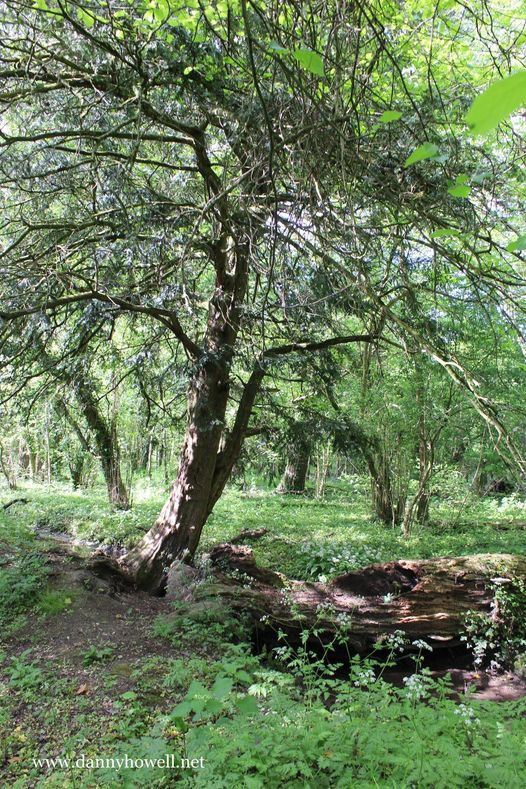
Photograph taken by Danny Howell on Friday 7th June 2019.
Wednesday 1st August 2018
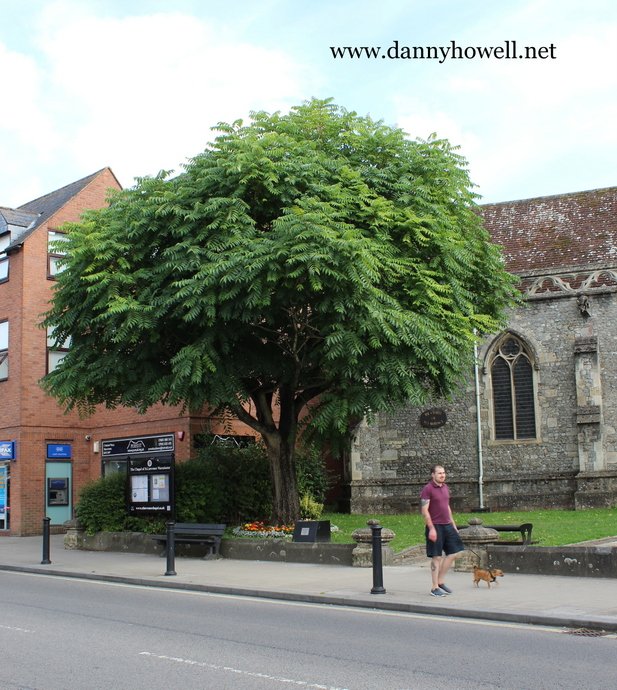
 The Tree Of Heaven at the Chapel of St. Lawrence,
High Street, Warminster.
Photograph taken by Danny Howell
on Wednesday 1st August 2018.