Extraordinary Catch Of Fish At Fonthill

From The Warminster Herald, Saturday 29 October 1881:

In dragging the lake at Fonthill the number of fish caught was as follows: On Monday, 2,046; Tuesday, 1,000; Wednesday, 3,430; total, 6,466. The fish weighed 1 ton 6 cwt. 1 qr. 24 lbs., and were all roach and perch. They were given away to the labourers and any who applied for them.

Selwood Forest

The Reverend John Jeremiah Daniell, in his book The History Of Warminster, first published in 1879, noted:

Among the ancient forests of Britain, none was of much greater extent than the Forest of Selwood, called expressly COTT MAUR, or the Great Wood. Contracted as it was, century after century, yet Leland writes, temp. Henry VIII,

“The Forest of Selwood, as it is now, is a 30 miles in compace, and streatchith one way almost unto Warminster, and another way unto the quarters of Shaftesburie, by estimacion a 10 miles.”

It extended westward far into Somerset, then passed in a easterly direction round Chapmanslade to Westbury, skirted the foot of the Downs north and east of Warminster, and enclosing Black-Dog, Norridge, Longleat, Southleigh, and Eastleigh woods, reached its southern limit at Pensilwood [Pen Selwood], near Mere. Here were formerly to be seen, distinctly traceable, though now much overgrown with copse-wood, hundreds of hollows and excavated pits, covering an area of six or seven hundred acres, which with fair reason may be believed to be, as those at Hisomleigh, on the northern edge of the Forest, near Thoulston, and others more recently discovered and carefully examined, near Salisbury, subterranean habitations of the old Celtic tribes.

The woods above-named were no doubt a part of Selwood Forest. One portion is frequently mentioned in old deeds as “Warminster Wood.” A perambulation of the Forests of our Lord the King was made 28 Edward I, whereby it was ascertained that all the bailiwick of Selwood, which was in the county of Wilts was appropriated to the Forest after the coronation of King Henry, great grandfather of the then King, except the wood of Heghtreborn, and the wood of WERMYNSTRE, and the wood of Westbury, which were in the Forest. The office of Forester of Selwood remained with the Crown till Charles I empowered a Commission to disforest Selwood and disperse the deer, with reservation, as royalties, of one third of the woods, while another third was assigned to the Lords of the adjacent Manors, and another to those Commoners, who by ancient prescription, had acquired right of depasturing cattle on the open heaths of the Forest.

But the old country families, settled in or near the Forest, seem from ancient time to have exercisedthe privilege of hunting deer within its limits; and therefore when Sir John Thynne enclosed a large area for a deer park, and laid restrictions on the chase of deer, (although apparently some compromise had been offered for a supply of venison), on one occasion, in September, 1580, the principal gentlemen of the two counties into which Sir J. Thynne’s newly-granted lands extended, including Mr. Popham, the Queen’s Attorney, Sir Amyas Paulett, Sir Gen. Rogers, with representatives of the families of Wadham, Coles, Sydenham, Willoughby, Hopton, Horner, Leversedge, Colthurst, Smith, Daniell, Wynter, Chamberlayne, Gisborne, Player, and others, nearly a hundred in number, with forty dogs, entered the Park mounted, and proceeded to hunt. Hugh Stowe, the Head Keeper, boldly protested against the invasion of his master’s property, but, threatened by one of the chief hunters with personal assault, – “he told me,” writes Stowe to his master who was absent, – “that I should run the risk of his dogs if I durst deny him; that Somersetshire or elsewhere should be too hot for me, and that he would cuff me, or would cause who should do it;” and powerless to resist so formidable a body, the chase went on, and three bucks were killed.

The trees of Selwood were all Oak or Beech. The Elm is supposed not to be indigenous to Britain. But it has been remarked that this noble tree has gained for itself and its numerous congeners such a settlement in this country, that but for the plough and scythe, almost every valley and lowland of Wilts would become in fifty years as dense a forest as any that ever covered this Island.
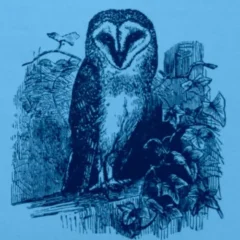
Starling Chicks In Nest Hauled From Longleat To Warminster Station Continued To Be Fed By Parents

From The Warminster Herald, Saturday 24th May 1873:

During the past week timber merchants have been hauling timber the five miles from Longleat estate to Warminster Station. In one of the trees a pair of starlings had built their nest and hatched their young. It had been hauled in the usual manner, the young birds still remaining in it and apparently uninjured. The strangest part remains to be told – on the following day the old birds discovered the whereabouts of their young and continued feeding at regular intervals.

The Largest Tree On The Longleat Estate

From The Warminster Herald, Saturday 15 June 1872:

The largest tree on the Longleat estate, says a correspondent of the Garden, is an oak growing in a grove in the park; the dimensions are as follows: girth of stem at one foot from the ground, thirty-four feet; girth of stem five feet up, twenty-two feet; contents, upwards of 1,100 feet of timber.

Late Swarming Of Bees At Crockerton

From The Warminster Herald, Saturday 24 September 1870:

On Sunday last, Sept 18th, Henry Coward of Crockerton, had a swarm of bees. After some time they went back to the hive, but the other bees killed them. On the same day John Baker, of Crockerton, also had a swarm of bees, and they were taken all right. We believe it is somewhat unusual for bees to swarm at so late a period of the season.

Remarkable Yew Tree At Corsley

From The Warminster Herald, Saturday 11 June 1870

It may interest some of your readers to know the dimensions of a very remarkable yew growing on the Marquis of Bath’s estate at Temple Farm, Corsley, Wilts: Height, 50 ft.; circumference of branches, 164 ft.; spread of branches from north to south, 53 ft.; and from east to west, 60 ft.; girth of stem at 1 ft. from the base, 32 ft.; smallest girth of stem, 24 ft. 7 in.; the stem at 7 ft. up branches into several limbs. The age of yew trees may be pretty nearly calculated by allowing one century for every foot in diameter of the stem; thus this grand old tree may be guessed at from ten to eleven hundred years old, and is healthy, growing, and in full foliage, forming a perfect cone in shape, and a lease of its life for another century or two might safely be taken. I should be glad to learn through the columns of Land And Water if any of your readers could give the dimensions of a larger yew than the one I have just recorded. George Berry, Longleat, May 3, 1870.

To Frighten Rooks

From The Farm, Garden, Stable And Aviary, edited by I.E.B.C., published by Horace Cox, Strand, W.C., 1869:

Rooks, To Frighten

Place cats, tied to a long string, according to the size of the field, so that they can range about to a fair extent. They must have a basket with hay to lie in, and be well supplied with food, milk, &c., and be taken up at night. One or more cats are required for each field, according to its size, and the length of their line.

Plant Curiosities At Sutton Veny, Pitmead And Smallbrook Mill, Warminster

From The Warminster Herald, Saturday 12 December 1868:

The following instances may be reckoned as specimens of rather luxurious growth, for the climate of Wiltshire.

A fern was cut, in 1867, in a plantation near Five Ash Lane, Sutton Veny, which measured no less than thirteen feet in length. It had grown up amongst larches, and through their branches.

In the same plantation was found a briar which had grown in that season twenty three feet. The tallest fern previously (1861) noted in this locality was ten feet eight inches high; and not far from there were many thistles which measured nine feet high.

A common stinging nettle grew (1865), in a withy bed near Smallbrook Mill, rather more than nine feet out of the ground quite vigorous and upright.

A dandelion plant in Pitmead, had leaves eighteen inches long, and a flower stalk three feet, from which the seeds had been shed shortly before discovery.

And within our town an old grapevine, of the white sweetwater kind, produced shoots of sixteen feet six inches in length, one summer, in the open air.

error: Content is protected !!