Saturday 7th June 2014
Riparian Mammal Survey For Spurt Mead, Warminster:
Sample photographic record taken during riparian mammal survey River Wylye (Spurt Mead), by Pam Marshall-Ball, BSc (Hons), of Rookmarsh Ecology, 6th June 2014.
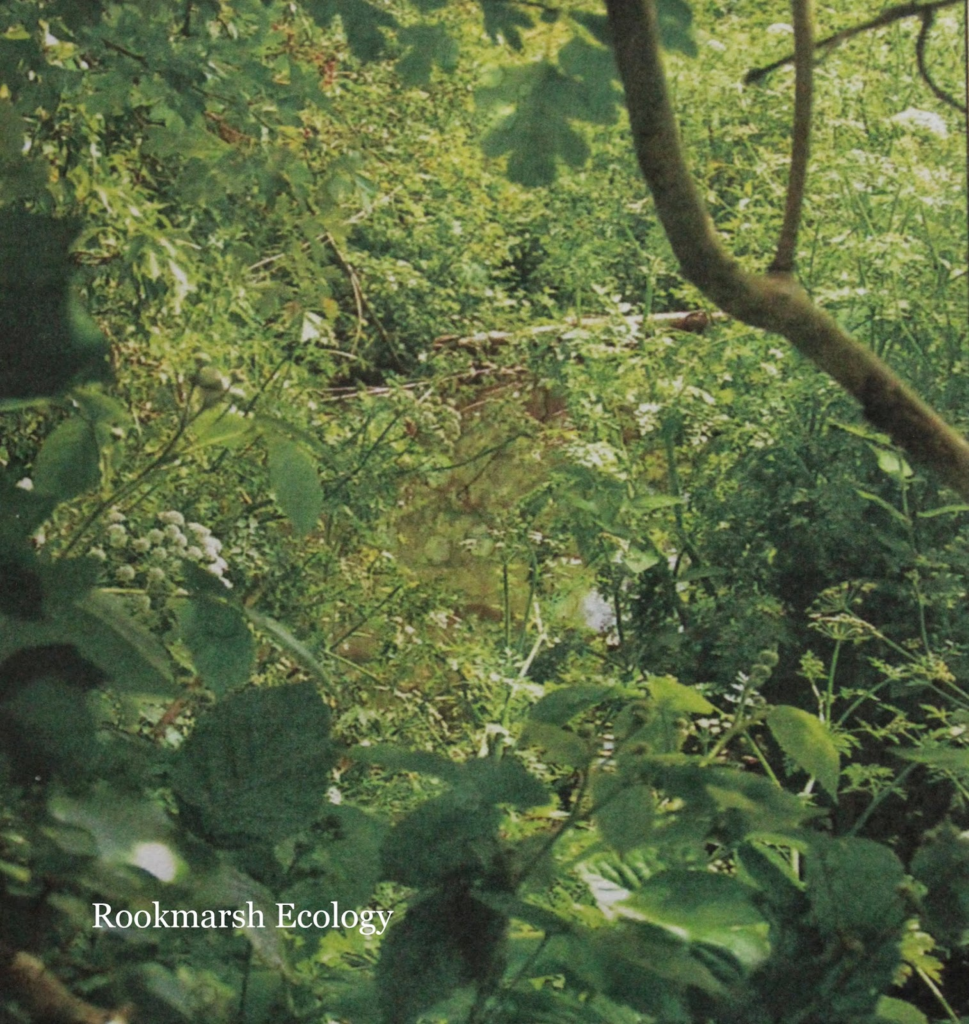
Photo 1. (Above) View of drainage ditch at present road access to site. View looking east alongside A36.
Dry in places, the entire ditch encircling the site showed sub-optimal habitat for water voles. The photo shows sluggish poor quality water – perhaps contaminated by run-off from road.
Dense overhanging vegetation overshading the watercourse and access to the water’s edge hazardous!
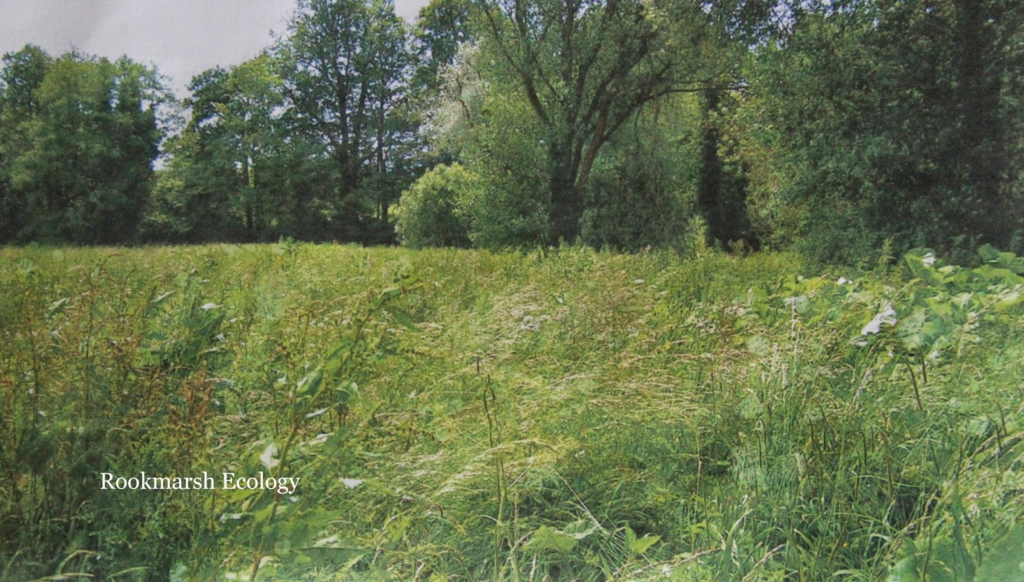
Photo 2. (Above) View of present vegetation along western margin of site. Tall un-grazed meadow grasses with dock, nettle, burdock and ranunculus.
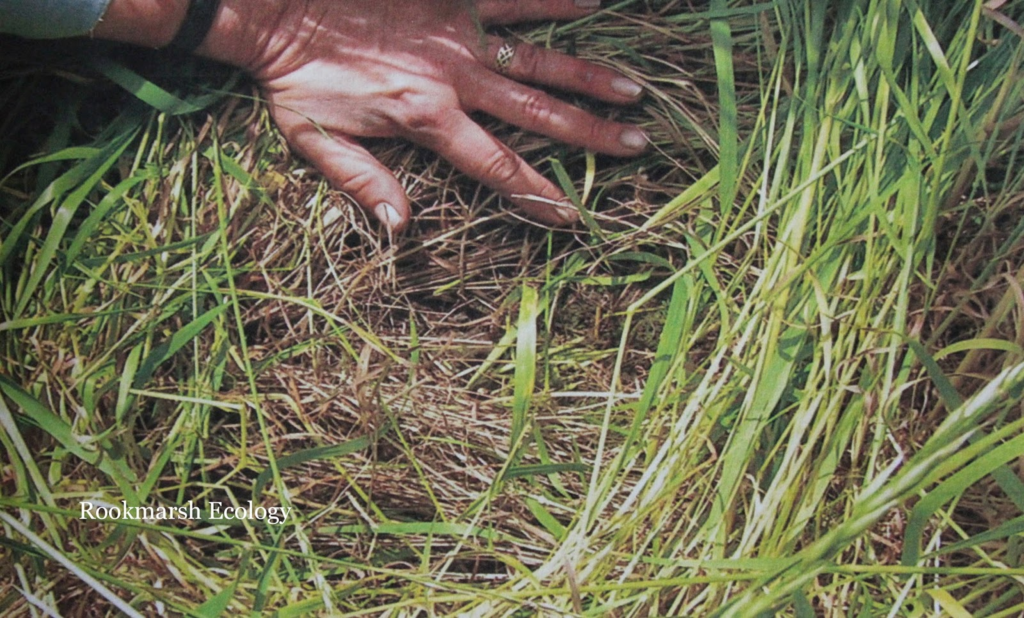
Unusually, water vole feeding stations were found up to 20m from the watercourse in this dense cover.
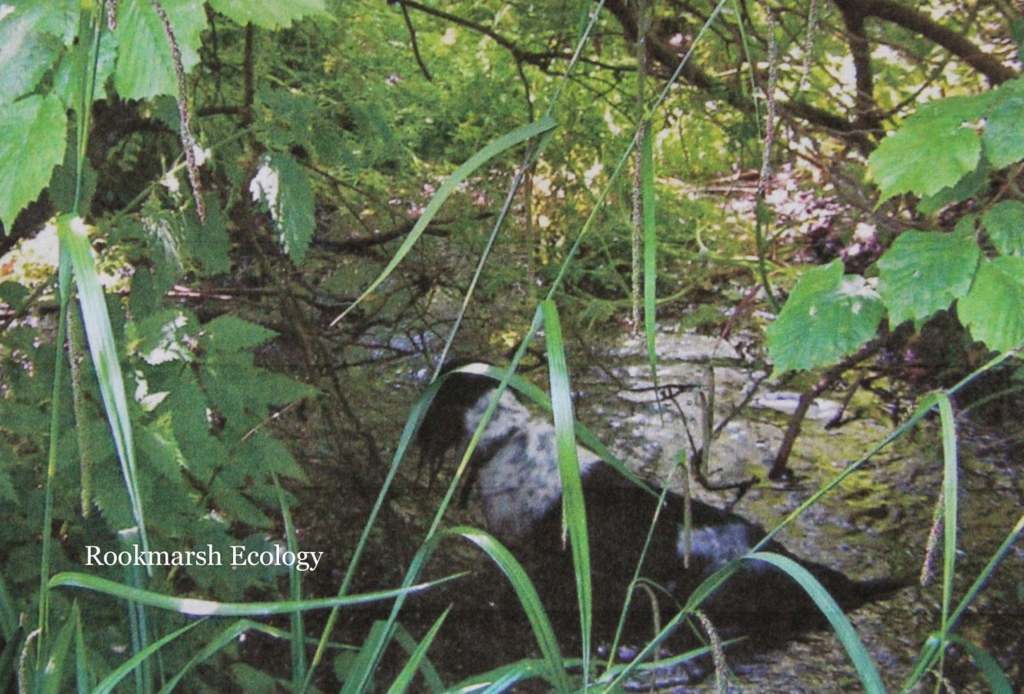
Photo 3. (Above) Ditch conditions along the western boundary of site (dog for scale). Densely over-canopied with alder, ash, willow and hazel. Minimal bank-side cover – perhaps the reason for water voles foraging well beyond their ‘normal’ range from the watercourse.
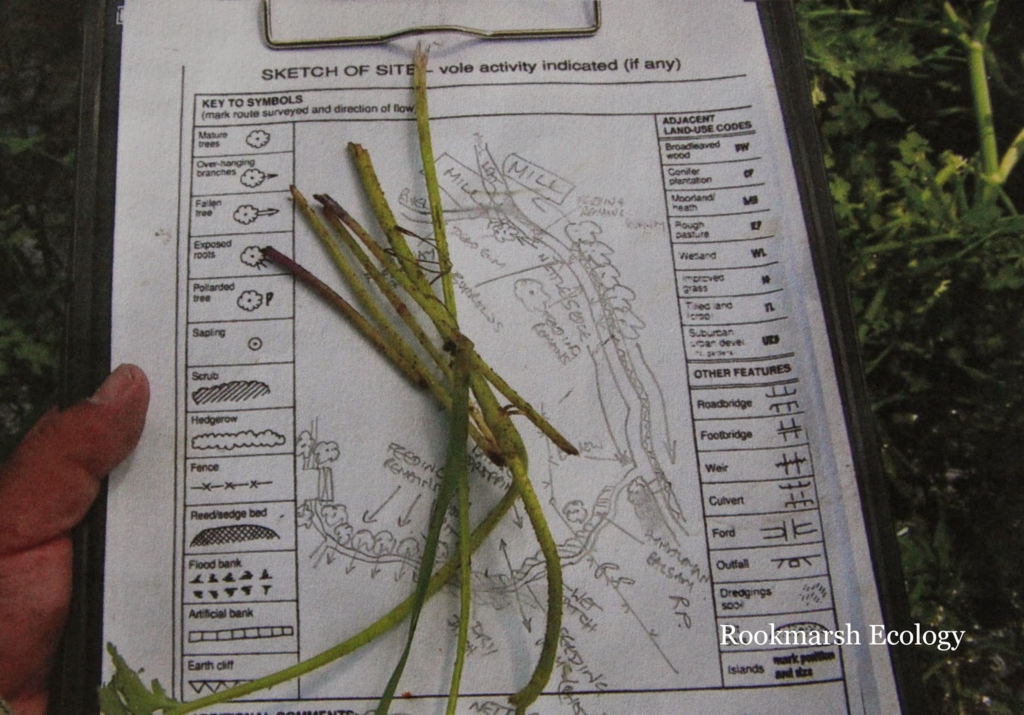
Photo 4. (Above) Feeding remains collected from feeding stations up to 22.3m from nearest watercourse. Meadow grasses predominate in these remains but the stem size precludes field voles.
Photo 5. (Above) At other feeding stations, remains consisted of ranunculus (as shown here), sedge stems, nettle, and bramble.
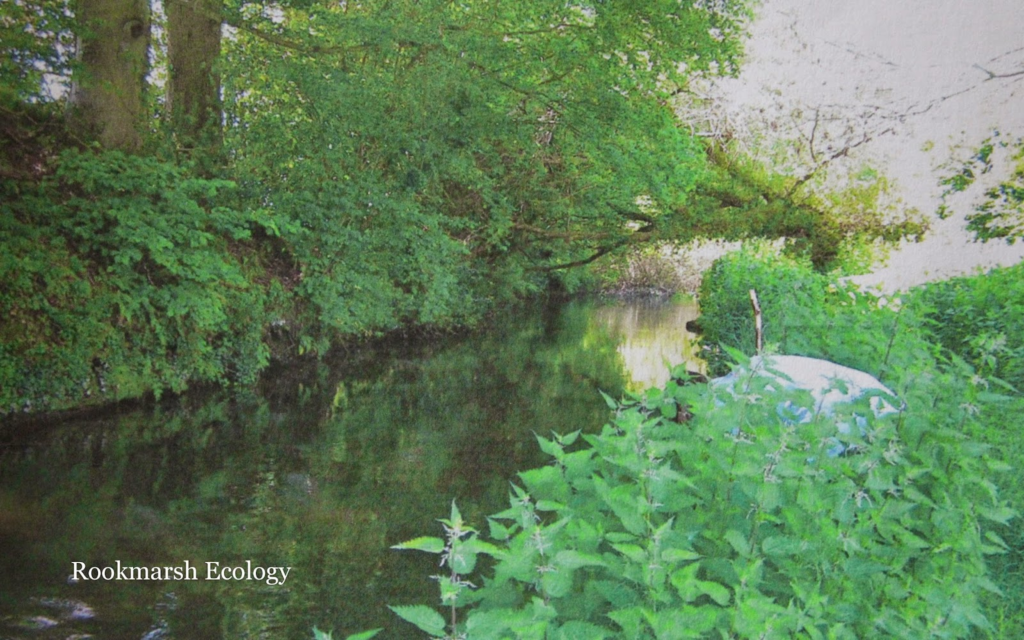
Photo 6. (Above) Main river, camera pointing west along southern boundary of the site. Left bank over-canopied with insufficient herbage cover at ground level. Right bank displays good habitat with nettle, sedge, reeds, water mint. River bank composed of silty alluvium with some stones – good burrowing conditions.
Photo 7. (Above) Feeding station located 20m from watercourse (ditch) at the north-east corner of the site. Length of stems indicate possibly a juvenile water vole, and the thickness of the stems preclude field vole.
NOTE:
The survey has indicated that this water vole population is displaying unusual feeding behaviour in that they are venturing much further from watercourse than is ‘normal’.
One possible explanation is that the field vegetation affords cover and feed, while much of the watercourse margins of the ditch and the south bank of the main river has sub-optimal cover, increasing the risk of exposure and predation.
The implication of this is that on this site, water vole burrows extend a considerable way into the field and any use of heavy machinery (agricultural or otherwise) may constitute ‘deliberate and reckless destruction of habitat of a species under full legal protection.’
See below
– extract from Natural England document – ‘Guidance for Planners and Developers’
Legal protection makes it an offence to intentionally or recklessly:
* damage, destroy or obstruct access to any structure or place which water voles use for shelter or protection;
* disturb water voles while they are using such a place.
Summary of Findings:
1. Positive presence of water voles.
2. Sub-optimal ditch environment causes water voles to feed up to 20m from watercourse.
3. Over-canopying by trees on main river (south bank) and on ditch producing sub-optimal conditions.
4. Known vole colonies both upstream and downstream which raises disturbance and connectivity issues.
5. Meadow provides ideal food source for water voles.
6. Otter presence known both upstream and downstream of site (up to 40km) range raising disturbance and connectivity issues.
Implications:
1. An 8m wide environmental protection corridor will be insufficient to both protect and allow water voles to feed safely and sufficiently.
2. Planting additional trees and bushes as part of the visual screening of the site will exacerbate the problems already identified.
3. Disturbance during work on the site will lead to predation on water voles as they will become readily visible.
4. Improving the drainage capacity of the ditches will mean the destruction of water vole burrows as the ditches will in effect need dredging. Use of concrete channels will also prevent water voles from burrowing.
5. The process of development will drive water voles and otters away from this site to more protected ones hence losing these fragile populations.
6. The management plan for the site says it will seek to exclude pets. With cats this is not possible.
7. Artificial burrows and holts will not work for the reasons given above.
Pam Marshall-Ball, BSc (Hons),
Rookmarsh Ecology,
43 Castle View,
Westbury,
Wiltshire,
BA13 3HR.
Telephone 01373 859821
email: rookmarshecology@yahoo.co.uk
7th June 2014.
Pam Marshall-Ball, BSc (Hons) in Environmental Science.
* Riparian mammal surveyor for major BASC conservation project across Somerset and West Dorset.
* Riparian mammal surveyor for Halycon River Diaries BBC TV series.
* Instructor for riparian mammal survey training courses for BASC, Somerset Wildlife Trust, Dorset Wildlife Trust, Avon Wildlife Trust, and Gwent Wildlife Trust and the Environment Agency.
* Member of the Southwest Riparian Mammals Forum.
* Keynote speaker on otters and water voles at the Southwest Wetlands Conference.
* Specialist wetlands surveyor for the Thames Gateway Project.
* Principal advisor to the River Allen Water Vole Recovery Project for Wessex Chalk Stream Rivers Trust.