From The London Gazette, 3rd October 1952:
Commissions signed by the Lord Lieutenant of the
County of Wilts –
Brigadier James Joseph Kingstone, C.B.E., D.S.O.,
M.C., of Dairy Cottage, Corton, Warminster.
Information and pictures about the military at Boyton and Corton.
From The London Gazette, 3rd October 1952:
Commissions signed by the Lord Lieutenant of the
County of Wilts –
Brigadier James Joseph Kingstone, C.B.E., D.S.O.,
M.C., of Dairy Cottage, Corton, Warminster.
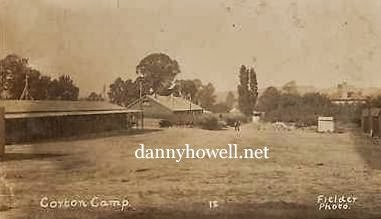
A view of the military camp at Corton,
in the Wylye Valley, circa 1916.
The picture was taken by the
Warminster photographer Mr. Fielder.
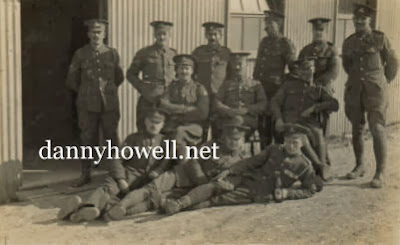
Soldiers outside a building with corrugated iron
sides, depicted on a postcard with a
Boyton Camp, 1916, postmark.
Wilfred Middlebrook, in his newspaper serial, The Wylye Valley, written in 1949, makes a reference to Sundial Farm at Corton and its use by the military three years before the First World War. He stated:
“In 1911 there were some big army manoeuvres in the district, and officials were sent to Corton to find accommodation for the Scots Greys. A hundred men were to be quartered in barns and outbuildings, and two officers in the house of Sundial Farm. When the day came, the ‘two’ officers had increased to seven, with a staff of fifteen who slept in tents on the lawn. One of the seven officers was the late Prince Arthur of Connaught, and another, Lord Brassey.â€
Middlebrook goes on to say that Corton people were “proud of having such celebrities in their midst,†and adds “A good story is told of Prince Arthur, who one day called for his valet in vain. Then he went down into the kitchen, where he found the valet fast asleep in the big armchair. His pipe had fallen on his chest, and some joker had placed a large doll in each of his arms! The Prince could not help laughing, and as he motioned the others out of the room he whispered ‘Let him alone; he’s happy’!â€