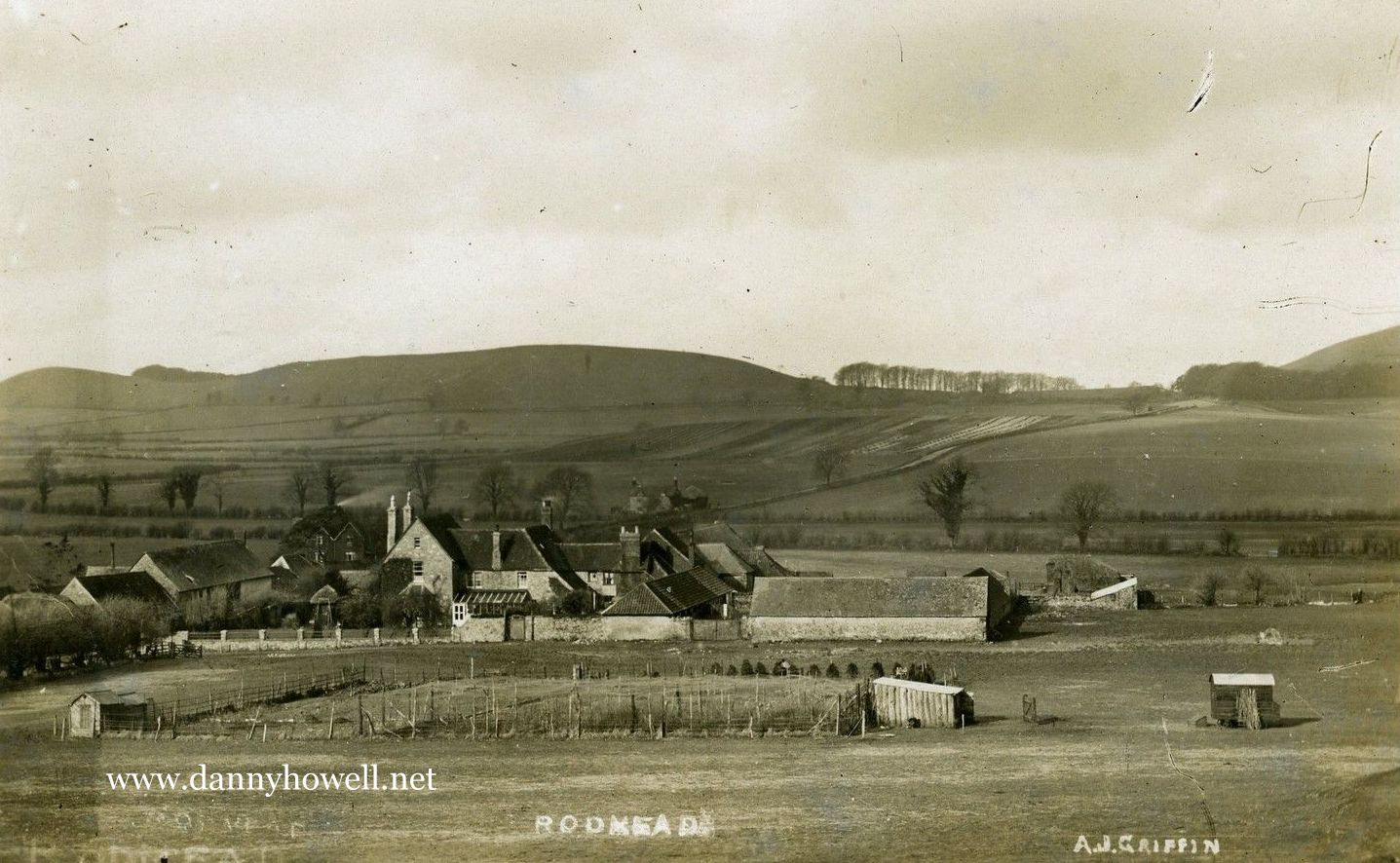
Boreham Farm, Warminster, Sale 1920

The Warminster auctioneers D. & D.H. Waddington were instructed by Grenville N. Temple to sell by auction, “three good corn, sheep, dairy farms & water meadows, known as Bishopstrow, Boreham & Temple Farms, together with accommodation pasture fields, building sites, and cottages, the whole having an area of 2215 acres, 0 roods, 0 perch, in 20 convenient lots” in 1920. The sale took place at the Town Hall, Warminster, on Saturday 14th August 1920, commencing at 3.00pm.

Boreham Farm, which was Lot 2, was described in the sale catalogue, as follows:

“THE VALUABLE FREEHOLD RESIDENTIAL AGRICULTURAL AND SPORTING PROPERTY, BEING BOREHAM FARM, WARMINSTER, In the Parishes of BISHOPSTROW and WARMINSTER, about One mile from the TOWN of WARMINSTER. With exceptionally good and convenient Residence, Spacious Buildings, Dairy, 7 Cottages, Hill Barn, Buildings, and Yards. Good ARABLE, PASTURE and DOWN LAND, WATER MEADOWS, The HISTORIC “BATTLESBURY WOOD,’ good SHOOTING, having a total area of 936 ACRES 3 ROODS 14 PERCH.”

“The House which is approached from the Main Road by a Carriage Drive, is most substantially built in stone and roofed with slates and comprises the following accommodation: viz: – Entrance Hall, Back Hall, Large Dining Room, and Drawing Room, Breakfast and Sitting Room, Kitchen, Scullery, Larder, Cellar, 8 Bedrooms, Bath Room, and W.C., Situate near are Coal, Wood and other houses, Walled Flower and Kitchen Gardens, Greenhouse.”

“The Farm Buildings consist of a Range of Brick Pigsties and Meal House, Timber Granary, Wagon and Implement Shed, Nag Stable for 4 horses, Harness Room, Cowstalls for 10 Cows, Calf Pen, Cart Horse Stable for 10 Horses with Loft over, Harness House, Motor House, and Cart Shed. Cow Byre for 40 Cows, 6 Pigsties, Meal House, Open Cattle Sheds and Yards with Water Troughs, Cow Stalls for 18 Cows, Calf Stage, Large Barn, Engine and Implement Shed, Boiler House, Cart Horse Stable for 8 Horses with Loft over and Chaff House, Thatched Colt’s House, 2 Thatched Cottages, Row of 5 Brick and Tiled, each containing KITCHEN, WASH-HOUSE, 2 BEDROOMS; Dairy, Cheese Room, Coal House, etc., Hill Barn, Stable, Shedding and Yards.”

“The Farm House Buildings and Cottages are supplied with water from the Warminster
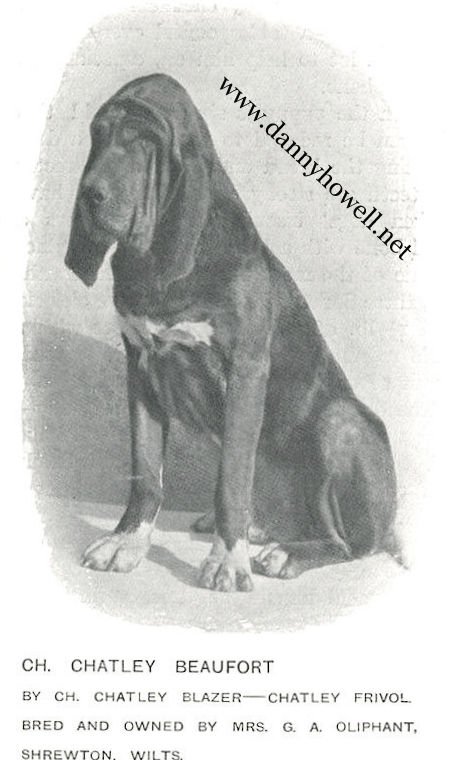
Mrs G.A. Oliphant And Her Kennel Of Bloodhounds At Shrewton

From Dogs And All About Them by Robert Leighton (1859 – 1934), published by Cassell And Company, 1919:

The Bloodhound
Mrs. G. A. Oliphant, of Shrewton, Wilts, whose kennels include Chatley Blazer and Chatley Beaufort, has of late years been a keen supporter of the breed. Mrs. Oliphant, who is the president of the ladies’ branch of the Kennel Club, is a great believer in hounds being workers first and show hounds second, and her large kennels have produced many hounds of a robust type and of good size and quality. There is no doubt that as far as hunting is concerned at the present moment this kennel stands easily first. But admirable Bloodhounds have also given distinction to the kennels of Mr. S. H. Mangin, Dr. Sidney Turner, Mr. Mark Beaufoy, Mr. F. W. Cousens, Mr. A. O. Mudie, Lord Decies, Mr. Hood Wright, Mr. A. Croxton Smith, Dr. C. C. Garfit, Dr. Semmence, and Mrs. C. Ashton Cross, to mention only a few owners and breeders who have given attention to this noble race of dog.

Prince Arthur’s Valet Fell Asleep

Wilfred Middlebrook, in his newspaper serial, The Wylye Valley, written in 1949, makes a reference to Sundial Farm at Corton and its use by the military three years before the First World War. He stated:

“In 1911 there were some big army manoeuvres in the district, and officials were sent to Corton to find accommodation for the Scots Greys. A hundred men were to be quartered in barns and outbuildings, and two officers in the house of Sundial Farm. When the day came, the “two’ officers had increased to seven, with a staff of fifteen who slept in tents on the lawn. One of the seven officers was the late Prince Arthur of Connaught, and another, Lord Brassey.”

Middlebrook goes on to say that Corton people were “proud of having such celebrities in their midst,” and adds “A good story is told of Prince Arthur, who one day called for his valet in vain. Then he went down into the kitchen, where he found the valet fast asleep in the big armchair. His pipe had fallen on his chest, and some joker had placed a large doll in each of his arms! The Prince could not help laughing, and as he motioned the others out of the room he whispered “Let him alone; he’s happy’!”

Smallholdings In Wiltshire

The County Council appointed an Allotment Committee in 1890 and a Smallholding Committee in 1892, but their activities seem to have been limited to supervising the work of parish councils in this field until the Small Holdings and Allotments Act of 1907 empowered county councils to provide smallholdings and to satisfy the demand for allotments in urban and rural areas. Wiltshire accepted the former of these duties with enthusiasm; a land agent was appointed and by 1911 2,759 acres of land had been purchased and were let to 115 tenants.

– From Wiltshire County Council 100, The First Hundred Years 1889-1989.

Yarnbury Fair Of No Little Account

W.H. Hudson, in A Shepherd’s Life, published in 1910, referring to the sheep fair that was held at “Yarnborough Castle, the name of a vast prehistoric earthwork on one of the high downs between Warminster and Amesbury,” says:

“There is no village there and no house near; it is nothing but an immense circular wall and trench, inside of which the fair is held. It was formerly one of the most important sheep-fairs in the country, but for the last two or three decades has been falling off and is now of little account.”

An Illegal Practice At Warminster

From The Wiltshire Times, Saturday 18th June 1910:

Warminster. An Illegal Practice.
At a meeting of the Urban District Council on Monday night the Market Management Committee reported that the Clerk had given his opinion on the question of the right to toll cattle and dead stock offered for sale in Weymouth Street, and his opinion was that the Council had no such right nor had the public any right to exhibit there at all.

error: Content is protected !!