Fowler BB1 Steam Engine At Boreham Farm, Warminster

Tuesday 28th January 2020

The photograph above shows a Fowler BB1 steam engine in use at Arthur Bazley’s Boreham Farm, Warminster, during the 1920s. It replaced a Fowler K7 ploughing engine, No.15279, and another Fowler engine, No.15278, purchased by Arthur Bazley in 1919.

Does anyone, by chance, have any pics of the Fowler K7 ploughing engine, No.15279, or the other Fowler engine, No.15278, purchased by Arthur Bazley in 1919, during the time they were at Boreham Farm, Warminster?

A Rustic Scene At Boreham Farm

Wednesday 23rd October 2013

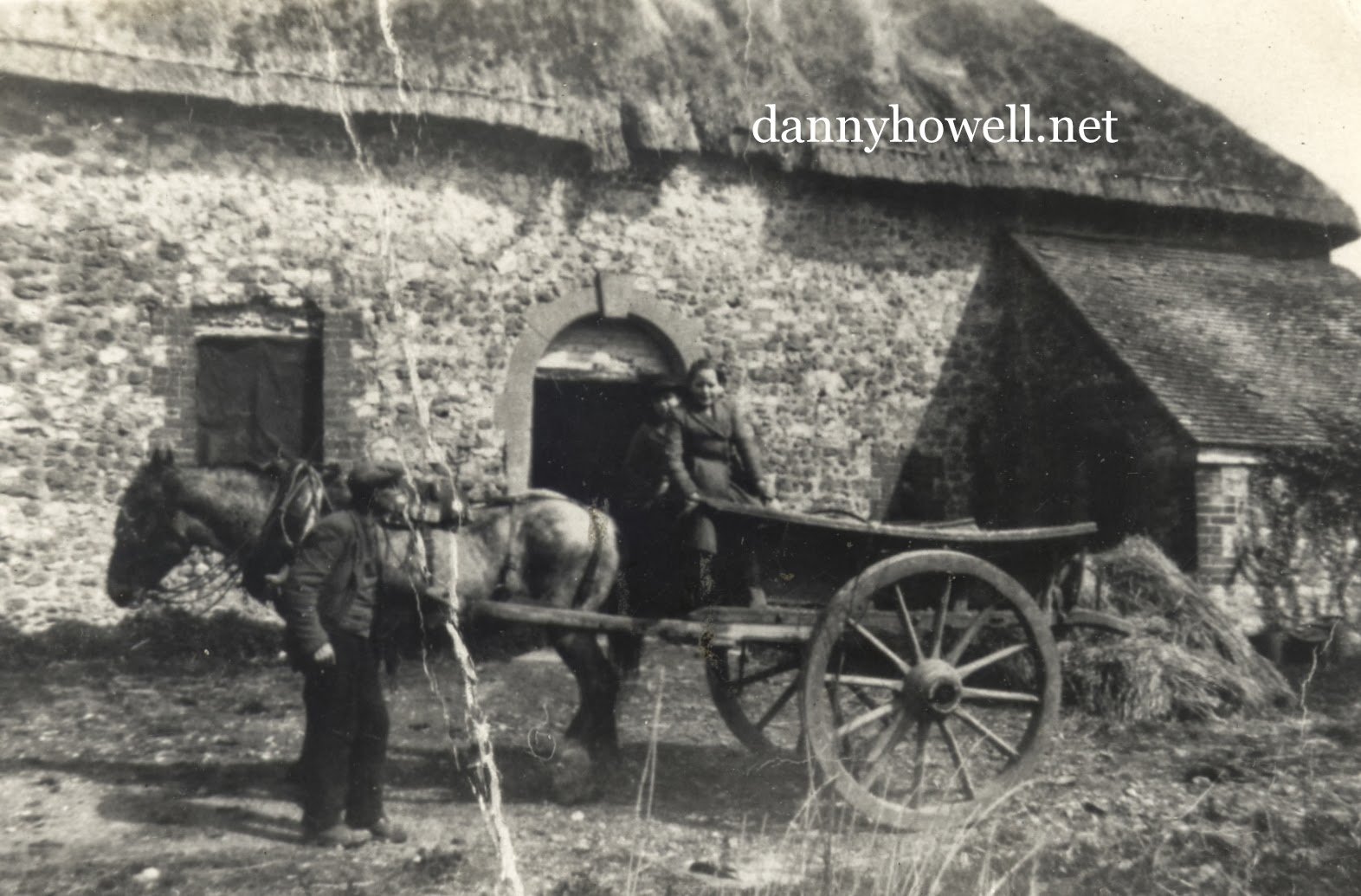
This photograph shows a scene by the old barn at Boreham Farm, Warminster, and was taken during the period when Tom Bazley was the tenant farmer. It may be in the 1920s. These days, the descendants of the Bazley family live in New Zealand. They very kindly sent this photograph to Richard Dombkowski in Warminster in more recent years (he thinks in the 1980s). Richard’s father Bruno Dombkowski worked for Tom Bazley in the 1950s. The farm buildings no longer exist ~ they were demolished circa 1969 and the rubble was bulldozed into the ground in situ, where the St. George’s Playing Field (Kingdown School’s Sports Field) is now. 

Richard Dombkowski writes ~ “The Bazleys sent me a letter with the photograph, as far as I can remember, explaining who the man and the woman were in the picture. I have temporarily mislaid the letter but I hope to find it soon. So, for now, I’ll let you [Danny Howell] share the photo on your website and will hopefully let you have the information later. I do remember the barn very well, going back to when I was about five years old (circa 1959).”

Our  thanks to Richard for sharing this wonderful photograph.  

A Farm Worker From Boreham

Friday 5th July 2013

Richard Dombkowski has contributed some more of his song lyrics to dannyhowell.net for our readers to share. These particular lyrics are truly local, are partly in the regional dialect, and give an insight into Richard’s late father, Bruno (Michael) Dombkowski, who worked for many years for Tom Bazley at Boreham Farm, Warminster.

A Farm Worker From Boreham
(Doo-lah-loo-lah-loo-lah-rieu)

Come on everybody
Let’s sing
And let’s dance
Doo-lah-loo-lah-loo-lah-rieu
Doo-lah-loo-lah-loo-lah-ray
Doo-lah-loo-lah-loo-lah-loo-lah
Loo-lah-lay

A farm worker known as Michael
From Boreham
Had muscles like Popeye
‘Ee ‘ad to insure ‘um
He was strong as an ox
Could juggle hay bales and rocks
And once pulled a combine
With a rope to the docks
From Warminster and all the way down
To Southampton
Only stopping once for a break
To ‘ave a sandwich a cup of tea and a cake
And ‘ave a row with the coppers
Who’d clamped ‘um

A farm worker known as Michael
From Boreham
Give him his due you’d ‘ave to applaud ‘um
Always graftin’ laughin’ and wearing a grin
Scratchin’ his gurt dimple and stubbly chin
A true gent with an outstanding decorum

Doo-lah-loo-lah-loo-lah-rieu
Doo-lah-loo-lah-loo-lah-ray
Corn and straw ~ turnips ‘n’ swede
And a whoppin’ juicy lookin’ monstrous pumpkin
Doo-lah-loo-lah-loo-lah-rieu
Doo-lah-loo-lah-loo-lah-ray
If you’re from Wiltshire
It’s good to be a country bumpkin
Doo-lah-loo-lah-loo-lah-rieu
Doo-lah-loo-lah-loo-lah-ray
Oh ooh arrrh ooh arrrh ooh arrrh ~ hey hey
Doo-lah-loo-lah-loo-lah-ray
A farm worker is a good trade to ‘ave ~ to be
Hey hey.

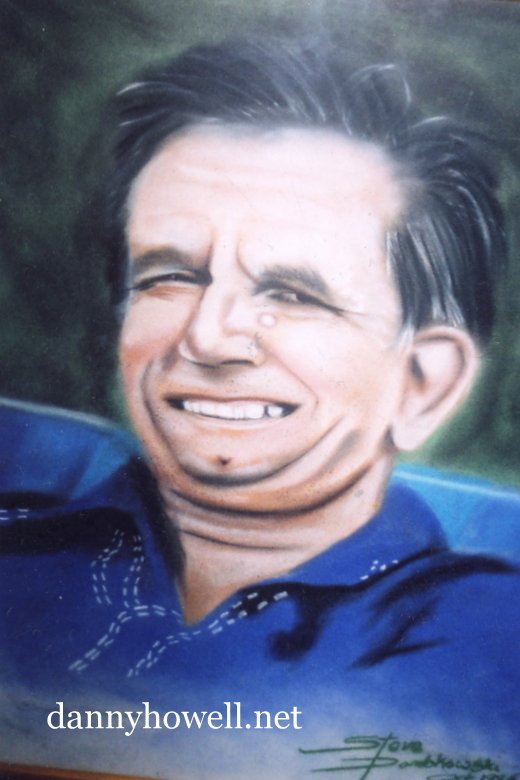
Photograph of Bruno (Michael) Dombkowski.

The photo is taken by Richard Dombkowski
from the original 1986 portrait
created by Steve Dombkowski.

Purchase Of Boreham Farm Lane, Warminster

Correspondence by Warminster Urban District Council with regard the purchase of Boreham Farm Lane, Warminster, can be found in the archives at the Wiltshire And Swindon History Centre at Cocklebury Road, Chippenham, Wiltshire, SN15 2QN. The correspondence is dated 1964-1968. The reference number is G16/132/40.

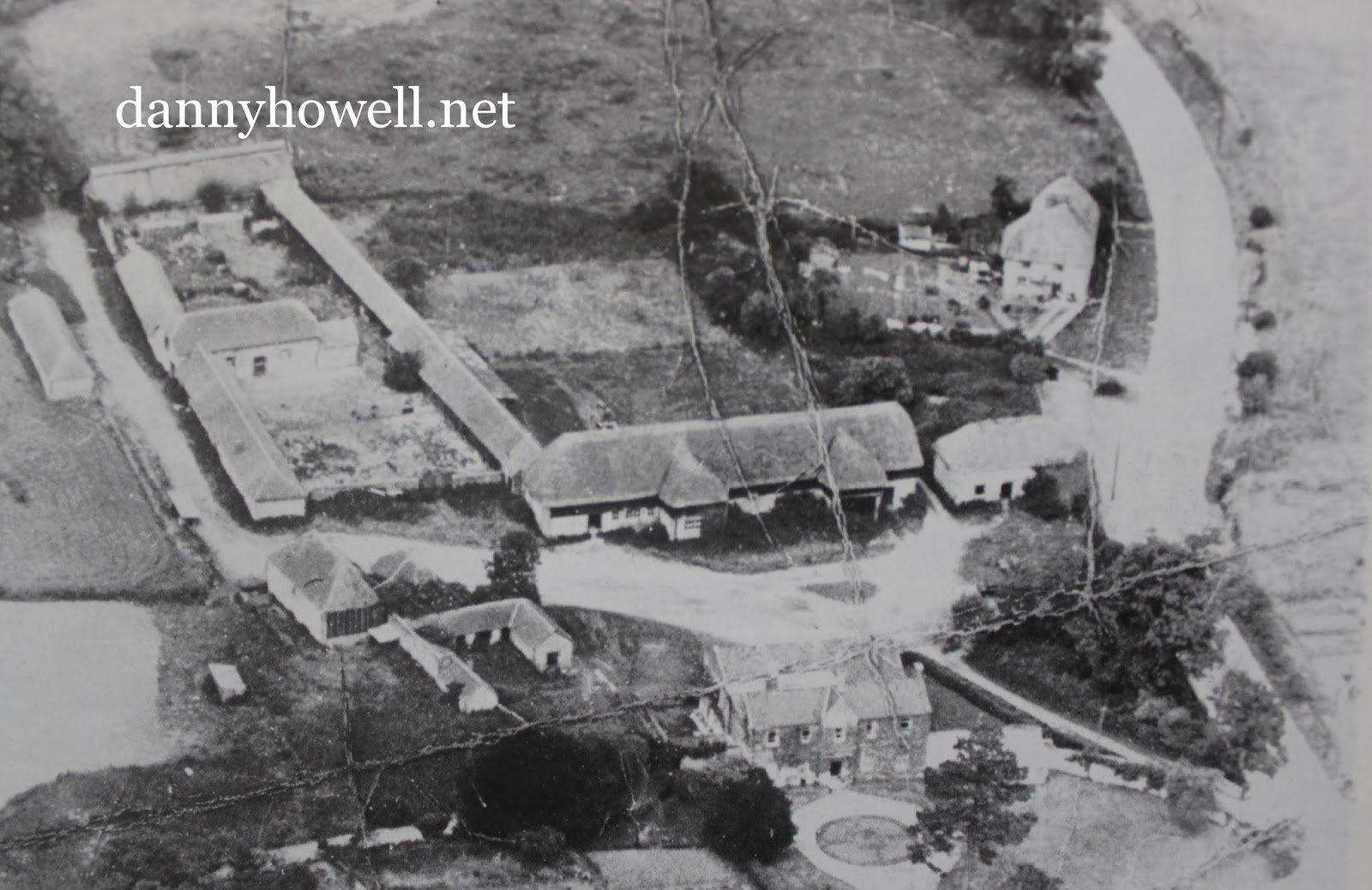
Boreham Farm, Warminster, In The Mid-1960s.

Boreham Farm, 
on the east side of Warminster,
pictured in the mid-1960s, 
shortly before it was demolished.

Boreham Road runs left to right off 
the lower edge of the photo,
Boreham Crossroads is just off the 
lower right corner of the  photo, 
and Woodcock Road can be seen on the right.


The farmhouse and all the farm buildings
were demolished and bulldozed flat circa 1968.
All the rubble was spread out and buried
under what became the 
Kingdown School Sports Field
(St. George’s Playing Field).

The thatched cottages, near the top right corner
of the picture, remained untouched.

Tom Bazley was the last to farm Boreham Farm.

Boreham Farm, Warminster, Sale 1920

The Warminster auctioneers D. & D.H. Waddington were instructed by Grenville N. Temple to sell by auction, “three good corn, sheep, dairy farms & water meadows, known as Bishopstrow, Boreham & Temple Farms, together with accommodation pasture fields, building sites, and cottages, the whole having an area of 2215 acres, 0 roods, 0 perch, in 20 convenient lots” in 1920. The sale took place at the Town Hall, Warminster, on Saturday 14th August 1920, commencing at 3.00pm.

Boreham Farm, which was Lot 2, was described in the sale catalogue, as follows:

“THE VALUABLE FREEHOLD RESIDENTIAL AGRICULTURAL AND SPORTING PROPERTY, BEING BOREHAM FARM, WARMINSTER, In the Parishes of BISHOPSTROW and WARMINSTER, about One mile from the TOWN of WARMINSTER. With exceptionally good and convenient Residence, Spacious Buildings, Dairy, 7 Cottages, Hill Barn, Buildings, and Yards. Good ARABLE, PASTURE and DOWN LAND, WATER MEADOWS, The HISTORIC ‘BATTLESBURY WOOD,’ good SHOOTING, having a total area of 936 ACRES 3 ROODS 14 PERCH.”

“The House which is approached from the Main Road by a Carriage Drive, is most substantially built in stone and roofed with slates and comprises the following accommodation: viz: – Entrance Hall, Back Hall, Large Dining Room, and Drawing Room, Breakfast and Sitting Room, Kitchen, Scullery, Larder, Cellar, 8 Bedrooms, Bath Room, and W.C., Situate near are Coal, Wood and other houses, Walled Flower and Kitchen Gardens, Greenhouse.”

“The Farm Buildings consist of a Range of Brick Pigsties and Meal House, Timber Granary, Wagon and Implement Shed, Nag Stable for 4 horses, Harness Room, Cowstalls for 10 Cows, Calf Pen, Cart Horse Stable for 10 Horses with Loft over, Harness House, Motor House, and Cart Shed. Cow Byre for 40 Cows, 6 Pigsties, Meal House, Open Cattle Sheds and Yards with Water Troughs, Cow Stalls for 18 Cows, Calf Stage, Large Barn, Engine and Implement Shed, Boiler House, Cart Horse Stable for 8 Horses with Loft over and Chaff House, Thatched Colt’s House, 2 Thatched Cottages, Row of 5 Brick and Tiled, each containing KITCHEN, WASH-HOUSE, 2 BEDROOMS; Dairy, Cheese Room, Coal House, etc., Hill Barn, Stable, Shedding and Yards.”

“The Farm House Buildings and Cottages are supplied with water from the Warminster