1958:
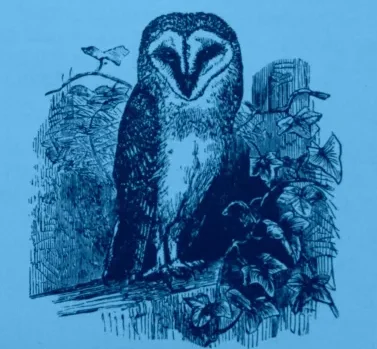
‘The Rookery’ in the parish of Warminster is marked on the Ordnance Survey map, Heytesbury, Sheet ST 94, 1:25,000 First Series, printed and published 1958. ST 902 476.
A gazetteer of places and things beginning with the letter R in the parish of Warminster (includes Boreham).
1958:
‘The Rookery’ in the parish of Warminster is marked on the Ordnance Survey map, Heytesbury, Sheet ST 94, 1:25,000 First Series, printed and published 1958. ST 902 476.
Victor Manley, in his Regional Survey Of The Warminster District, Volume Five, compiled in the 1920s and 1930s, listed and attempted to explain the meaning of several local place names. He included Rack Close in his list, saying it was in Common Close. He wondered if Rack Close was derived from Rick Close. Later, in another part of his list, Manley, referring to the Rack Close again, notes: “Common Close in 1756 ‘afterwards a farmyard’ where Wesley preached on May 5th, History Of Warminster, page 217, under ‘Wesleyans’-â€
1838 Survey of Warminster:
Number: 1825
New reference number: 1799
Page: 83
Address: Rehobath
Property details: House (Rehobath) and Garden &c.
State: –
Owner: Timothy Goodman.
Lessee: –
Occupier: Timothy Goodman.
Number: 1826
New reference number: 1800
Page: 27
Address: Rehobath.
Property details: Garden (part) and Orchard.
State: –
Owner: Marquess of Bath.
Lessee: Timothy Goodman.
Occupier: Timothy Goodman.
A piece of land called Rogers’s Bury Ground is numbered 103 on a map of the Eastleigh and Warminster estates of Sir John Dugdale Astley in Warminster, Bishopstrow, Sutton Veny, Norton Bavant and Upton Scudamore. This map, dated 1835, is in the Wiltshire and Swindon History Centre at Cocklebury Road, Chippenham, Wiltshire, SN15 2QN. (reference 3330/2L).
A key at the base of the map gives the following details:
103
Premises: Rogers’s Bury Ground.
Occupier: Ambrose Patient.
Row, measure: 0 acres, 3 roods, 22 perches.
Arable, measure: 7 acres, 2 roods, 11 perches.
Parish: Warminster.