Bishopstrow Resident Leo Aylen To Make A Film About Mangosuthu Buthelezi

Wednesday 1st August 2018

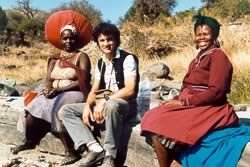
Leo Aylen, who lives in Bishopstrow, is off to KwaZulu, South Africa, following an invitation to make a film about Mangosuthu Buthelezi. 

Leo refers to Buthelezi as “an honest and honourable politician who has regularly contravened the unwritten law of political behaviour — by speaking the truth.” 

Leo, in his blog, also writes: “Some people are starting to realise that Mangosuthu Buthelezi, who for the last 40 years has had regular assassination threats, almost, almost, almost,  in 1986, succeeded in instigating a peaceful transfer of power from South Africa’s white government. The abominable President P.W.Botha, his lumpily evil character appropriately matched by his purblind stupidity, put a stop to such a revolution. So it was left to the ANC, running their so-called “peaceful’ revolution which left over 20,000 dead, mostly Zulus, mostly innocent civilians, some of them killed by a method so brutal it would have disgusted the Nazis.”

Buthelezi is about to celebrate his ninetieth birthday, and he still risks his life.

Leo Aylen (pictured above) was born in 1935 in KwaZulu, South Africa, the son of Charles Aylen, whom the Zulus elected Bishop of Zululand. Although brought up in England, Leo kept in touch with Zulu friends, including Prince Buthelezi with whom he has corresponded for twenty years. He spent time in KwaZulu during the late 1970’s on a travel fellowship, and then made a performing tour of theatres, campuses, and Black arts centres; he performed at the Space in Cape Town, and the Market Theatre in Johannesburg. In the late 1980’s, as apartheid was collapsing, he returned to the country, was detained by South African Army Intelligence for possessing books by banned black writers, participated in various Zulu and Swazi conferences, and gave poetry performances, including one to a gathering of three thousand Zulus in an open-air amphitheatre, as a prelude to a display of Zulu dancing. He supports a charity Helwel which raises money for community development in KwaZulu.

https://leoaylenblog.wordpress.com/blog/

Sunset Cinema And Fine Wiltshire Fare At The Bath Arms, Horningsham

Thursday 18th August 2016

Sunset Cinema
at
The Bath Arms, Horningsham.

This summer, The Bath Arms at
Horningsham has been pioneering
Al fresco dining and good times entertainment. 

After a highly successful Bastille Day showing of
Amelie, we’re proud to announce a series of
exclusive outdoor sunset cinema nights.

We will be hosting the showings on our 
luscious green lawns on the following evenings:

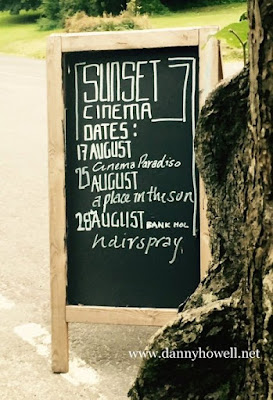
Thursday 18th August 2016, 8.30 p.m.
Cinema Paradiso.

Thursday 25th August 2016, 8.30 p.m.
A Place In The Sun.

Sunday 28th August 2016, 8.30 p.m.
Hairspray.

Thursday 1st September 2016, 8.30 p.m.
The Way Way Back.

Thursday 8th September 2016, 8.30 p.m.
Sing-A-Long-A-Sound-Of-Music
(closing with fireworks!).

The outdoor cinema has been built outside
on the edge of the Longleat Estate at
The Bath Arms and will play from sunset to starlight
entertaining guests and children this summer holiday.

The pub’s talented Head Chef will be showcasing
the best cuisine from his new menu (see menu here).
Packed with fresh favours from the best local and
seasonal produce Wiltshire has to offer, it is set
to be a show stopping series of events which
should be in every local film and foodie fan’s diary.

For those with an appetite for something in a little
more casual, there will be homemade wood fired
pizzas, juicy steak sandwiches and tempting snacks
available on each of the nights.

Showings start at 8.30 p.m.
and diners are required to sit down no later
than 8.00 p.m. for the chance to indulge
in some fine Wiltshire fare.

To book, telephone 01985 844308
or email: enquiries@batharms.co.uk 

Weather permitting.
Give us a call on the day if you’re unsure.

http://www.batharms.co.uk/event/outdoor-sunset-cinema-nights/

Old Verlucian Amanda Is 40 Today

Saturday 19th May 2012

Amanda de Cadenet (daughter of the racing car driver Alain de Cadenet), celebrates her 40th birthday today. Amanda is a former pupil of Warminster School, at Church Street, Warminster.

The Old Verlucian (as former Warminster School pupils are known) became the co-presenter of The Word and Big Breakfast television shows, before becoming an actress, starring in films Four RoomsAllison AndersFall, and Brokedown Palace. She also worked for several magazines including Spin, Harper’s Bazaar, and Jane.

From 1991 to 1997 she was married to John Taylor, the bassist with Duran Duran, with whom she had a daughter called Atlanta. In 2006 Amanda married Nick Valensi, the guitarist with The Strokes. Amanda and Nick are the parents of twins.

Amanda has also added photography to her talents. In 2010 Amanda photographed the American reality TV star Kim Kardashian for the cover of the 22nd of November issue of People magazine, when they profiled Kim for her thirtieth birthday.

The Palace And The Regal Cinema, Warminster

From Yesterday’s Warminster, by Danny Howell, published in March 1987:

When Albany Ward sought the lease of the Bleeck Memorial Hall in May 1912, to convert it into a cinema, the Urban District Council consulted the rate-payers through a postal referendum. Of 1,164 cards sent out, 840 were returned, of which 602 were in favour, 154 against and the rest declared invalid. Mr Ward ran the largest circuit of theatres in the south west and he installed an electric plant to run the cinematograph and light both the interior and exterior of the Hall. The interior was redecorated and the old seats in the balcony replaced. A cycle store was built at the rear of the building, for patrons from surrounding villages – free of charge.

Albany Ward’s Electric Picture Palace opened on Monday 9 September 1912; every seat and inch of space inside was filled. The first programme featured Don Juan, a 5,000 feet long film described as “a magnificent coloured historical masterpiece’, plus Jack and JinglesFate’s Interception, and The Funeral Of General Booth. Admission prices were 1s., 9d., 6d. and 3d. Albany Ward’s policy was to present family entertainment with nothing obnoxious and a complete change of programme every Monday and Thursday, with performances on Mondays, Tuesdays, Thursdays and Fridays, and a children’s matinee on Saturdays. There were also performances on Saturday evenings, the first house at 7.00 p.m. and the second at 9.00.

Among the first managers were G.H. Bray, a former member of the Frome Military Band; Mr Lennox-Sheppard; H. Rolls; and Yorke Trevor. Manager’s wife Mrs Lennox-Sheppard was one of the first lady pianists who played the accompaniment, and others included Miss Burgess and Mrs Minhinick.

The first “talkie’ at the Picture Palace was The Hollywood Revue, starring Joan Crawford, Norma Shearer, Lionel Barrymore, Laurel and Hardy, and a host of other big names, shown in May 1930.

After nearly 15 years of presenting silent films and other entertainment at the Palace, Albany Ward did not renew his lease of the building when it expired on 25 March 1927. The UDC received letters from Charles Rowe of Westbury and Mr Barnard of Farington, respectively, offering to rent the Picture Palace on terms, and Charles Rowe subsequently became the new lessee. He promised to promote a wider range of entertainment than hitherto, and to bring the cinema up-to-date with new equipment. The UDC, for their part, anxious to prevent Warminster residents from going elsewhere for their entertainment, allowed Charles Rowe to make a few interior changes and undertook repairs to the building, including the roof. The Palace cinema re-opened on Easter Monday, 18 April 1927.

Charles Rowe also had the running of the Vista Cinema at Westbury and he screened the same programme at both venues, alternating the support film and the feature, the same evening. Jack Field, who worked as the assistant projectionist at the Palace under the watchful eye of head projectionist Bill Nicholson, between September 1933 and February 1934, recalled “The support film was shown first and the feature second at Warminster and vice-versa at Westbury. Before the interval we would rewind about half of the programme and this was taken by car to Westbury, where the first spool of the other film was picked up and brought back. Depending on the length of the programme they sometimes had to make two trips but on Saturdays when there was also a matinee, the trip could be made anything up to six times. Occasionally there were delays, maybe because of a stoppage with the film at one of the cinemas or the car breaking down at Biss Bottom or somewhere else between Warminster and Westbury. When that happened we would be biting our nails and playing music over and over again to keep the audience quiet. Sometimes the film would come back from Westbury not rewound because they were running late and that caused a great deal of panic and consternation at the Palace projection room. When I look back I can see Charles Rowe showed the same film at both cinemas for economy reasons but it was a crazy way of doing things because it was so easy for it all to go wrong.”

Charles Rowe’s son, Tommy, eventually took over the management of the Palace until Westbury-born Edgar Chapman replaced him in 1934. Edgar’s association with Charles Rowe had begun in 1922, when, as a 12 year old entrant in Westbury Carnival, he was a top prize winner with his impersonation of Charlie Chaplin. Charles Rowe spotted him and took him about the district to publicise silent films starring Charlie Chaplin. Edgar began working full-time for Charles Rowe when he left school, aged 14, at the Vista Cinema, Westbury, as the rewind boy, chocolate seller and general dogsbody. He eventually became the assistant manager under Charles Rowe at Westbury and he also became the relief manager at the Arcadia and Rink cinemas in Swindon. Travelling to and from Swindon in Charles Rowe’s van in the wintertime was uncomfortable, to say the least, because the van had no heating, the side windows were made of celluloid, and he had to use half a potato to prevent the windscreen from icing up.

A year after his appointment as manger of the Palace, a second cinema, the Regal, was purpose built at Warminster, because the northern part of the town was soon to be used as a garrison base for large numbers of troops and their families. This prompted Charles Rowe to enhance the appearance of the Palace entrance by removing the old reading room, and converting the billiard room into a new lounge. Permission to make these alterations was only granted after a great deal of opposition. Following his service in the RAF and the Fleet Air Arm during the Second World War, Edgar Chapman continued as manager of the Palace and in 1962 he became the manager of the Regal as well. The Palace closed as a cinema two years later and he remained as the Regal manager until his retirement in 1976.

The Regal Cinema at Weymouth Street, opposite the entrance to the Lake Pleasure Grounds, was opened at 2.30 p.m. on Easter Monday, 22 April 1935, by C.S.H. Perry, a former Chairman of the UDC. The architect was Ernest S. Roberts, LRIBA, of Birmingham, who had already designed over 50 cinemas since 1918, varying in capacity from 400 to 2,100 persons. Among his other cinemas was the one he had rebuilt at Devizes and one at Shepton Mallet. At the time of the Regal opening, he had nine others in the progress of erection. Warminster’s new purpose-built cinema took less than 14 weeks to complete, at a cost of running into five figures. The main contractors were W.E. Chivers and Son of Devizes; the frames for the seats were made by the Ex-Service Industries at Copheap Lane, with 500 seats in the auditorium and 180 in the balcony. The original interior colour scheme was old gold and blue; and the exterior featured a neon lighting display. The directors of the Regal, Warminster Ltd., were H.C. James (Chairman), Austin Pilkington (Managing Director), H. Chivers, F. Chivers, A.W. Hall, P. Hall, and E.S. Roberts. At the opening ceremony they donated cheques to the Warminster District Nursing Assoiation, the Hospital and the Orphanage. The first programme at the Regal included Blossom Time, a film dubbed “the screen’s greatest spectacular romance’, starring the world-famous tenor Richard Tauber. Initial admission charges at Warminster’s new cinema were 1s. 6d., 1s. 3d., 1s., and 7d. for adults; and 1s., 9d., 7d., and 5d. for children if accompanied by adults.

E.S. Bryden was the manager until July 1936, when he was appointed manager of the Coliseum at Harrow. His successor at Warminster for 22 years was Bert Kerr, a Tasmanian who came to this country with the Australian Expeditionary Force during the First World War. The AEF left camp at Sutton Veny to serve in France and on their return Bert Kerr decided to stay in England and make his home at Warminster. He married into a local family, the Peaces of Imber, and was later elected to the UDC, on which he served during the Second World War. He lived at Ash Walk and became a champion of the working classes, especially Council House tenants. Among his many “battles’ was his bitter opposition to the exchange of the children’s playing field from Pound Street to Newtown. He was a man of strong principles, outspoken in all Council deliberations and he cared not whether he upset or befriended others with his views. His greatest achievement was the raising of £5,000 to purchase a Mk Vb Spitfire, appropriately named Warminster, which was built at Castle Bromwich in 1942. Bert Kerr received great report from Mrs Slyde and the members of the Warminster National Savings Committee who raised the sum needed. He was also an active member of the British Legion, at one time a Vice-Chairman. He died in a dressing room at the Regal after taking an overdose of barbiturate tablets on 7 November 1958. He was 66 years old. Throughout his time at Warminster he had kept an interest in the annual ANZAC Commemorations at Sutton Veny, laying a wreath at the ceremonies. He was buried, as he wished, in the village churchyard, with many Australian colleagues who died in a mass ‘flu epidemic.

Warminster, of course, can boast its very own film star. Although he was not born in Warminster but London, young Freddie Bartholomew, who came in 1927 when he was three, was quickly accepted as one of Warminster’s favourite sons. He was brought up by his aunt, Miss Millicent “Cissy’ Bartholomew, at Carlton Villa, Portway, the home of his grandparents, Mr and Mrs F. Bartholomew Except for 12 months at Lord Weymouth’s Grammar School at Church Street, Freddie was educated solely by his aunt Cissy. By the time he was four he was appearing at local concerts and everywhere he went he won both hearts and admiration. At three-and-a-half years old he was a brilliant play actor, at four a comedian, a monologist at five, an elocutionist and mimic a year later and at seven he was a Shakespearian tragedian, reciting word-perfect passages. He won many elocution contests and could recite 50 different poems, and his appearances on stages throughout the West Country and London made him a household name.

Mrs Gwen Howell, recalling one of Freddie’s early appearances in Warminster, said “Freddie lived at Portway, by the corner of the Avenue School playing field, and he used to say recitations. He was ever so good and one instance I can remember was at an evening’s entertainment at St. John’s Parish Hall. Freddie recited, Gloria Sloper was a little dancer, and Vera Shepherd and I played a duet on the piano. Alas, Freddie was the only one of us who got to Hollywood.” Although Freddie’s ambition was to be an engine driver, no doubt because his grandparents’ house at Portway was near the railway line and in sight of the Station, go to Hollywood he did.

Following his appearances between 1930 and 1934 in several British films including ToylandFascination, and Let’s Go Naked, he went to the Californian film capital in 1934, accompanied by his aunt. That year he landed his first American film role as the young lead in Metro-Goldwyn-Mayer’s production of Charles Dickens’ classic David Copperfield, after being picked from 10,000 hopefuls. Producer David O. Selznick said at the time “Freddie was the final choice because of his unaffected personality, his wholesome boyishness and his decidedly British manner of speech.” The part was a triumphant success for Warminster’s boy film star and he soon secured his second leading role in a Hollywood movie, this time in Anna Karenina, in which he starred with Greta Garbo.

The 1930s brought him a host of other screen successes, including Professional SoldierLittle Lord FauntleroyThe Devil Is A SissyLloyds Of LondonCaptains CourageousThe Boy From Barnardo’s, Listen Darling, Man’s Heritage, and Two Bright Boys. Fame and fortune brought legal wrangles between his aunt and his parents, and it was once estimated that Freddie was the subject of a court case twice a month between 1934 and 1939. More films followed in the 1940s including Swiss Family RobinsonTom Brown’s SchooldaysNaval AcademyCadets On ParadeA Yank At EtonJunior ArmyThe Town Went WildSepia Cinderella, and Outward Bound. Freddie, who married thrice-divorced Maely Danielle, starred in Escape If You Can in 1951 and afterwards pursued a career in advertising and television show production.
A Video Profile On Warminster

December 1986

A new video film documenting much of Warminster’s history from bronze-age times to the present day goes on general sale to the public this weekend.

The film, which is titled A Video Profile on Warminster has been produced by Video Pictures, who are based in the town, and marks their biggest venture to date into making specialist feature films.

The completed video has a running time of approximately 55 minutes and represents only a fraction of the thousands of feet of film the company shot on location in Warminster and elsewhere during the summer months.

It is narrated by Jane White and the script was researched and written by Warminster historian Danny Howell. Lighting was masterminded by Amanda Chaunt and the film was directed by Bridget Penny who runs Video Pictures with her husband Eric.

Bridget and Eric established the company in 1982 and have been involved with recording private functions such as weddings and making promotional films for industry. Earlier this year they produced successful video films of the Warminster Fire Brigade Centenary Celebrations, and the Warminster and District Community Play “Imber”.

Although they will still be concentrating on filming private functions and events, they now hope to follow up the “Warminster Profile’ with similar films on other towns in Wiltshire and Somerset.

“A Video Profile on Warminster’ commences by taking a look at some of the hills and earthworks around Warminster where early man once lived, before taking viewers on a guided tour of many of the town’s curiosities and buildings, beginning with the Parish Church of St. Denys, The Minster. It was probably at a spot near where the Church now stands that the first urban settlement of Warminster, or Worgemynster as it was recorded at the end of the 9th century, began in mid Saxon times.

En route, narrator Jane White meets the Curator of Warminster’s Dewey Museum, who explains the role of the Museum and describes some of the displays therein; and Mr. Mayhew at Devizes Museum, who takes great delight in showing one of Warminster’s more gruesome relics – the mummified arm of George Carpenter, who was hung for murder at Warminster in 1813.

On a lighter note, viewers are also told and demonstrated by Mr. Roderick McAdams and Mr. Stuart Monard how the game of “Fives’ has been played at Warminster School since the late 18th century.

The film also incorporates many old pictures of the town, blended in with today’s modern scenes to give a “then and now’ look at many of Warminster’s buildings and streets. The film also highlights much of Warminster’s past prosperity as a corn market, for which it achieved great fame for several centuries; as well as the cloth trade and malting industries. It also includes a few glimpses of some of the town’s former residents who contributed much to the community’s way of life.

The film received its premier at the December meeting of the Warminster History Society, earlier this month, when it was thoroughly enjoyed by those who saw it. It certainly is worthwhile to own a copy of your own, as it is ideal for entertaining family and friends. And of course, the joy with video is that you can stop it and watch your favourite scenes over and over again, whenever you wish.

A Video Profile On Warminster

December 1986

A new video film documenting much of Warminster’s history from bronze-age times to the present day goes on general sale to the public this weekend.

The film, which is titled A Video Profile on Warminster has been produced by Video Pictures, who are based in the town, and marks their biggest venture to date into making specialist feature films.

The completed video has a running time of approximately 55 minutes and represents only a fraction of the thousands of feet of film the company shot on location in Warminster and elsewhere during the summer months.

It is narrated by Jane White and the script was researched and written by Warminster historian Danny Howell. Lighting was masterminded by Amanda Chaunt and the film was directed by Bridget Penny who runs Video Pictures with her husband Eric.

Bridget and Eric established the company in 1982 and have been involved with recording private functions such as weddings and making promotional films for industry. Earlier this year they produced successful video films of the Warminster Fire Brigade Centenary Celebrations, and the Warminster and District Community Play Imber.

Although they will still be concentrating on filming private functions and events, they now hope to follow up the “Warminster Profile’ with similar films on other towns in Wiltshire and Somerset.

A Video Profile on Warminster commences by taking a look at some of the hills and earthworks around Warminster where early man once lived, before taking viewers on a guided tour of many of the town’s curiosities and buildings, beginning with the Parish Church of St. Denys, The Minster. It was probably at a spot near where the Church now stands that the first urban settlement of Warminster, or Worgemynster as it was recorded at the end of the 9th century, began in mid Saxon times.

En-route, narrator Jane White meets the Curator of Warminster’s Dewey Museum, who explains the role of the Museum and describes some of the displays therein; and Mr. Mayhew at Devizes Museum, who takes great delight in showing one of Warminster’s more gruesome relics – the mummified arm of George Carpenter, who was hung for murder at Warminster in 1813.

On a lighter note, viewers are also told and demonstrated by Mr. Roderick McAdams and Mr. Stuart Monard how the game of “Fives’ has been played at Warminster School since the late 18th century.

The film also incorporates many old pictures of the town, blended in with today’s modern scenes to give a “then and now’ look at many of Warminster’s buildings and streets. The film also highlights much of Warminster’s past prosperity as a corn market, for which it achieved great fame for several centuries; as well as the cloth trade and malting industries. It also includes a few glimpses of some of the town’s former residents who contributed much to the community’s way of life.

The film received its premier at the December meeting of the Warminster History Society, earlier this month, when it was thoroughly enjoyed by those who saw it. It certainly is worthwhile to own a copy of your own, as it is ideal for entertaining family and friends. And of course, the joy with video is that you can stop it and watch your favourite scenes over and over again, whenever you wish.

Haunted England

Haunted England is a short (24 minutes) documentary film, directed by Michael Winner and released, with a ‘U’ certificate in 1961. Michael Winner was also the producer, assisted by Pat Ryan. The cinematography was by Charles Marlborough. Among the actors taking part were Tom Corbett and Irene Culyer.

Tony Hillman on the IMBd page describes it as follows:

“David Jacobs, better know as a disc jockey, takes us on a guide to some of the haunted places in England. The ghost of Anne Boleyn at Blickling Hall in Norfolk, a girl who lost her head literally in Burton Agnes Hall, Yorkshire, a phantom funeral at Lyme Hall in Cheshire, a lady in white who appears at Blenkinsopp Castle in search of hidden treasure, a 10th century nobleman who rides the Welsh Stiperstone mountains in search of his missing bride, The Devil’s Chair in the Stiperstones which causes a thunderstorm if anyone sits in it and the Marquis of Bath tells of some of the ghosts at his stately home of Longleat.”

Captain Bill Grant, who was a member of the Warminster Dramatic Society and later lived at Bishopstrow, played a headless horseman in the Longleat section of the film. The Western Advertiser, issue dated Saturday 12th August 1961, mentions that Captain Grant in the guise of a headless horseman “urged his mount down the wooded slopes of Heaven’s Gate in Longleat Park.” Grant is billed in the end credits as a “headless horseman” but if you watch the film though, Grant does not appear ‘headless’, nor is he seen descending the woodland slopes. He is actually seen on horseback in “a lonely part of the grounds” below Heaven’s Gate, playing an 18th century nobleman talking with his groom. Not that you can hear what is being said, as it’s what’s called a non-speaking role. Grant is also seen riding off on horseback.

Also in the film is Emlyn Rees from Warminster.

Haunted England can be viewed for free online on the BFI website:
player.bfi.org.uk/free/film/watch-haunted-england-1961-online