Closure Of WAG School Uniform Bank

Tuesday 10th September 2024

A message from the Warminster Action Group (WAG):

Important Update: Uniform Bank Closure

Dear Warminster Community,

We wanted to let you know that after much consideration, we’ve decided to close our Uniform Bank. Over the past few years, it’s been wonderful to see how the Uniform Bank has supported families, but due to a lack of volunteers to run it effectively and with many local schools now offering second-hand uniforms themselves (raising funds for their own causes or giving them to people in need ), we feel it’s time to step back from this service.

However, we do still have some uniform left! If you’re in need, please pop in on either a Wednesday or Thursday over the next few weeks to see what we have available.

We’re incredibly grateful to everyone who’s donated, volunteered, and supported the Uniform Bank over the years. You’ve made a real difference, and we couldn’t have done it without you!

We’ll continue focusing on our other community initiatives and look forward to your continued support in creating a connected and caring Warminster.

Thank you all again for being a part of this journey.

The WAG Team.
More Scarves And A Hat Left For The Homeless And Those Who Might Be Feeling The Cold In Warminster

Tuesday 29th November 2016

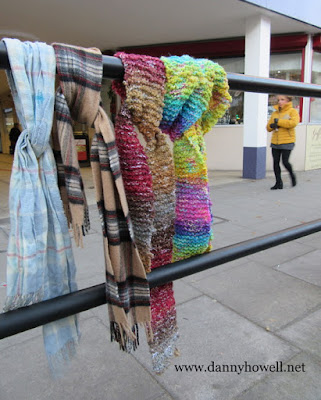
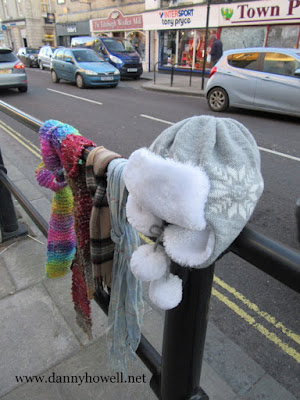
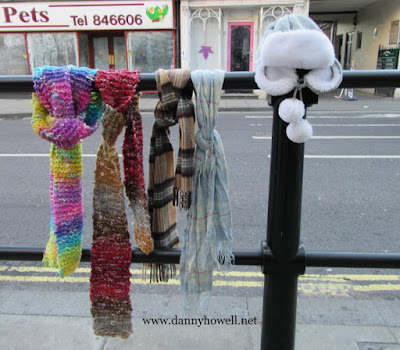
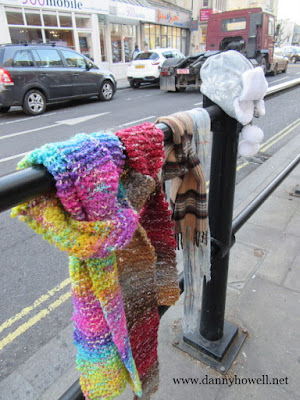
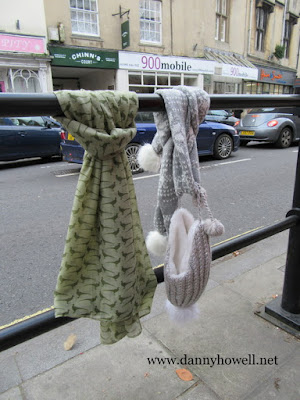
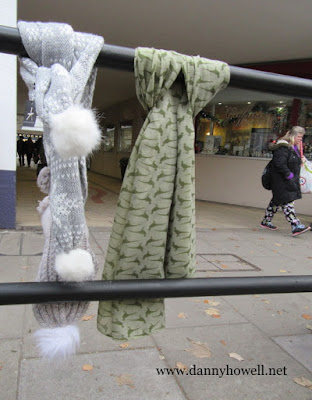
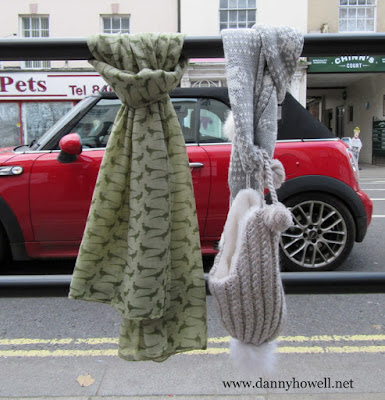
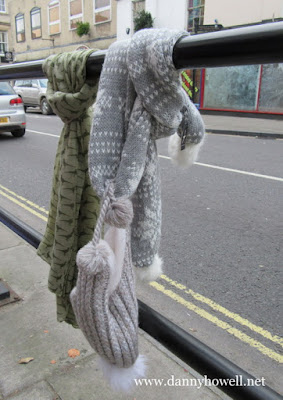
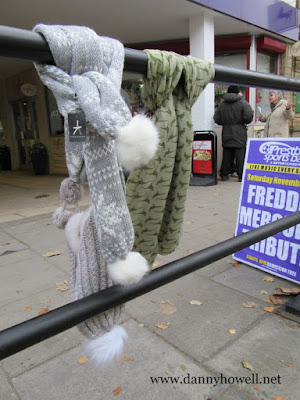
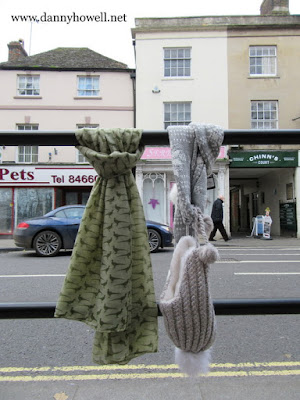
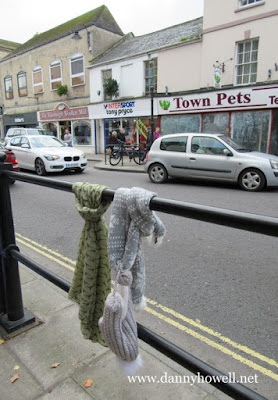
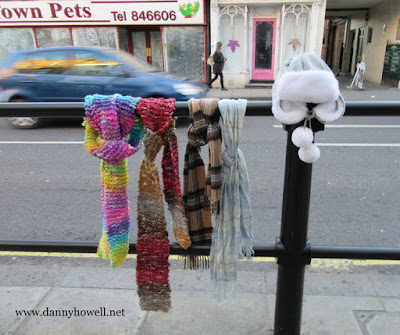
More scarves and a hat left on the railings
in the Market Place, Warminster (at the 
southern end of Three Horseshoes Walk).

Kind-hearted people have been leaving scarves 
on railings or tied to lamp posts in Warminster.

The idea is that if someone is homeless 
and on the streets, or if a person is just 
feeling the cold, they can help themselves 
to a scarf or a hat~ it’s also a wonderful way 
of letting the less fortunate know that there 
are people in Warminster who really care.

Photographs taken by Danny Howell
on Tuesday 29th November 2016.

Help Yourself To A Scarf In Warminster If You’re Homeless And On The Streets Or Just Feeling The Cold

Saturday 26th November 2016

Kind-hearted people have been leaving scarves
on railings or tied to lamp posts in Warminster.

 The idea is that if someone is homeless
and on the streets, or if a person is just
feeling the cold, they can help themselves
to a scarf ~ it’s also a wonderful way of
letting the less fortunate know that there
are people in Warminster who really care.

Scarves tied to the railings in the 
Market Place, Warminster,
opposite the southern entrance to
Three Horseshoes Walk.

Photographs taken by Danny Howell
on Saturday 26th November 2016.

Wool Is The Best Material For Keeping The Body Warm

Friday 1st October 2004

Victoria Coombes has a letter published in The Times:

Sir, With winter approaching why are our shops and supermarkets heated to such a high temperature? While staff sit at tills wearing thin, short-sleeved blouses, customers arrive in heavy clothes to combat outdoor weather conditions.

In the interests of energy conservation wouldn’t it make more sense to reduce the heating in shops and provide staff with a warmer uniform? What has happened to wool? In my experience it is by far the best material for keeping the body warm, but it is becoming increasingly difficult to find any wool clothes in our shops.

Yours sincerely,
VICTORIA COOMBES,
2 Railway Cottages, Bishopstrow,
Warminster, Wiltshire BA12 0ER.

A Teenager’s View Of Clothes Shopping In Warminster

By Polly Few; first published in The Warminster Digest, May 1997:

Mostly, I have to go to Bath for my clothes. New Look and Dorothy Perkins are quite good. Now and then the shops in the [Three Horseshoes] Mall are good. Sometimes I can find things in Encore at prices that I can afford. There is nothing for young men in Warminster. It is a complete waste of time for them. It would be nice if there was a Top Shop in town.

Over 200 People Attended Panache Fashion Show, Raising £220 For Warminster Carnival Funds

Friday 16th August 1991

A fashion show which took place recently in Warminster was attended by more than 200 people and has raised £220 for Warminster Carnival funds.

The show, organised by Mrs. Cathy Day, was held at Kingdown School, Woodcock Road, Warminster, and featured clothes provided by Mrs. Barbara Bates of Panache Fashions, East Street, Warminster.

Local models paraded the cat walk, which was decorated with beautiful plants loaned by the Warminster Fuchsia Society. Holiday and casual wear were followed by smart day wear and then evening and cocktail wear. The grand finale of the evening featured clothes for a family wedding.

Music was provided by Mr. Nick Swann, of Weymouth Street, Warminster.

Members of the audience were able to buy any of the clothes they had seen and liked, and a discount was given to all purchases made on the night. The Carnival Committee received a commission on each sale, to add to Warminster Carnival funds.

Mrs. Bates, after the show, said: “I’m pleased it all went so well. The girls who modelled and the audience were marvellous.”

Lecture By Sylvia Chard ~ 18th Century Costume

The first lecture of the Warminster History Society’s Autumn Meetings 1976 was held on the evening of Monday 6th September, when Mrs. Sylvia Chard, of Horningsham, spoke on the subject of 18th century costume. Her interest in the subject grew from her work in the theatre.

A report of Mrs. Chard’s lecture noted:

It was most interesting to hear how various garments began in court circles and were adopted by the masses; or, contrariwise were taken up by the court and gentry after being successfully worn by the working-classes. This was particularly the case with the ‘Frock’, a male garment which later, with adaptations, became the ‘Frock-coat’.

Men apparently paid almost as much for cosmetics and hair care as their women-folk.

Fashion went to great extremes, prompting the beginnings of rival groups who aimed to counteract the extravagances so obvious among the upper-classes.

Female fashions were very romantic, made from rich, extravagant fabrics imported from France or Italy. The century saw a variety of styles from hoop-skirted dresses to saddle-backed dresses, to the gentle designs of the Regency period. Elaborate frills and laces were used as decoration by both men and women. Muffs were frequently seen as were other accessories such as canes, parasols, brooches, buckles, and watch-fobs.

Wigs were worn by men for most part of the century; female hairstyles were varied, the most bizarre of which was the style brushed high and elaborately decorated with all kinds of ornaments, seen around 1770 and 1780. Such creations were arranged and not dismantled for six to eight weeks at a time.

The scope of Sylvia’s talk was wide and included many charming details, too numerous to mention here. Thanks were extended to Mrs. Chard for giving such a lively and instructive lecture.