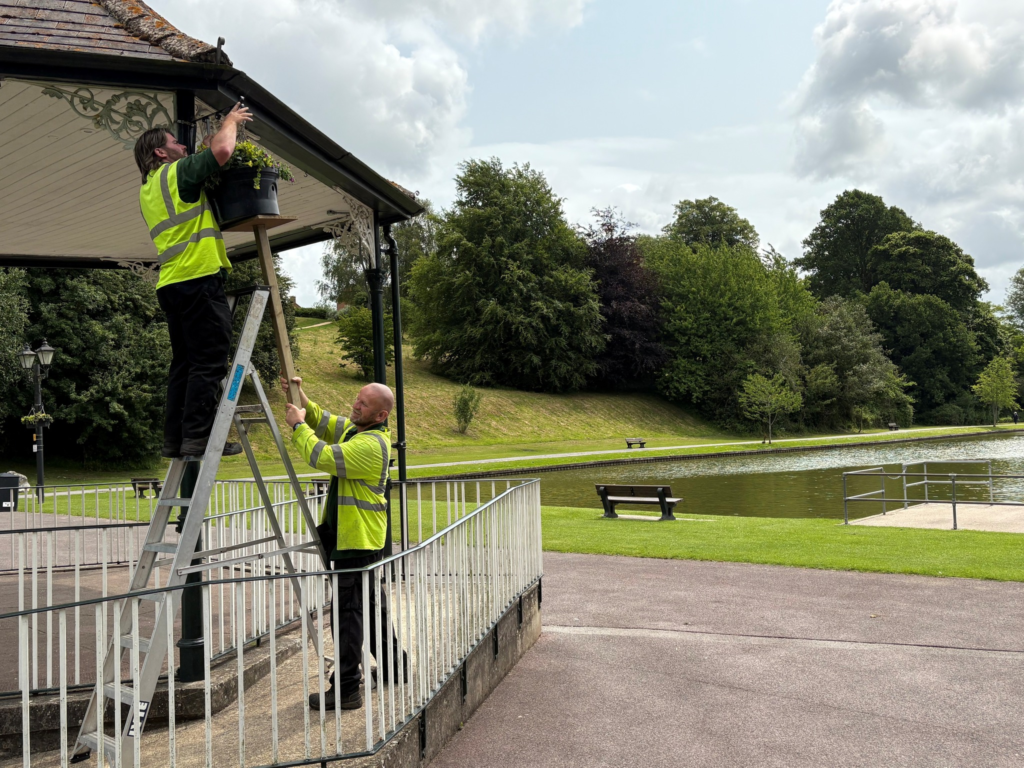
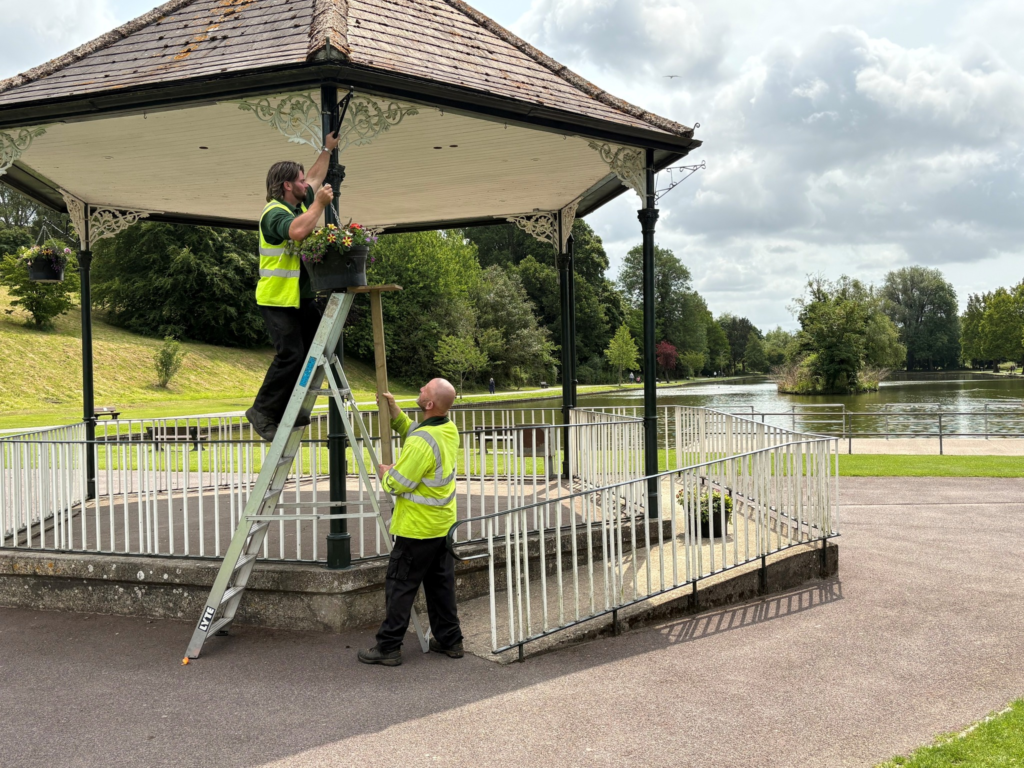
Hanging Baskets Installed Again In Warminster

4th June 2025

Press release from Warminster Town Council:

Warminster Will Bloom Again With Hanging Baskets

Warminster town centre is blooming after the Warminster Town Council Grounds Team installed more than 80 hanging baskets around the town on Wednesday 4th June.

The popular hanging baskets made a welcome return – adding a splash of colour to the High Street, Market Place, George Street, Weymouth Street, East Street, Station Road and in the Lake Pleasure Grounds.

Stuart Legg, Parks and Estate Manager, said: “Warminster continues to be on the up, attracting new businesses and visitors to the town centre. The town council will continue to invest in Warminster as part of a regular maintenance programme to ensure a good first impression for new and regular visitors.”

The town centre will soon host the Warminster Book Festival on this weekend, as well as the Warminster Independent Summer Market on Sunday 29th June.

For more information contact Warminster Town Council, Tel: 01985 214847 or email: admin@warminster-tc.gov.uk

Multiple Steps Being Taken To Enhance Warminster Town Centre

Thursday 27th June 2024

Press release from Warminster Town Council:

Multiple Steps Being Taken To Enhance Warminster Town Centre

Warminster Town Council continues to work with the Warminster Business Network and others to improve the town centre and make Warminster a place to be proud of.

The aim is for the town to maximise the benefits of the new independent market days, supporting these events and ensuring they grow and become even more successful in the future.

Warminster Town Council is undertaking a number of initiatives to improve the vibrancy and appeal of the town centre:

• Smartening-up the town centre – rubbish bins, fingerpost signs and street signs are being repaired and repainted

• Cleaning-up the streets – the team remain busy removing weeds and litter

• Promoting local tourism – themed town trails on the Explore Wiltshire App have been developed and promoted, with prizes that encourage people to visit the town centre

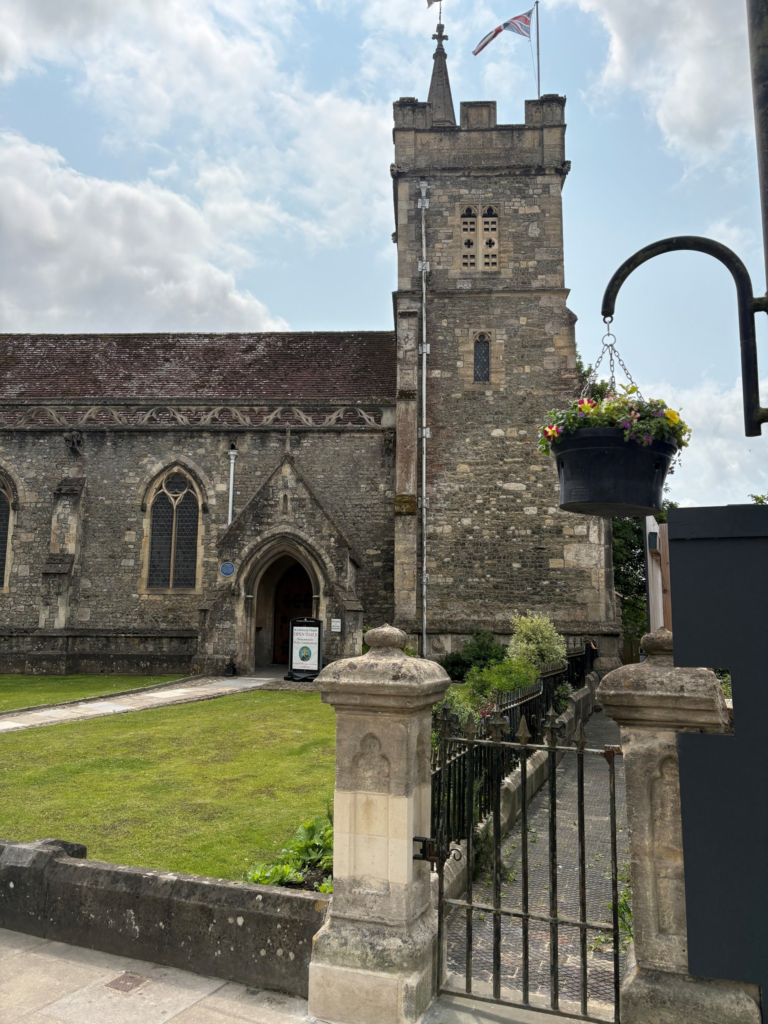
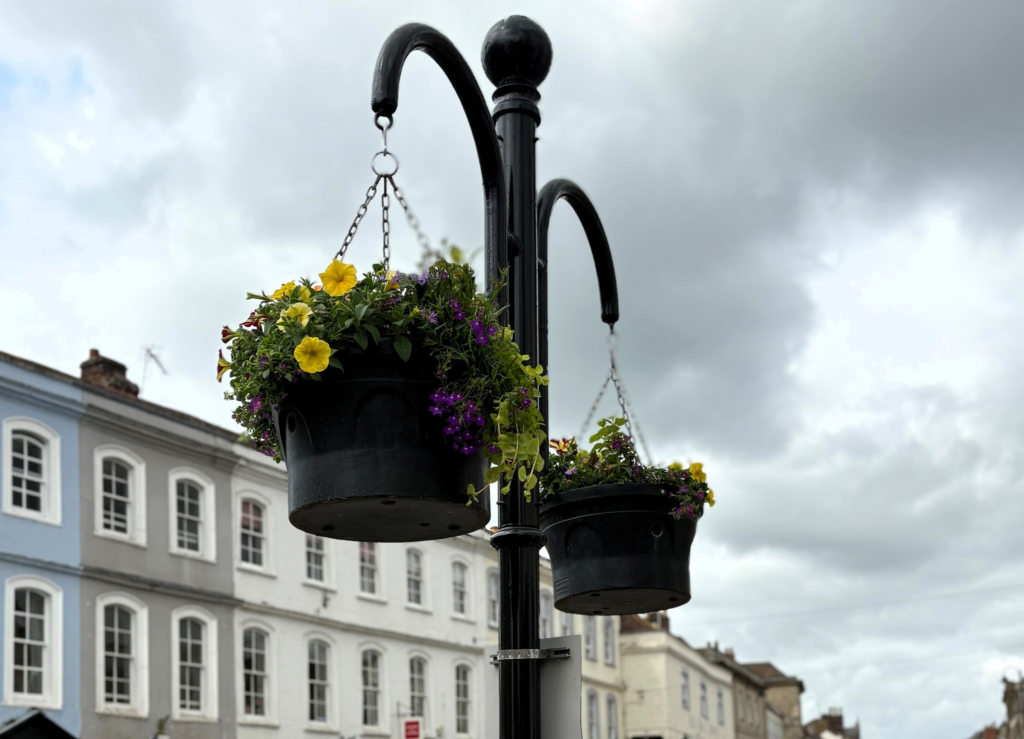
• The seasonal return of hanging baskets

• Steps to reduce crime and anti-social behaviour

• Encouraging businesses to take part in a ‘Tidy up, Smarten Up’ campaign, to enhance the look of their premises

• Written to owners of empty building to encourage them back into use

The town council has recently hand delivered a newsletter update to all businesses in the town centre to help them keep in touch and engage in the process. This can be found/downloaded on the town council website.

Cllr Jack Jones said: “I warmly welcome these initiatives and hope we will build some real momentum behind a positive vision for the town centre.”

𝐅𝐨𝐫 𝐦𝐨𝐫𝐞 𝐢𝐧𝐟𝐨𝐫𝐦𝐚𝐭𝐢𝐨𝐧 𝐜𝐨𝐧𝐭𝐚𝐜𝐭 𝐖𝐚𝐫𝐦𝐢𝐧𝐬𝐭𝐞𝐫 𝐓𝐨𝐰𝐧 𝐂𝐨𝐮𝐧𝐜𝐢𝐥, 𝐓𝐞𝐥: 𝟎𝟏𝟗𝟖𝟓 𝟐𝟏𝟒𝟖𝟒𝟕 𝐨𝐫 𝐞𝐦𝐚𝐢𝐥: 𝐚𝐝𝐦𝐢𝐧@𝐰𝐚𝐫𝐦𝐢𝐧𝐬𝐭𝐞𝐫-𝐭𝐜.𝐠𝐨𝐯.𝐮𝐤

Warminster Town Centre Would Benefit From Qualitative Improvements


July 2023

From Wiltshire Council’s Planning for Warminster â€“ a guide (published in July 2023) to how the Local Plan Review (‘the Plan’), which will replace the Wiltshire Core Strategy, will affect the town over the coming years.

The WRTCS (The Wiltshire Retail and Town Centres Study) echoes some of the content of the Warminster Neighbourhood Plan in that parts of the town centre would benefit from qualitative improvements, including Three Horseshoes Walk and the central car park, and there may also be opportunities over the plan
period to improve linkages through the central area. The neighbourhood plan identifies the central car park as an opportunity area for regeneration, with potential uses including possible new retail units, improvements to the public realm and re-organisation of existing parking arrangements, a new bus/ coach interchange, relocation of the library and relocation of the weekly market. The WRTCS confirms that the Warminster Neighbourhood Plan’s proposal for the central car park is logical, also recognising assessment of retail needs does
not indicate a requirement for a significant level of new net additional retail floorspace in Warminster. Such proposals would be dependent on securing the necessary enabling funding.

Warminster Town Centre Has A Unique Position

July 2023

From Wiltshire Council’s Planning for Warminster â€“ a guide (published in July 2023) to how the Local Plan Review (‘the Plan’), which will replace the Wiltshire Core Strategy, will affect the town over the coming years.

The Wiltshire Retail and Town Centres Study (WRTCS)4 regards Warminster’s town centre as having a unique position in that all main convenience goods stores are in and around the town centre, which in turn helps to drive foot fall in the town centre. It is concluded that there is capacity for 310sqm net additional comparison goods floorspace by 2025 and 207sqm net in 2030, and that this should ideally be centrally located to avoid attracting footfall away from the town centre.

Retail Warminster Has A Healthy Town Centre

July 2023

From Wiltshire Council’s Planning for Warminster â€“ a guide (published in July 2023) to how the Local Plan Review (‘the Plan’), which will replace the Wiltshire Core Strategy, will affect the town over the coming years.

The town centre has a range of shopping retailers which provide excellent choice and range for grocery items. The town also benefits from a weekly Friday market. The Wiltshire Retail and Town Centres Study (WRTCS)2 concludes that overall Warminster is a healthy town centre, although there are high levels of vacancies in the core retail area. Warminster’s town centre benefits from the presence of all the town’s main food stores being in and around the
centre, which drives footfall to the centre.

Work Continues On Town Improvements For Warminster

From Engage, Newsletter No.1, of Warminster Town Council, published February 2008:

Over the Christmas period and the New Year celebrations, work on the upgrading of Warminster’s town centre was suspended to enable two-way traffic to be reinstated, allowing seasonal shoppers to come into town more easily.

When the work restarted so did the inconvenience. But the improvements are essential and will be valued by all residents when they are completed by the end of February.

“The roadworks have brought much disharmony to the town,” acknowledged the Mayor of Warminster, Veronica Burden, “but the advantage will be that the ‘unpopular, unpleasant town smell’, as it is fondly referred to, will have gone forever and the enhanced street scene will hopefully encourage more visitors to the town.”

The Military Presence In Warminster

Saturday 10th March 2007

The Warminster Town Centre Conservation Area Assessment (Informative Document), published in March 2007, noted: 

There is a large military presence within the town. Despite the close physical proximity of the army barracks and School of Infantry, the army’s infrastructure is hidden by the landscape and does not have a visual impact within the town.

West Wiltshire District Council’s Warminster Town Centre Conservation Area Character Assessment ~ Secondary Retail Area

West Wiltshire District Council’s Warminster Town Centre Conservation Area Character Assessment, Informative Document, Consultation Draft/Cabinet Draft, of December 2006, includes the following notes:

SECONDARY RETAIL AREA
This area is formed from a series of roads including George Street, Silver Street and Emwell Street, the southern end of Ash Walk and the northern end of Sambourne Road.

Archaeological evidence appears to suggest that Saxon habitation may have been situated within the area now formed by Emwell Street – an area slightly raised above the river Were’s floodplain. An early medieval market is also said to have flourished at the meeting of the roads in Silver Street and Church Street, where the obelisk is currently located.

The early origins of this part of the town are therefore an important contributory factor to the way this area has gradually evolved to become the complicated urban fabric that characterises this area today.

USES
This part of the town has always acted as a physical link between the earliest part of the settlement and the later medieval part in the High Street area. Despite this it has grown to have its own special features especially reflected in terms of the quality of the built environment. It is characterised by a mixture of uses including residential, retail, small business, including several inns and semi-industrial uses. The balance between these elements fluctuates but is generally stable apart from the shop units in the George Street terrace that do not all appear to be flourishing, leading to some units being converted back to residential use.

The uses genuinely reflect the fact that this area is not the main commercial centre of the town although there are some well established shops that have been operating for many years.

Many shops are classed as specialist and provide a slightly unusual range of goods from antiques to electrical items. Some of the dwelling houses in the area have been converted to small business such as dentists or architects practices, whilst others seem to be successful in providing family accommodation. The close proximity of a number of schools in Church Street and Vicarage Street makes this area attractive for residential use.

LAYOUT
Silver Street and George Street are orientated in roughly the same alignment east-west and appear to be separated at present by a small mini roundabout that allows for Sambourne Road to merge with them. Highway features mark each end of these roads; Silver Street starts at the junction where the Obelisk stands, whilst George Street ends at the mini-roundabout at the Portway and High Street junction. Both have attractive visual ends and are lined almost continuously with high density historic development fronting directly onto the pavements. There are few gaps between development, although the most notable is that large area presently boarded by McCarthy Stone hoarding that used to be the Octagon Motors Garage, occupying an important corner site on George Street and Ash Walk.

There is a higher predominance of properties with private gardens in Silver Street, especially towards the western end. Craven House in particular boasts gardens to its front and rear.

Emwell Street runs parallel to Silver Street, with the effect of both creating a large roundabout containing property on the south side of Silver Street and the north side of Emwell Street by linking into Sambourne Road and Vicarage Street. This results in some of the property being accessed from both roads, effectively having two public frontages. Emwell Street is distinctly different in character from the other roads being one-way, traffic calmed and narrower than them, it has a more suburban feel to it. The areas of open space created by school playing fields and off-street car parking that break up the southern side of this street also contribute to this character.

ARCHITECTURAL FORM
The strongest group of buildings to in terms of visual impact is the George Street terrace. These 3-storey Victorian terraced houses dominate the north side of George Street emphasised by the sheer wall of brickwork.

Public Houses are numerous in this part of the town, possibly reflecting the historic association this area had with the brewing industry. Many inns still survive as pubs, the most notable being The Weymouth Arms Inn and The Farmers Hotel. Both prominent buildings in both scale and position.

The former is an 18th century re-working of an earlier structure – possibly 16th century in date – and is regarded as one of the first buildings in the town where the wings have been faced in brick, it is also likely to have been a house before it became an inn. The Venetian window and gothic tracery at the rear together with a pedimented doorway on the front give this building an attractive quirky appearance that tends to allow it to dominate the road.

The Farmers Hotel is in contrast a later building , deliberately built as a hotel although attached to earlier buildings at the rear that that may have been workshops. Interestingly this started out life as a grocery, licensed to sell tea, coffee, pepper, tobacco and snuff! before changing to a temperance hotel in 1879 selling cocoa. The most salient feature of this building is its angled front onto the corner of Silver Street and Sambourne Road.

Now redundant but recognisable externally, is the 19th century 2 storey building on the corner of Church Street and Silver Street facing the obelisk. Once known as the “Ship and Punchbowl”, this was the site for one of the earliest inns in Warminster pre-dating 1710. The original thatched building burnt down in 1880 and was replaced with the current brick and tiled building with distinctive dog-tooth cornice details at the eaves. The alley by the side of this inn was the entrance to Warminster Brewery, now apparently converted to a row of houses known as Obelisk Terrace.

Houses in this area seem to either be flats above shops especially in the 3 storey properties within the George Street area or 2 storey cottages in terraced groups. The row of cottages numbered 44-49, Silver Street are a particularly attractive group with colourful rendered fronts, adding a visual break from the somewhat monotonous brick and stone of surrounding buildings. Craven House on the opposite side of Silver Street is a high status building from the 18th century, set back from the street behind ornate gates and walls.

SHOP FRONTS
This area has retained a number of period shop fronts which are very important to the character and attractiveness of the town and should be preserved. Those that stand out within the street-scene are:

2, Silver Street (Obelisk Antiques).
5, Silver Street ( Double M Electrics).
16, Silver Street (Manfield House).
34, Silver Street ( Collectables).
1 and 2, George Street.
42, George Street.

There is a wealth of old photographs and records for the town, providing an opportunity to reinstate lost features or even entire shop fronts if they have been replaced with less sensitive modern examples.

SUMMARY OF KEY FEATURES
Street and Building Layout.
High density, narrow building plots fronting onto pavements.
Wide streets with parking in bays along each side.
George Street, in particular, has raised crossings.
Emwell Street in contrast is narrow and has become one–way to alleviate problems with school and residential traffic.

Building Types
Uniform terraces of brick up to 3 storeys in height interspersed with individual buildings of varying heights, styles and architectural qualities arranged in long terraces or groups. There are a number of traditional shop fronts in this area that are important to the character of the conservation area.

Materials
Ashlar stone and render are used most frequently in this area, with some locally manufactured brick and rubble stone can also be found. Many of the rendered buildings are painted in attractive shades that help to distinguish each one.
Casement and sash windows reflecting Georgian, Victorian or earlier origins.

Landscape Features
Hard landscape associated with an urban centre.

Parking
On street, subdivided into parcels of parking areas in George Street.
Rear courtyards and some coach houses converted to garages.

Streetscape
Presence of traditional street nameplates.

Skyline
The lowest part of the town so that buildings in the immediate vicinity tend to block any views out of the town. Buildings are of varying heights whilst others have uniform heights forming visual blocks.
West Wiltshire District Council’s Warminster Town Centre Conservation Area Character Assessment ~ Character Analysis

West Wiltshire District Council’s Warminster Town Centre Conservation Area Character Assessment, Informative Document, Consultation Draft/Cabinet Draft, of December 2006, includes the following notes:

CHARACTER ANALYSIS
Focused on the main trade routes and market centre of the town, the Warminster Town Centre Conservation Area, has developed a varied character, generally focused around the uses, which have been dominant during different periods, and the uses that are dominant today.

In order to identify the key features that characterise the conservation area and its townscape, the conservation area has been separated into five character areas. These are loosely based on the predominant uses and identities associated with these parts of the town:

One – Market Centre – this area includes the main retail centre and covers the majority of the medieval market.

Two – Secondary Retail Area – centred on George Street and Silver Street, this area portrays the characteristics of a secondary retail area, with a considerable number of residential buildings and less commercial emphasis than in the Market Centre.

Three – The Original Settlement – Centred on Church Street and stretching down from the Minster, this area is thought to be the original location of the town in the 9th century. It now includes land and buildings relating to Warminster School and has St. Deny’s Church at its head in the vicinity of possibly an earlier Saxon church.

Four – Residential Area 1 – Portway is characterised by residential properties and although originally identified in the 13th century. Today it forms the edge of the Georgian and Victorian settlement.

Five – Residential Area 2 – West Street and Vicarage Street form part of one of the earliest routes through the town.

As part of the character analysis of the conservation area, the urban design of the town and the historic buildings within it will be considered in greater detail.

This is not designed to be a comprehensive account of all the town’s notable buildings, but does include a selection of the salient architectural features, including significant non-listed buildings. Whilst the majority of buildings within the conservation area make a positive contribution to its character and appearance, it is possible to identify certain buildings that play a particularly important role in contributing towards that character. Their importance may be derived from their historic associations, architectural interest, technological innovations or a combination of these factors.

There are over 351 separate entries for the town centre in the Warminster Town Statutory List for Buildings of Special Architectural or Historic Interest. Portway House is a Grade I, 8 are Grade II* and the rest are Grade II. There is also a map of the conservation area that indicates where all the listed buildings are located. Buildings of Local Interest have also been identified during the course of the survey work. These, together with the listed buildings referred to above, are all indicated on a map within the appendices. The criteria for assessing local interest buildings are also provided as an appendix to this report.

West Wiltshire District Council’s Warminster Town Centre Conservation Area Character Assessment ~ Materials

West Wiltshire District Council’s Warminster Town Centre Conservation Area Character Assessment, Informative Document, Consultation Draft/Cabinet Draft, of December 2006, includes the following notes:

MATERIALS
Locally quarried rubblestone roughly squared was a popular building material in the 18th century. The more affluent buildings used dressed stone, fenestration details such as door and window openings and quoins. Bath Stone was imported for use on some of the most prestigious buildings within the town such as Portway House, The Athenaeum and the Town Hall.

Brick as a building material began to be used in the mid 18th century. One of the earliest examples of brickwork is in the Weymouth Arms, Emwell Street. From this period onwards bricks were also used around doorways and windows.

In the 19th century many of the existing buildings were re-fronted or rendered in stucco, although buildings continued to be constructed with local rubble and brick dressings. Cambered arches were commonly used and details such as this should be accommodated in new buildings and extensions. Houses entirely of brick were uncommon during the early nineteenth century, but became more common towards the end of the century.

Originally famous for its thatched roofs, Warminster gradually adopted plain clay tiles, made from local clay, as a safer roof cladding due to concerns over fire. The roofscape today is recognised as being in the main an attractive assembly of traditional roof shapes and coverings, that can be fully appreciated from the top of St. Lawrence’s tower.

Traditional cast iron street nameplates are still common in the town. It is important that these street features are retained. Other features common to property are foot scrapers that still appear on the exterior of many period houses.