West Wiltshire District Council’s Warminster Town Centre Conservation Area Character Assessment, Informative Document, Consultation Draft/Cabinet Draft, of December 2006, includes the following notes:
MARKET CENTRE
This area includes Market Place, High Street, North Row and East Street and part of Weymouth Street.
Since the 13th century High Street and Market Place have been the focus for trade within the town. This area has been relatively unaltered and retained the majority of the building frontages that existed in the 19th century. However, there are a number of considerably older buildings behind the Georgian and Victorian frontages.
The majority of the 20th century development spills back off of Market Place. To the north it is in the form of small shopping centres, which open into the modern car parks. To the south more of the earlier town’s plan form is retained with the vestiges of burgage plots still in evidence.
Warminster town centre today is dominated by traffic, although this is not new as Warminster’s traffic problems date back to the 18th century. There are ongoing studies and discussions taking place between the Highways Authority and other interested stakeholders on how this issue may be resolved. This document is not the appropriate format to address this issue other than to note it as a potential enhancement opportunity.
USES
This area has historically been characterised by shops and inns and taverns, many of which are still in evidence. Many of these shops are in buildings that have residential accommodation above, some that are empty and some that have offices. Where these are empty it, there is clearly a need to re-establish uses.
The area has remained the primary retail area, but has been dramatically changed by the need for parking. The civic and entertainment uses in the form of the town council and the Athenaeum have been retained, although the Town Hall is no longer used as a civic building and is currently on the District Council’s buildings at risk register. The modern library and museum building, located in the car park to the north of Market Place, is also an important focus for community activity.
The Chapel of St Lawrence was originally built in the 13th century as a chapel of ease to the Norman Minster Church. It was subsequently rebuilt in the 16th century and then sold by Edward VI in 1575 to the people of Warminster. Owned by the town and administered by local people, this chapel is most unusual in this respect and is one of only a handful like this in the country. This also emphasises the social importance of this part of the town, with community activities as well as religious worship still taking place in the chapel.
The Market Place itself is now, as always, a busy vehicular thoroughfare, which due to changes in the nature of traffic is no longer a suitable environment for an open market. Consequently the market is now held in the car parks to the north of Market Place, on a weekly basis. Detached from the historic Market Place and main shopping roads the current market has a sense of being detached from the historic town itself. This shift in the retail focus for the town, and car dependency, that draws people to the rear of Market Place. Nevertheless, Market Place itself retains its vibrancy and continues to be the main focal point for the town.
LAYOUT
High Street and Market Place High Street and Market Place are wide, busy commercial streets with buildings directly fronting the footpaths and a strong building line that bends to accommodate curves in the road. Despite the width of these streets little space is given to pedestrians in comparison to that allocated to vehicles.
Buildings typically have narrow frontages and extend back in a burgage plot plan form with courtyards and alleyways. The buildings, which front High Street, are often larger in scale with wider frontages. There are a number of rear courtyards and alleyways that were used to access other commercial buildings or associated stabling and outbuildings. The best remaining examples are:
Chinns Yard – an alleyway with a number of retail uses fronting onto it and a converted malthouse at the southern end.
14-28 East Street – a number of commercial buildings surrounding a courtyard.
Carson’s Yard – a courtyard that provides access to a number of industrial units.
High Street starting at the top of a hill, drops dramatically to the west so that views from the Athenaeum, in a northerly direction, are of the varied skyline and upper storeys of the buildings that lead down to the junction with George Street.
Market Place and East Street are relatively flat accommodating a long vista of attractive buildings, interrupted by parked cars and delivery vans and the occasional traffic sign.
East Street
East Street is a high-density narrow street located on the periphery of the primary retail area. East Street is busy in terms of traffic movement and is lined by terraces that directly abut the highway. It contains a number of small-scale retail uses but is generally of a more domestic nature that is reflected in the scale and character of the buildings. It also channels views of the attractive avenue and front gardens of Boreham Road.
North Row
North Row is a very narrow predominantly residential street that is remarkably tranquil and rural in character. This may be partly due to its “secret” entrance off the High Street, as it has a modest pedestrian entrance-way between buildings. It also has a less ridged character as some buildings extend forward of the building line where others are set back behind walled gardens.
North of Market Place
In the 20th century the need for additional retail space and the need to accommodate motor vehicles have resulted in the creation of small shopping centres (Three Horseshoes Walk and The Cornmarket), which lead back off of Market Place and adjoin large open car parks.
The manner in which the shopping centres have developed in terms of their linear nature and small unit size has retained some reference to the earlier burgage layout and the names of these centres obviously have reference to the historic functions of the Market Place.
The car parks have effectively destroyed any standing evidence of the medieval pattern of burgage plots in this area.
Generally, the buildings to the north of Market Place are 17th, 18th and 19th century buildings with later 20th century additions built off of them.
From within the car parks, it is possible to view the rear of a number of significant historic buildings, behind the more recent extensions.
This area is contained by a significant stone boundary wall, which runs along The Avenue, interspersed by trees. Previously a wide road The Avenue is now a pedestrian only route, which connects Portway with the railway station. Direct pedestrian links with the railway station, Market Place, North Row and Portway, make this an important node for the town.
Weymouth Street
This road was created quite late on to act as a link between the town centre and Sambourne Road. This acts as a main junction operated by traffic lights for traffic turning into High Street and Market Place. It is quite narrow at this point although it widens out as it goes south down hill, past car parks and main entrances to The Lake Pleasure Grounds (Town Park) and Morrisons.
ARCHITECTURAL FORM
The characteristics of the frontage buildings in this part of the conservation area have generally been retained. Market Place and High Street have a high proportion of ashlar Bath Stone fronted buildings, but rubble stone of local origin is more common throughout the historic town centre for both residential and commercial buildings.
In general terms building scales vary throughout this area, but by dividing the area into streets it is possible to make a more accurate definition:
Market Place is dominated by three storey buildings of varying heights. Building frontages tend to be relatively narrow, although there are a number of exceptions.
On Market Place and High Street parapets are common in this area, but dormers have very rarely been added or incorporated into the original design.
High Street has buildings with much wider frontages and larger footprints but also does not extend beyond three stories, despite the variation in finish heights.
There are a number of important shop frontages as well as a number of bland 20th century shop frontages, however some of the most ornate architectural features are to be found at first and second floor levels, a good example of this is 36 High Street.
Banks commonly occupy some of the most ornate ashlar Bath stone fronted buildings with strong classically proportioned facades.
East Street begins with large three storey buildings but quickly drops to a more domestic scale and style, and is predominantly two storeys.
North Row has a handful of three storey buildings but is predominantly 2-storey cottage style terraces. There are however some semi- detached or detached properties. Interspersed with some larger buildings of a very different character i.e. The Baptist Chapel and Dewey House.
Being of a more domestic nature dormers are more common on East Street and North Row where the architectural form is also generally simpler and less ornate.
There are many fine buildings in this area most displaying similar architectural characteristics, however, others are unique and would be difficult to find similar examples anywhere else. The Town Hall, The Old Bell and the Athenaeum are some of the most unique in the zone.
SHOP FRONTS
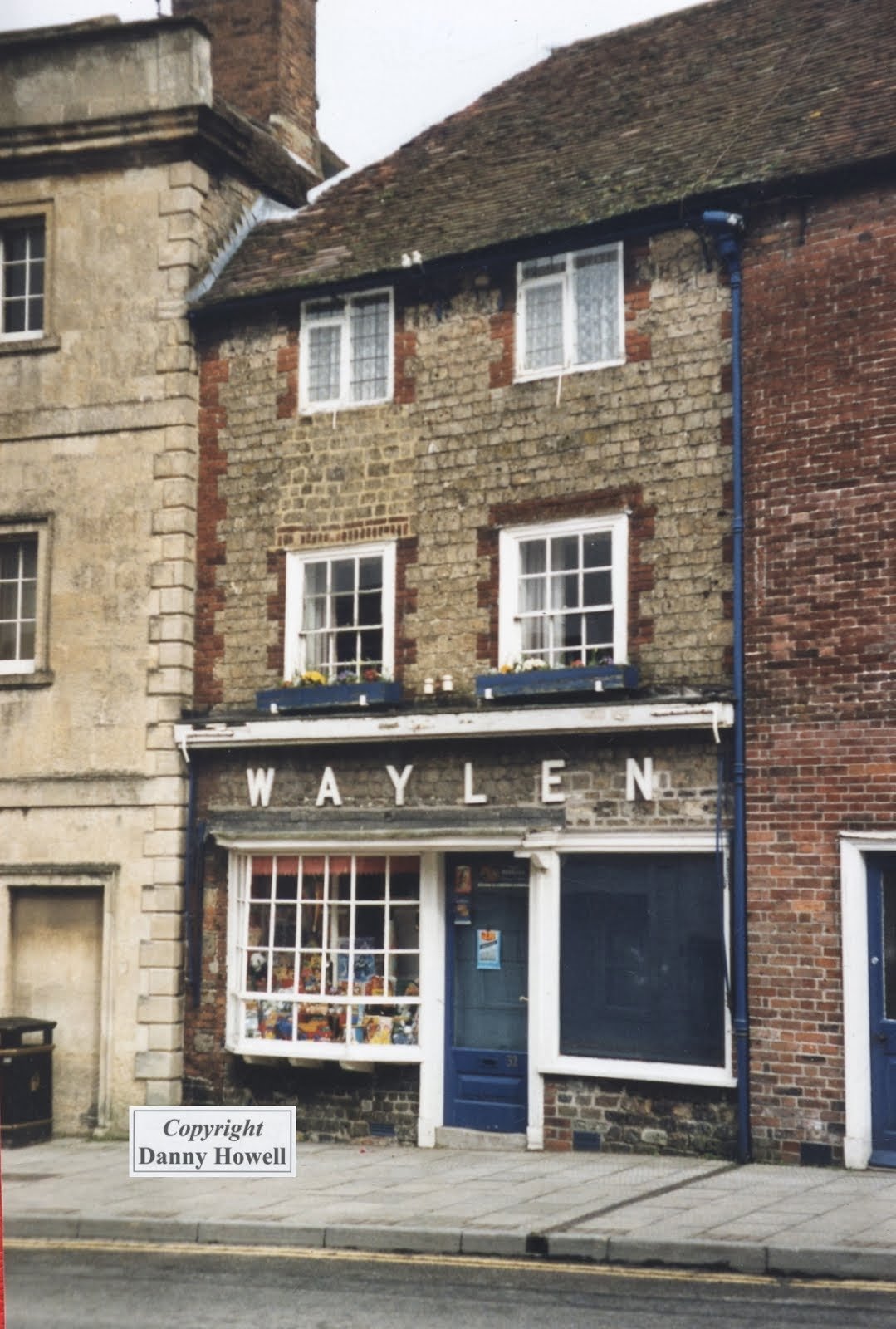
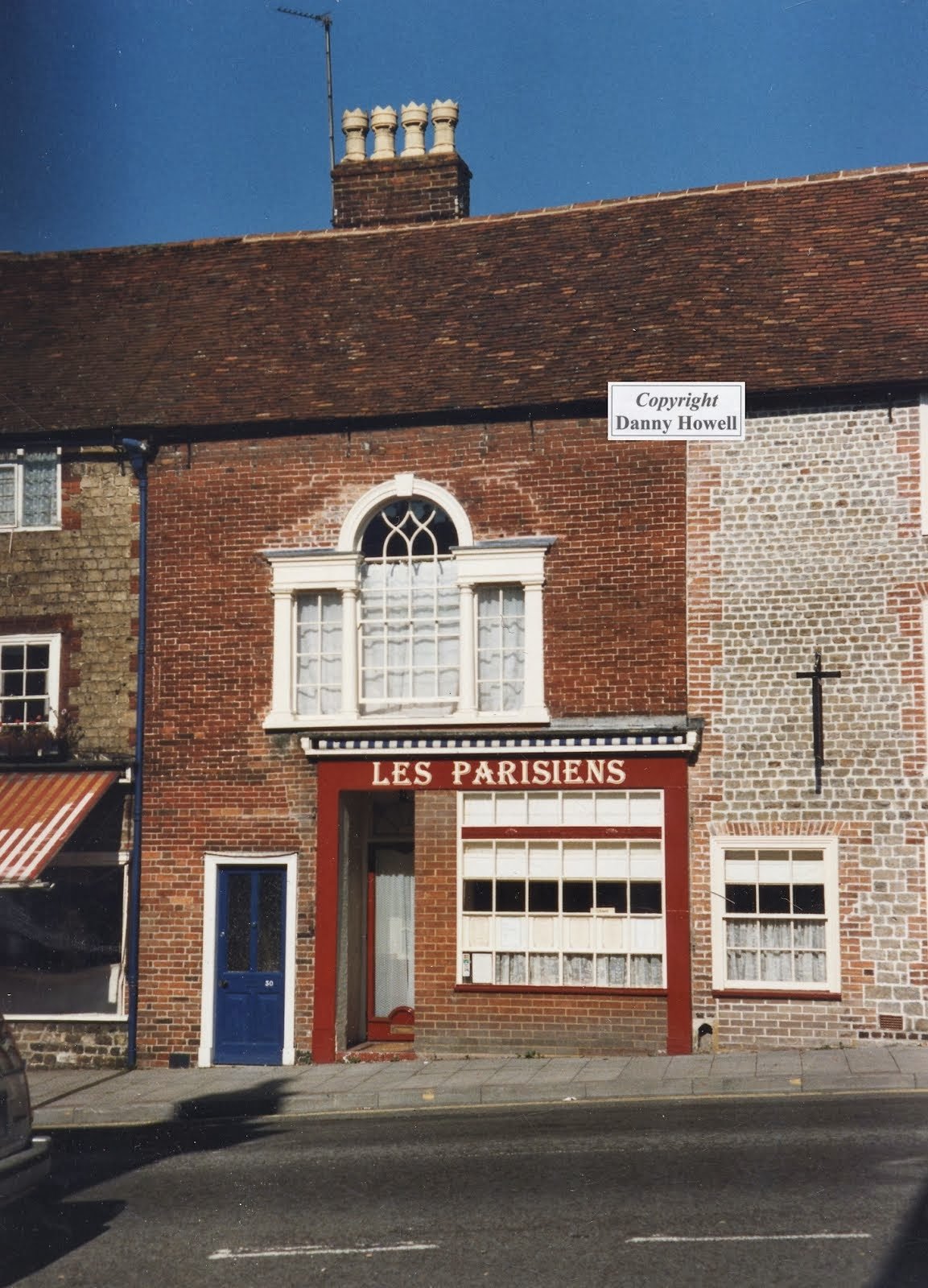
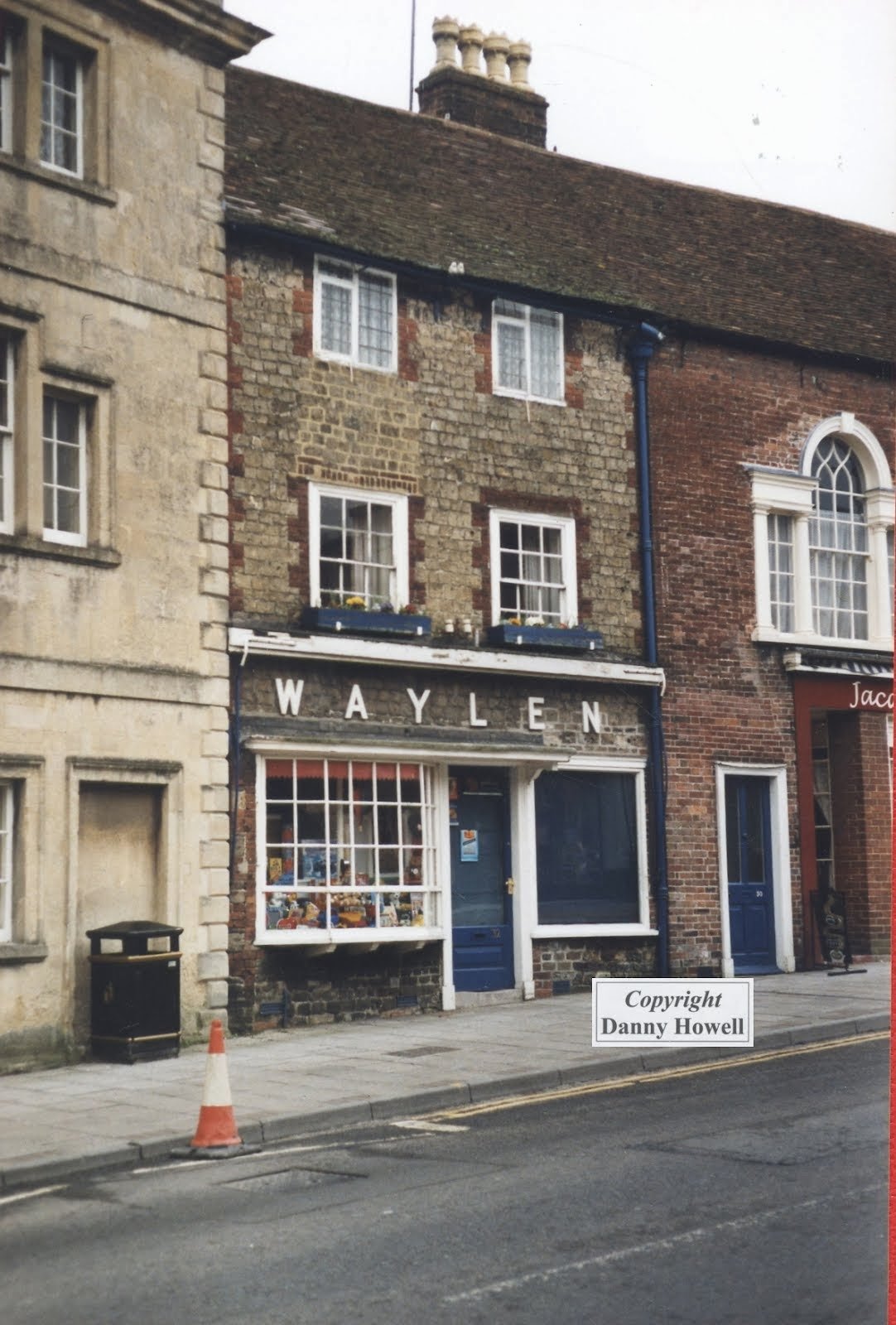
This area has retained a number of period shop fronts which are very important to the character and attractiveness of the town and should be preserved. Those that stand out within the street-scene are:
6 East Street.
7and 9 East Street.
10 East Street.
4 High Street.
6-8 High Street (Gibsons).
10 High Street.
30 High Street.
20 Market Place.
36 Market Place (Coates and Parker).
38/40 Market Place.
45 Market Place.
51/53 Market Place ( Dorothy Perkins).
84 Market Place.
There is a wealth of old photographs and records for the town, providing an opportunity to reinstate lost features or even entire shop fronts if they have been replaced with less sensitive modern examples.
LANDMARK BUILDINGS AND FEATURES
The majority of the buildings in this area are listed and are worth noting for their appearance and historic significance. The following is a list of those, which are most dominant, due to their positioning and/or architecture:
2 & 6 Portway and 52 & 54 High Street (corner group) known as Carters Corner.
36 High Street.
24 North Row.
Dewey House, North Row.
The Baptist Chapel and Hall, North Row.
The Athenaeum.
St. Lawrence Church.
The Town Hall.
34 Market Place.
37 Market Place.
The Bell Inn, 42 Market Place.
69 Market Place.
71 Market Place.
The Police Station, Station Road.
6 East Street.
BUILDING MATERIALS
Walls: render, rubble stone and ashlar Bath stone are the most common forms of cladding, but there are some red brick buildings within this area.
Roofs: clay pantiles are the most common roof finishes but stone tiles and slate can also be found.
Fenestration: timber Georgian and Victorian style sash, often with multiple glazing bars.
STREETSCAPE
Small areas of traditional paving materials have been retained. The majority are in the entrances to alleyways such as the cobbles along Chinn’s Court. An area of pitched paving had also been retained to the front of The Old Bell underneath the colonnaded arcade that provides a unique frontage to this building.
Street nameplates are predominantly traditional in size and materials and should be retained.
The streetlights are often attached to buildings including a number of listed properties.
The pavements are often narrow and somewhat cluttered by street furnishings.
LANDSCAPE
Urban high-density environment, with the only areas of greenery and significant trees being to the rear of the main streets and surrounding St. Lawrence Church.
OPPORTUNITIES
Promote the use of appropriate shopfront designs and materials within the historic market streets.
Empty shop units and premises above shop level should be monitored and where possible new uses actively encouraged whilst allowing the buildings character to remain intact.
Removal of on street parking to enhance the pedestrian environment and allow trade onto the streets. The study currently being promoted by the Highways Authority should take into consideration this character assessment with regard to the proposals being put forward.
Investigate the ownership and nature of the Buildings-at-Risk within this part of the town and pursue their repair and re-use as part of the regeneration for Warminster.
SUMMARY OF KEY FEATURES
Street and Building Layout
Generally narrow building frontages along linear roads, historically with long burgage plots to the rear.
Alleys and small courtyards are common features in this area.
Building Types
Individually designed buildings of varying heights and qualities arranged in long terraces.
There are a large number of traditional shop fronts in this area that are important to the character of the conservation area.
Materials
Ashlar stone and render are used most frequently in this area, but locally manufactured red brick, tiles and rubble stone can also be found.
Landscape Features
Hard, urban landscaping dominates this part of the town centre relying on the green backdrop of Salisbury Plain’s escarpment to give reference to its rural setting.
Parking
On street,
Rear courtyards, and
Designated car parks to the north of Market Place.
Streetscape
In a number of the courtyards and alleyways as well as a covered area to the front of The Bell Inn, have retained pitched paving stones, which are important to the conservation area, as the only remaining historic ground surface treatment.
Traditional street nameplates are also an important feature.
Skyline
The building heights are varied tending to be of 2-4 storeys in maximum height hereby allowing long distance views of the steeply rising landscape setting.