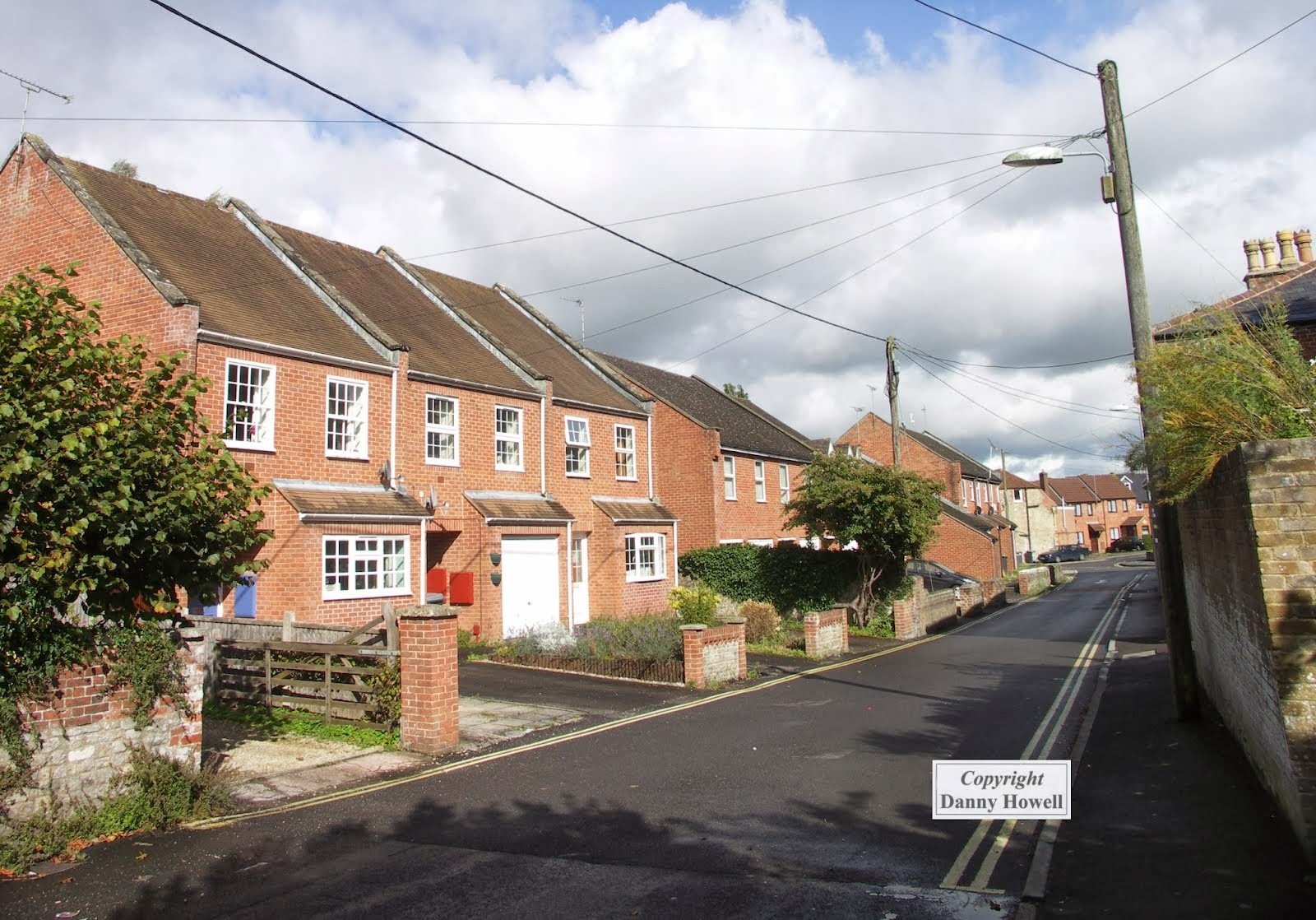
Locally Valued Heritage Assets ~ No.4 Emwell Street, Warminster

From Appendix 7.8 – Warminster’s Heritage Topic Paper. Additional information to support the Warminster Neighbourhood Plan. Produced in 2024.

Locally Valued Heritage Assets (LVHA)

Map Ref. No. 24.

Database Ref. LVHA59.1

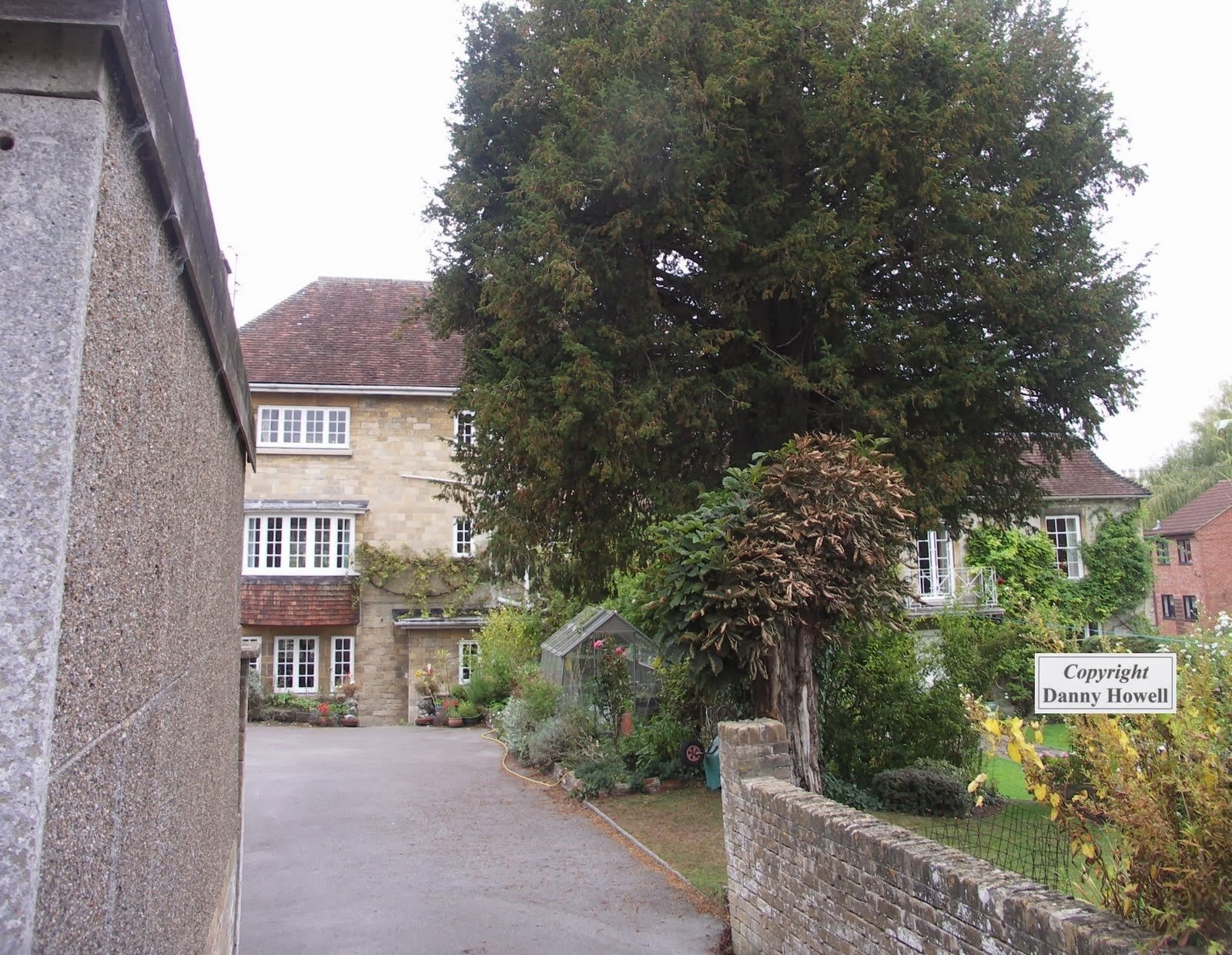
Asset Name: No 4 Emwell Street.

Description:
These are tall, semi-detached houses of golden coloured ashlar stone
and plain detailing typically found in the earlier half of the 19th
century. There is a plain string course between ground and first floor,
with both windows, chamfered doorway and a bootscraper recessed
within the façade. The front door is reached by several steps. At the
rear the garden elevation is similar with windows having wide plain
surrounds and projecting sills. There is a shallow brick stack with
plain coping and moulded architraves. The ashlar wall rises from a
brick plinth. The plan is that of a tunnel back house, often found in
towns, where the rooms are one behind the other. A long passage
leads alongside to the kitchen and on the other side is a stick baluster
stair with cupboard space below. All the windows seem to be
replacements. What is remarkable about the house is the good
quality of woodwork throughout. The mainly 6-panel fielded doors
on plain brass hinges are in oak along with the close-moulded
architraves, floorboards and other panelling. A plain picture (cornice)
rail has been added to the west end bedroom. During the 19th
century tiles enabled a shallow pitch of roof to be achieved. This roof
is in a mixture of softwood and oak. Normally only softwood is seen
at this date. There are collar trusses with plain central kingposts, the
favoured type of construction at this date, supporting a planked
ridge. The collars rest on the top of the brick partition wall with
struts on either side supporting the oak butt purlins. From a very
brief glance at the deeds relating to the house what is significant is
that Ann Allen Provis, widow of Samuel Provis, timber merchant
appears to be selling the house in 1826 to James Parsons, innholder
and maltster. It is possible that Provis was responsible for rebuilding
an earlier house before this time, say around 1800 judging by original
features. (Recorded on Wiltshire Buildings Record B11605).

How asset met Historic England critera –
Rarity (R)
Architectural or Artistic Interest (AA)
Group Value (GV)
Archaeological Interest (AI)
Historic Interest / Association (HI/A)

(AAI) What is remarkable about the house is the good quality of woodwork throughout. The mainly 6-panel fielded doors on plain brass hinges are in oak along with the close-moulded architraves, floorboards and other panelling. A plain picture (cornice) rail has been added to the west end bedroom. Roof space During the 19th century tiles enabled a shallow pitch of roof to be achieved. This roof is in a mi xture of softwood and oak. Normally only softwood is seen at this date. There are collar trusses with plain central kingposts, the favoured type of construction at this date, supporting a planked ridge. The collars rest on the top of the brick partition wall with struts on either side supporting the oak butt purlins. From a very brief glance at the deeds relating to the house what is significant is that Ann Allen Provis, widow of Samuel Provis, timber merchant appears to be selling the house in 1826 to James Parsons, innholder and maltster. It is possible that Provis was responsible for rebuilding an earlier house before this time, say around 1800 judging by original features. (GV) Built as pair. (HI) Blank windows may be example of the effect of Window Tax which was repealed in 1851.

Additional comments:
Good examples of early C19 terrace with functional details preserved.
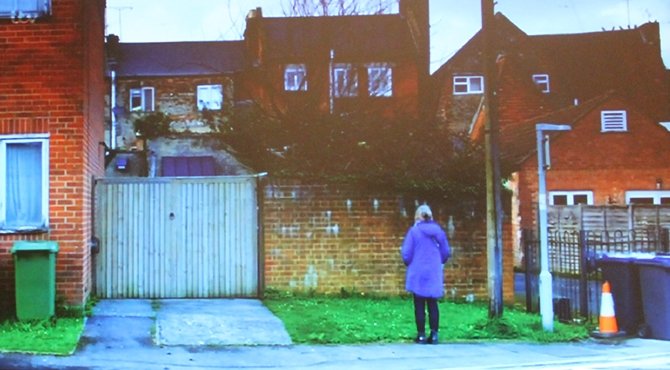
‘Long Lost Family’ To Feature A Woman Who Was Abandoned As A Baby In Public Toilets, Warminster

Thursday 22nd May 2020

Born without trace. Long Lost Family, ITV, Tuesday 2nd June 2020, 9.00 p.m. Nicky Campbell and Davina McCall help a woman who was found as an abandoned baby in the public toilets (long since demolished) at Emwell Street, Warminster.

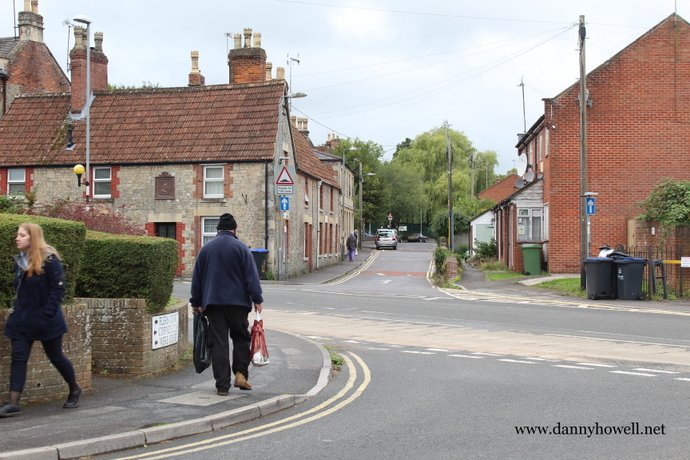
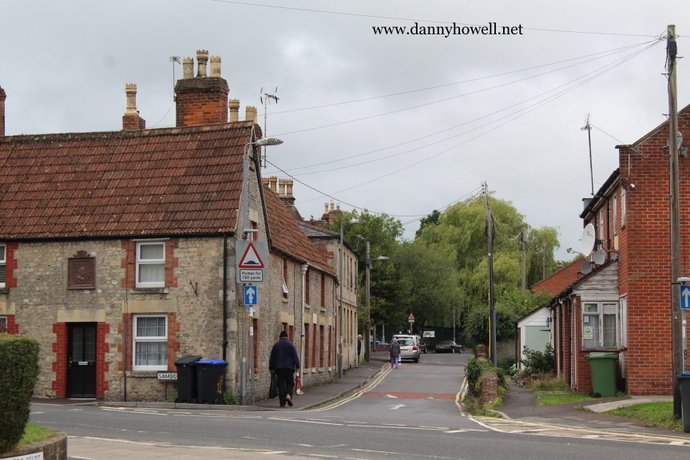
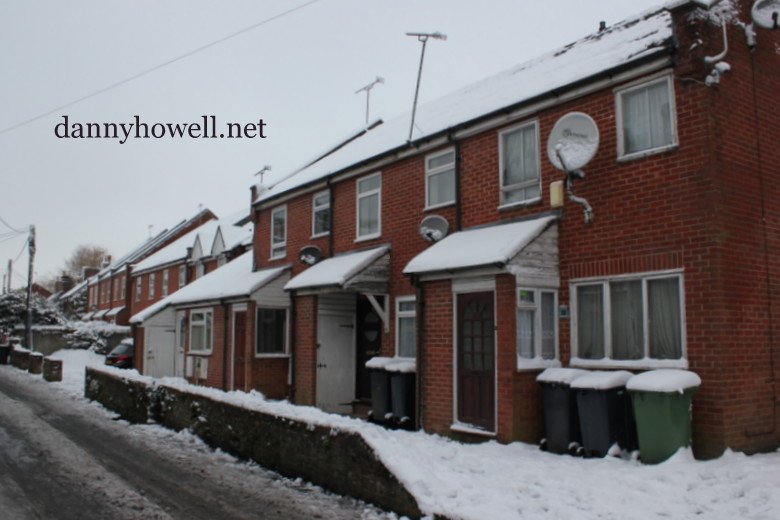
Views Across Sambourne Road To Emwell Street, Warminster

Wednesday 12th September 2018

 View from the access road to the
Western Car Park, looking west across
Sambourne Road, to Emwell Street,
Warminster.

 Photographs taken by Danny Howell
on Wednesday 12th September 2018.

Councillor Andrew Davis Correctly Identified The Mystery Photograph (Posted On This Website Yesterday) As Being Emwell Street, Warminster

Wednesday 2nd July 2014

Danny Howell writes ~

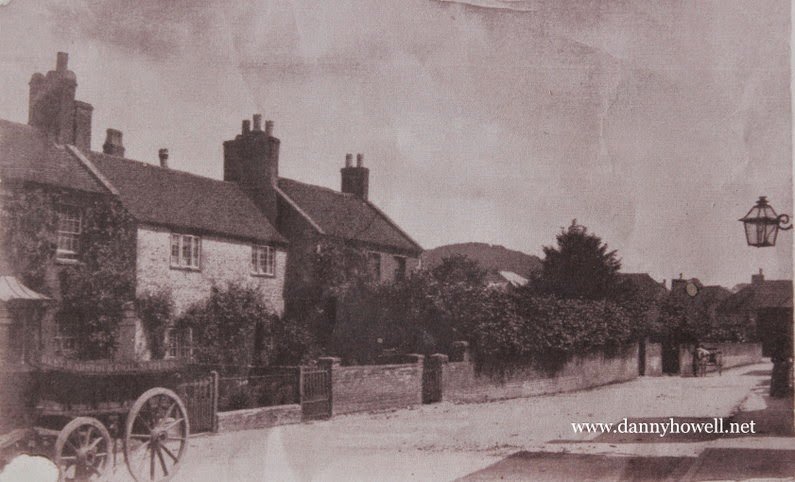
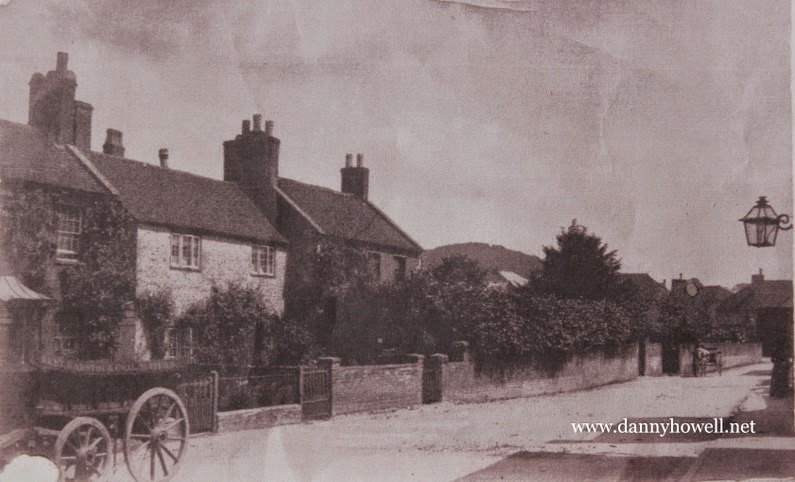
Last night I posted this old postcard picture (above)
on dannyhowell.net

I asked: Here’s a mystery photo you can maybe help
with. This postcard picture was taken by a 
photographer called Fielder  who was
based in Warminster years ago.
In the lower left corner is a cart signwritten
“Radstock Coal”. Radstock coal was regularly
delivered in Warminster and surrounding villages.

The question is, where did Mr. Fielder take the photo?
Is it in Warminster or elsewhere?
Do you recognise the houses or the street?
Of course, the scene may have changed a bit over
the years, but do you know where it was taken?

If you do, please contact
dannyhowellnet@gmail.com

I’m pleased to say I received a good response
from readers. Their emails suggested various streets 
in Warminster, including Portway, Victoria Road, 
Boreham Road, and so on. Thank you to all of you.
But only one person came up with the correct
location. That clever person was Andrew Davis
(yes, the Warminster Town Councillor and
Wiltshire Councillor).

Andrew wrote: 
“That Picture …… Could it be Emwell Street  with
the lantern being on the Weymouth Arms?”

It is indeed Emwell Street, Warminster, with the
lantern on the right of the picture being on the
north-east corner of the Weymouth Arms.
The lantern is no longer there, but a modern
lamppost stands on the pavement just a couple
of yards along, on the other side of the alley
between the pub and Emwell House.
In the old picture you can see where the shadows
on the right show no shadow from the alley.
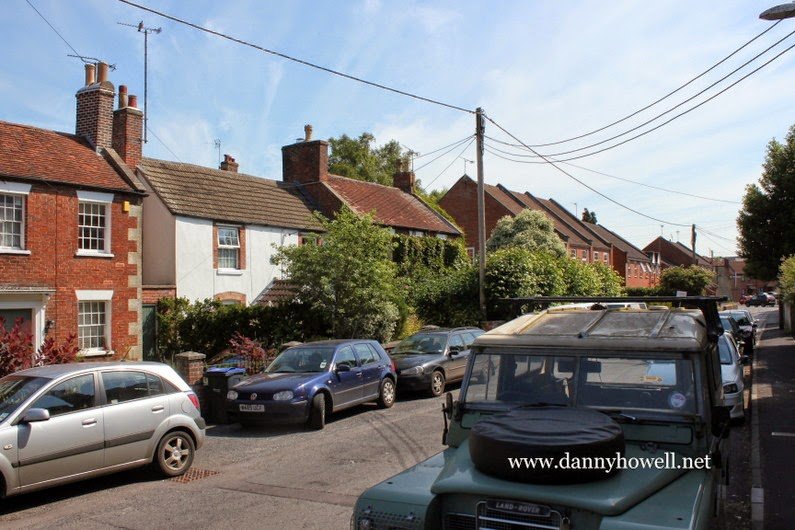
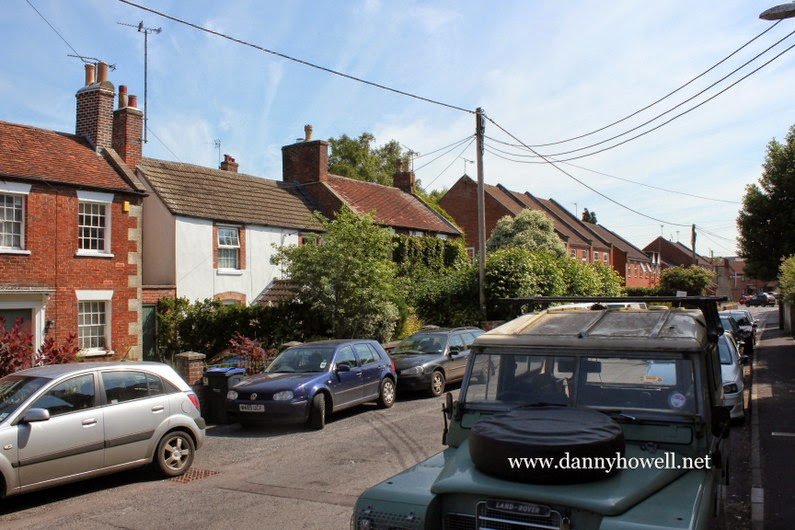
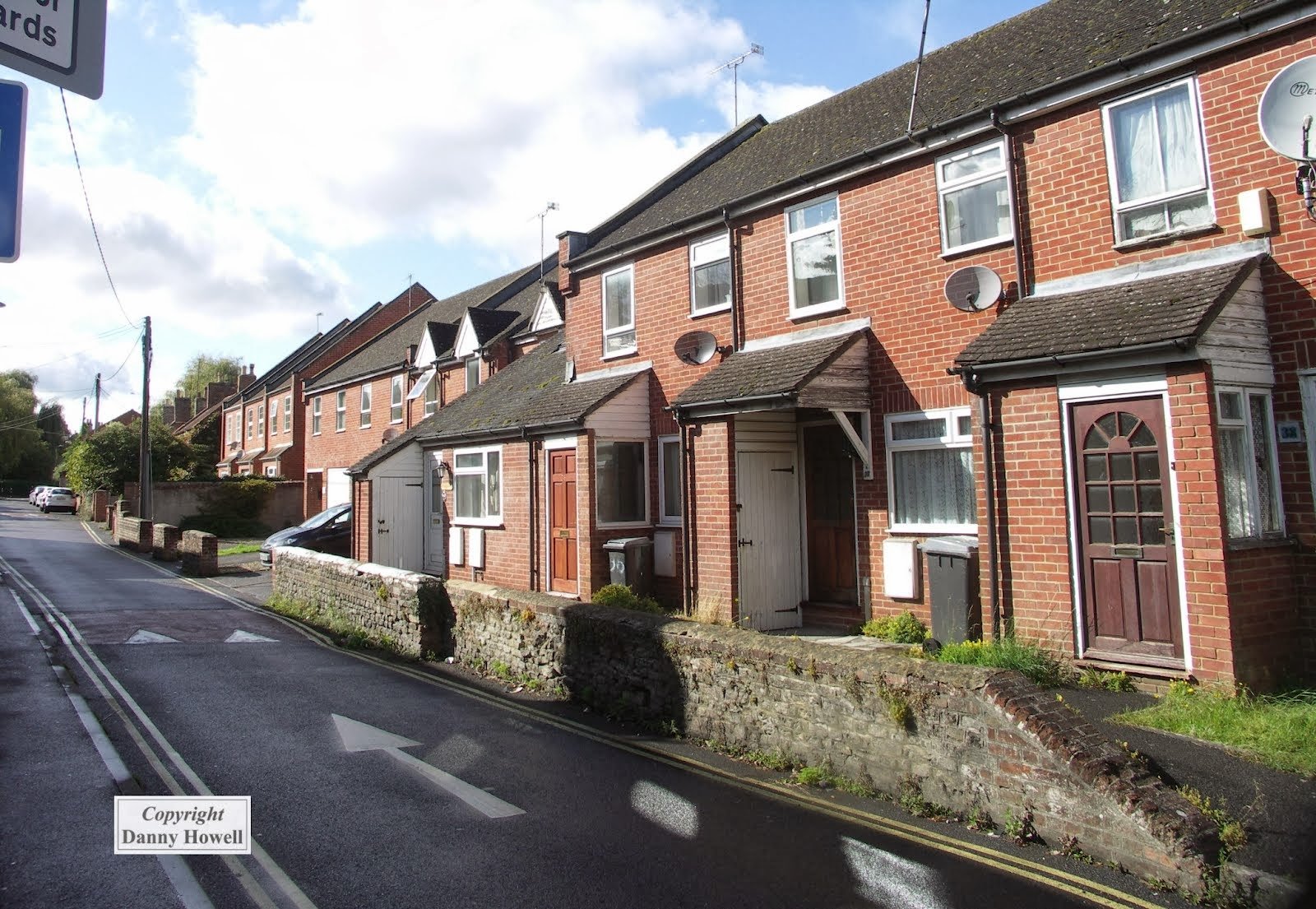
Below is the same scene, photographed by me
this morning (Wednesday 2nd July 2014).

The cottages on the left are now named or numbered
(left to right) No.26, Flora Cottage; 
No.27, Emwell Cottage; and No.28 Emwell Street.

The old porch above the door at Flora Cottage
has long since gone.
Flora Cottage was once the home of Albert Dewey,
a well-known Warminster blacksmith who
had his forge there (suceeding a previous blacksmith
called Thomas Bamsey), and there had at one time
been a weighbridge in the road outside.
It could be that the Radstock coal cart in the old
picture was there, having delivered coal to the forge, 
or had maybe been weighed empty, or was there for
some kind of repair.

Telephone poles and wires
now cross the street in several places.
And television aerials now occupy the
chimney stacks. And of course, the
horsedrawn carts have gone, replaced
with many (some would say too many) cars.

Emwell Street now has sleeping-policemen
car slowing measures too.
And let’s not forget it is now a one-way street.

At the far end of the street,
where the long wall is in the old picture, 
(with a horse and cart alongside)
is now a terrace of fairly modern houses.

At the end of the street is the junction with
the lower end of Sambourne Road.
In the background is the beech-clad summit
of Copheap which dominates the town.

Well done to Andrew for the correct identification.
Here are the two photos, old and new,
next to each other, so that readers can compare.

error: Content is protected !!