Tuesday 30th September 2025
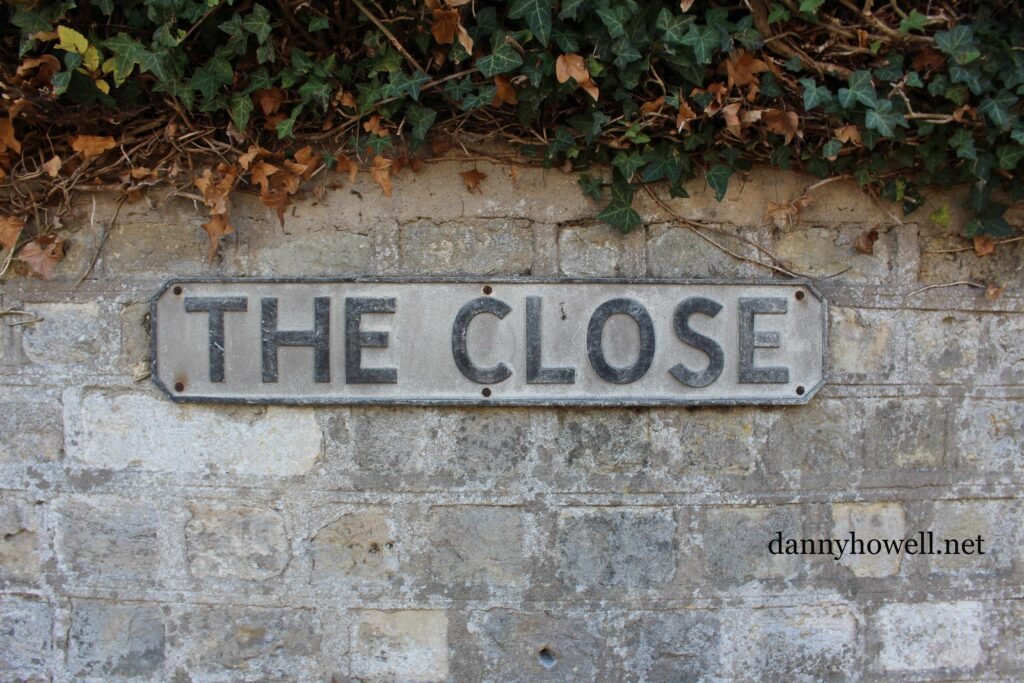
The street name sign at the northern end of The Close, Warminster.
Photograph taken by Danny Howell
on Tuesday 30th September 2025.
Tuesday 30th September 2025
The street name sign at the northern end of The Close, Warminster.
Photograph taken by Danny Howell
on Tuesday 30th September 2025.
Tuesday 30th September 2025
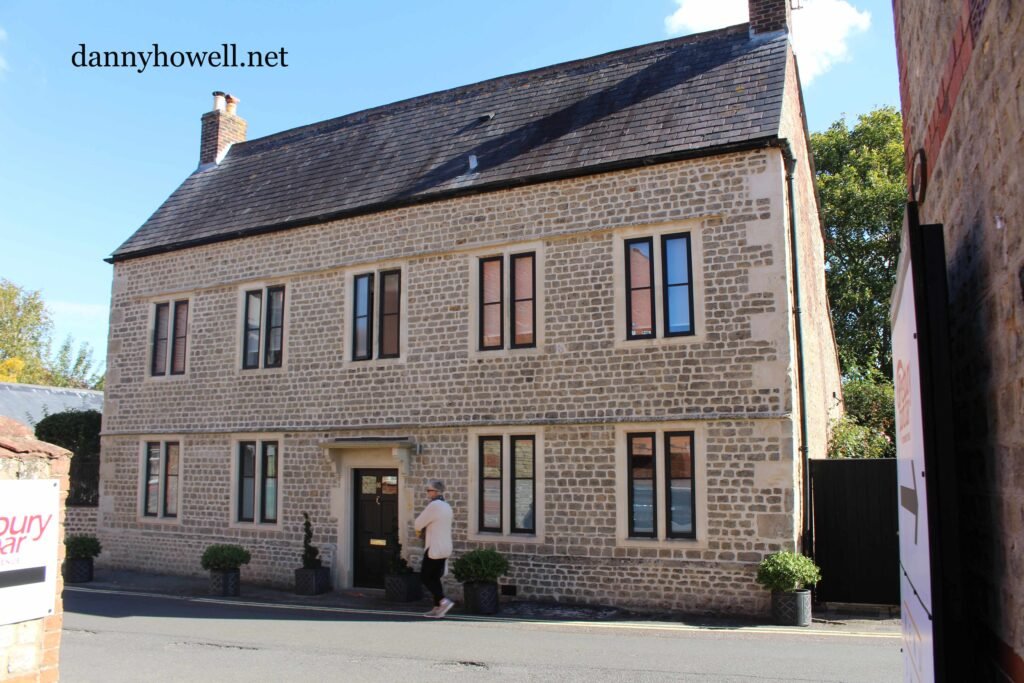
No.16 The Close, Warminster.
Photograph taken by Danny Howell
on Tuesday 30th September 2025.
Tuesday 30th September 2025
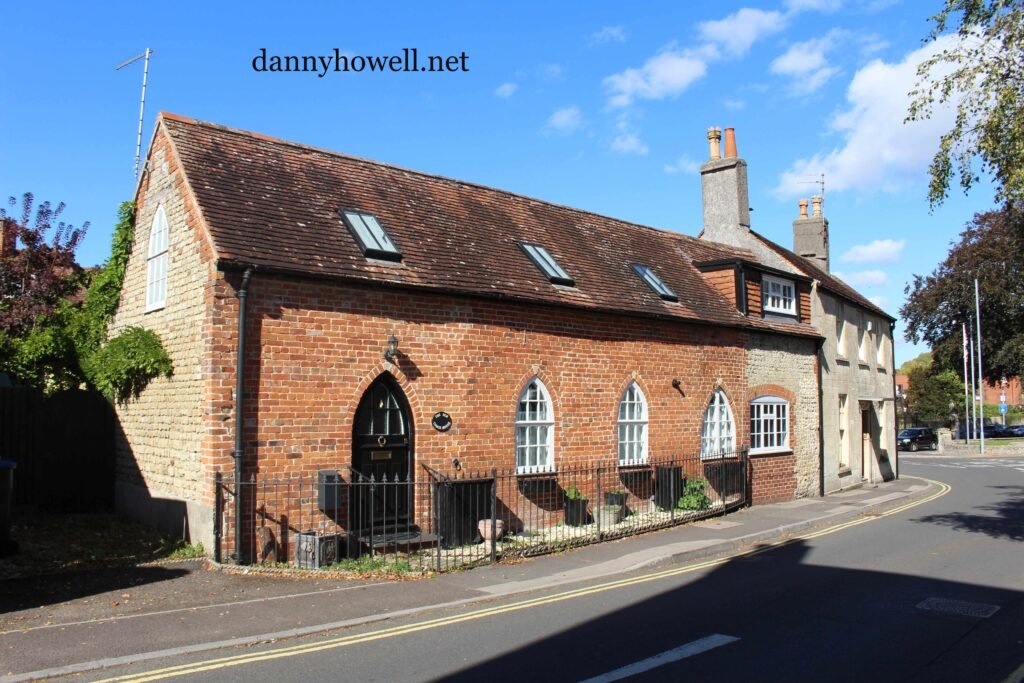
The Coach House at The Close, Warminster.
Avenue Cottage to the right.
Photograph taken by Danny Howell
on Tuesday 30th September 2025.
Tuesday 30th September 2025
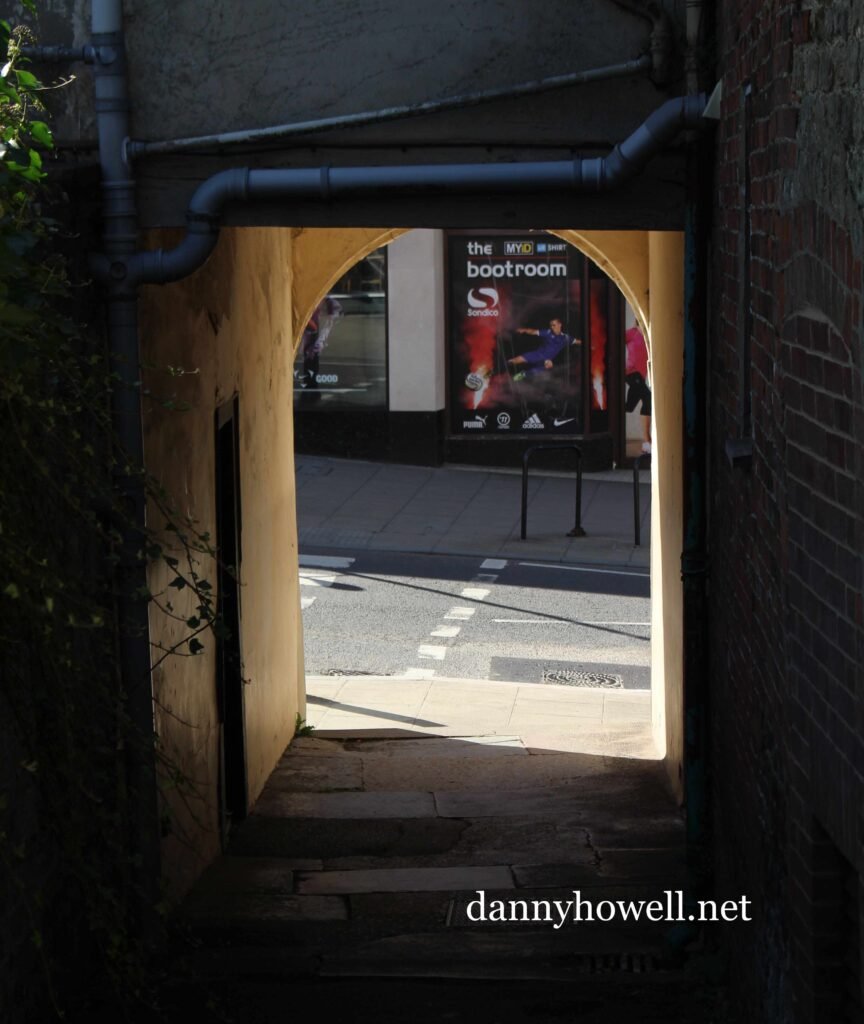
A view from the archway of The Close, Warminster,
to the High Street.
Photograph taken by Danny Howell
on Tuesday 30th September 2025.
Tuesday 30th September 2025

A colourful tree at The Close, Warminster,
on the corner with Chantry Mews.
Photograph taken by Danny Howell
on Tuesday 30th September 2025.
Tuesday 5th November 2024

An update from The Old Fire Station 1905, The Close, Warminster:
Just an update on our opening times.
We have taken the decision not to open Saturday daytime, at least over the winter. We are consistently busy in the evenings, but the Saturday days have been just ok or very quiet. Obviously since we came to this decision a week ago, we have had lots of enquiries! But, we are very content with evenings!
We continue to open Tuesday to Saturday from 5pm and now Sunday lunch with Dean, 12 till 4.
As always, better to book in advance to avoid disappointment! Telephone (01985) 213170
Dave and the team.
enquiries@theoldfirestation1905.co.uk
Friday 1st November 2024

Fundraising news from Dave and the team at The Old Fire Station 1905, The Close, Warminster:
On Monday 25th November 2024, we are open for the evening to raise money for the charities who are supporting Sophie Ward.
Sophie is a former pupil of Warminster School and a serving member of the Royal Marines Band Service. She met her husband Rich in 2022 and they married in April 2023. Sophie was diagnosed with Motor Neurone Disease in January 2024 aged just 26. Sophie and her family live in Warminster and her younger sister Katie works with us at The Old Fire Station.
Our aim is to book out all tables twice on the evening, with 100% of all money being donated to the #26forSoph campaign, raising money for the Royal Marines Charity, Dorothy House Hospice, and MND Association.
Our staff will be working for free, our suppliers are supporting us to cover all costs and we will also hold a raffle. Our aim is to raise £2600 in the one evening between 5 and 10pm.
We have the usual menu and fantastic beer, wine and cider on offer and the evening will run like any other OFS evening!
Please support us by booking a table. We do not want any empty seats so please note that tables must be of 4, 6, 7 or 8 people. If you are a couple, bring another couple!
Book via the website, messenger or phone, and please share.
www.facebook.com/theoldfirestation1905
(01985) 213170
Monday 13th May 2013
Rainbow Pre-School Learning Centre.
The Pratten Hut, The Close, Warminster
For 2 to 4 year-olds.
Monday – Friday
9.00 a.m. to 12 noon.
Warm, friendly atmosphere,
outdoor play area, in town centre location.
Visit any time during above hours.
Contact: Brenda Glasson, telephone 01985 219161.
Thursday 1st February 2007
Broberg Vehicle Repairs And Servicing,
Unit 1, The Old Brewery, The Close, Warminster, BA12 9AL.
Established in Warminster since 1979.
All vehicle servicing/repairs.
MOTs undertaken.
Sun computer tuning and diagnosis.
Welding.
Customer vehicles collected and delivered.
Friendly, personal, honest and conscientious work
carried out at reasonable rates.
Telephone 01985 218463.
West Wiltshire District Council’s Warminster Town Centre Conservation Area Character Assessment, Informative Document, Consultation Draft/Cabinet Draft, of December 2006, includes the following notes:
RESIDENTIAL AREA 1
This part of the conservation area includes Portway and The Close. Portway runs southwards and is one of the main entrance routes into the town. The Close also runs north to south, but is a smaller, one-way back road.
The manor of Newport was created in the 12th century, however, the road previously known as Newport (now Portway) formed part of a planned extension to the town in the 14th century.
Strong reference to the rural setting of the town and the historically rural nature of the town. Whilst it emerged in the 13th century as a route into the market place and has older origins than High Street or Market Place it is likely to have developed from a relatively low key drovers or access route; has not been consumed by the commercial centre/ uses of the town.
As an important entrance-way into the town centre, Portway has quite a suburban feel to it although it becomes more urban to the south as you get nearer to the town’s retail centre.
The northern end of Portway has a steeply rising wooded backdrop which, along with the low density green (well planted/mature) residential environment which surrounds the conservation area at this point, makes this one of the parts of the town which has retained its rural character.
USES
A large part of the Portway area was once part of the Portway Estate (previously the Newport Estate). Portway House is still the most dominant landmark feature within this area.
In the mid 19th century the railway line was constructed and crosses Portway, interrupting the avenue. This area has always been on the periphery of the commercial centre. Residential is currently the predominant use in this area that is also true of its historic function.
At the entrance to The Close is the Warminster Hospital complex. Positioned to the rear of Portway, these buildings do not have a strong presence on this main route but are a prominent feature on The Close and The Avenue.
This area has also been the location of the fire station for over 100 years although originally located at the southern end of The Close. In the mid 20th century it was found that the original building did not have sufficient capacity to meet demand and a new fire station was built on Portway. The current fire station is outside of the conservation area boundary and does not visually contribute to the character of the conservation area. However, it represents an important function within the town and the original first station building remains architecturally intact.
Between Portway and The Close there are remnants of the town’s industrial heritage and sandwiched between these two residential streets are a Victorian malthouse and brewery buildings.
LAYOUT
The majority of the buildings in this area are terraced properties which front directly onto the highway/footpath, although a number are set back behind small enclosed front gardens.
Portway in the most part is an unusually wide road, which allows for long views and adds to its low-density edge of settlement feel. Large gardens and a number of breaks in the building frontage allowing glimpses of green space or trees is an important feature. The relatively low density of development north of Portway House, gives the impression that the northern part of the area backs onto open countryside.
The southern end of Portway is narrower in width and is characterised by high-density development with narrow fronted terraces and a greater number of three storey buildings. Layers of development become visible and a sense of the busy town centre spills across into Portway.
The Close is a narrow one-way street, consequently cars do not dominate it. Buildings directly abut the road although many are orientated north and south rather than fronting The Close. Buildings are often very spaced out with side gardens bound by high walls. The overall effect is a high sense of enclosure and an intimate feel.
The Close, previously known as Common Close has a narrow entrance off of High Street, which historically was only a pedestrian alleyway with a building terminating the street. With the demolition of that building in the 20th century The Close became a one-way street from Portway to High Street.
ARCHITECTURAL FORM
The scale and form of buildings varies within this area from modest two-storey cottage style terraced properties to three storey wide fronted Georgian style town houses.
The Almshouses are the only single storey terrace. The tall steeply sloping hipped roof ensures that the neighbouring houses do not overshadow the building, and its detailed architectural features give it a strong presence within the street-scene.
Portway House, a grade I listed building, fronted by large wrought iron gates with pillars capped by eagle statues. This is one of the largest and most architecturally interesting buildings within the town. Portway House consists of three wings with the central part being three storeys, dropping down to two storey of either side. Clad in ashlar Bath stone, it stands out as one of the most distinguished buildings in the town.
The walls which front Portway House are also listed in their own right with the front wall and gateway being a grade II*.
Side gables are common, but a number of the feature buildings have steeply pitched Victorian front gables. Parapets are not common in this locality despite being a regular feature on the towns’ commercial streets.
The heights of buildings and roof pitches create a varied skyline that is enriched by the multitude of chimneys.
LANDMARK BUILDINGS AND FEATURES
Whilst a number of buildings or structures stand out within this area due to their size, positioning or architectural detailing, there are 2 key focal points:
The railway bridge, due to its simplicity, rather than being a barrier, acts as a physical gateway into the town.
Portway House.
Other landmark or feature buildings include:
The Almshouses, Nos. 92 -98 (even) Portway.
The War Memorial, set in its small courtyard.
Nos. 83-91 (odd) Portway, Victorian front gable, ornate timber detailing.
Nos. 37 – 43 (odds) Portway, a row of three storey weavers’ houses.
The pub, 49 Portway.
The Hospital (main building), The Avenue.
The Old Fire Station, The Close.
Nos. 2-6 Portway group with 52 and 54 High Street, corner building.
BUILDING MATERIALS
Walls: As is common throughout Warminster a large number of the buildings are clad in rubble stone with brick dressings.
Red brick frontages with stone or timber dressings, are found particularly along the east of Portway and in the southern part of this area. The side and rear elevations are often still finished with the local rubble stone.
Some buildings have been painted or rendered.
Roofs: Clay pantiles are the most common roof materials, with occasional use of slate or stone.
Fenestration: Where the original timber windows have been retained, they tend to be either glazing bar sash windows or narrow glazing bar casements. A number of buildings also have blind windows.
STREETSCAPE
Portway is an unusual wide street, which although not formally planted has the feel of an avenue and a street of some status.
LANDSCAPE
Surrounded by prominent green landscaping with views of mature trees and long green gardens to the rear of the buildings which front the street, Portway has retained a semi-rural feel. There are a number of mature trees in front courtyards which are important to the character of the streetscape and
complement the long views of the attractive landscape setting of the town.
OPPORTUNITIES
In order to retain and enhance the character of Portway the retention of front gardens and boundary walls is considered important.
The reinstatement of these enclosed spaces by introducing gateways where new drives have been created would be beneficial.
The street can accommodate the inclusion of street trees due to its width.
There are a few neutral buildings that do not contribute to the character of the conservation area:
35 Portway, is architecturally bland, but is nevertheless, of an appropriate size and positioned well in terms of its relationship with Portway House. Consequently, if redeveloped the building form should be retained.
88 Portway, late 20th century detached house. neither the materials, the positioning nor the architectural style of this building is suitable for this locality.
Kyngeston Court, architecturally does not positively contribute to the character of the conservation area.
SUMMARY OF KEY FEATURES
Street and Building Layout.
Varying street widths,
Majority of building directly front the highway.
Building Types
Predominantly residential terraces.
Some semi-detached or detached properties
Portway House and No 35, large buildings set in large grounds, multiple occupancy not apparent from the street.
Materials
Mixture of rubble stone and brick, some feature buildings in particular Portway House clad in ashlar stone.
Clay tiles including pantiles, some slate and stone.
Timber sash windows with glazing bars and timber casement windows.
Railings are the most frequent front boundary treatment.
Landscape Features
A large number of mature trees are important to the visual attractiveness of this locality. These are either to the rear of buildings or focused on Portway Lane, 33 and 35 Portway or around the war memorial.
Parking
On street or Courtyard and walled car parks.
Some later creation of frontage parking.
Some rear parking courtyards
Garages are not a common characteristic of the locality.
Streetscape
No historic street finishes or furnishings have been retained in this locality.
Skyline
Viewed against Salisbury Plain the varied nature of the skyline and roof detailing is considered an important feature in this locality.