

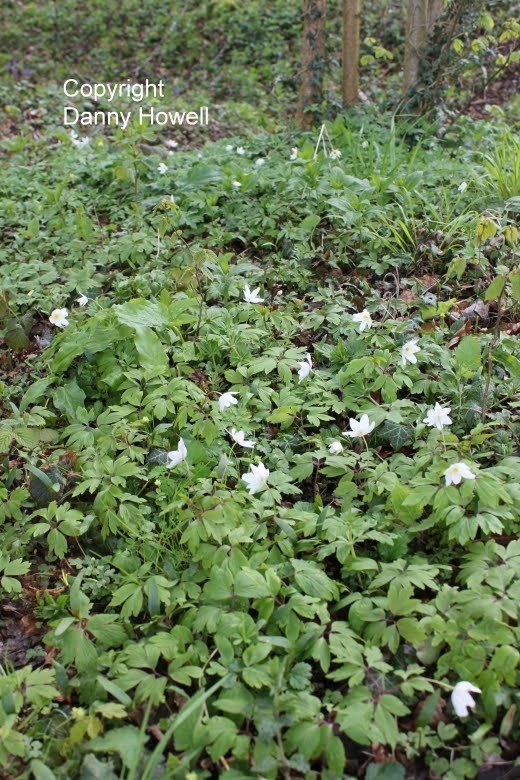
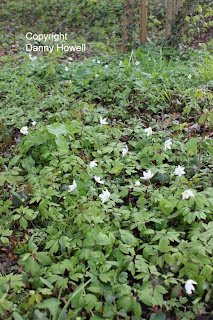
Some photographs of a carpet of wood anemones in
the woodland adjacent the Ox Drove, south of Wylye,
photographed by Danny Howell
on the afternoon of Sunday 22nd April 2012.
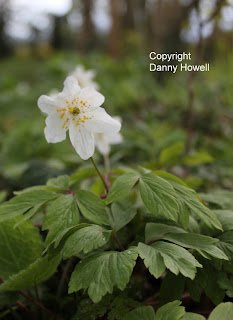
There are many folknames for this plant including crowfoot
and thimbleweed. The name “smell fox” is very popular and its origins appear to be the musky aroma of the anemone’s leaves.
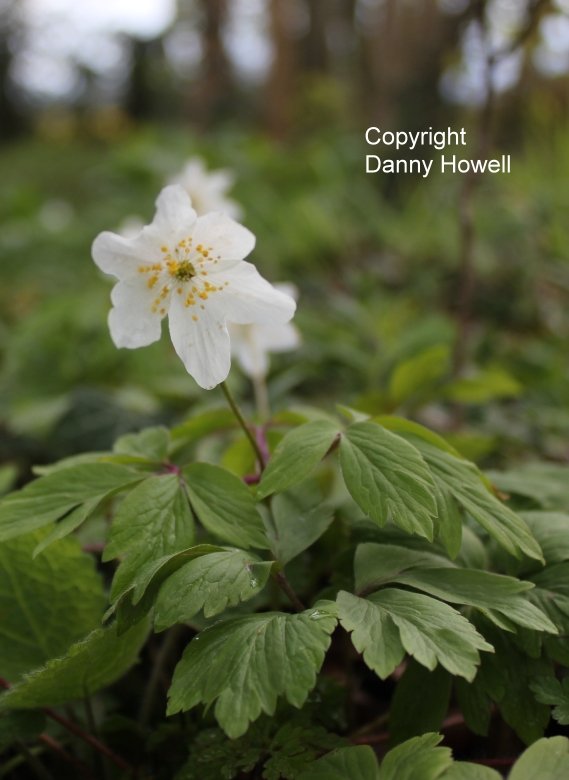
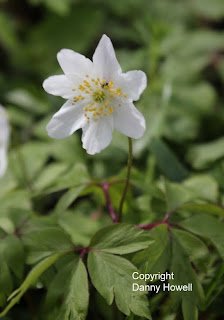
Wood anemones are widespread throughout the United Kingdom. It is found mostly in dry deciduous woodland, but is also seen in old hedgebanks indicating an area of vanished woodland, in which circumstances the plant is sometimes referred to as “the woodland ghost”.
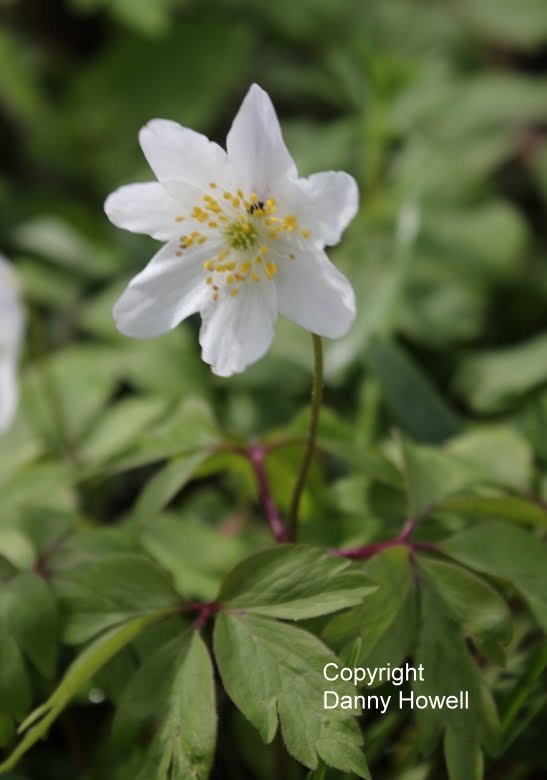

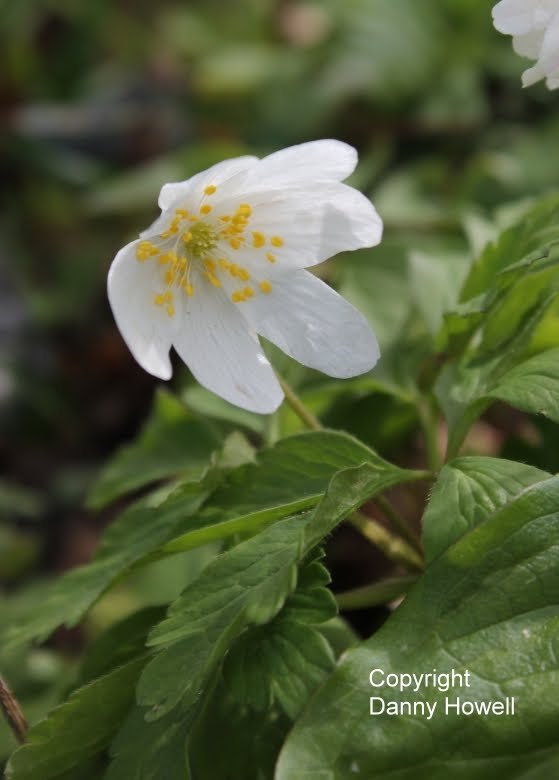
It is a perennial, herbacious plant, growing 5 to 15 cms tall,
with three-stalked leaves up its stem.
Wood anemones flower from March until May.
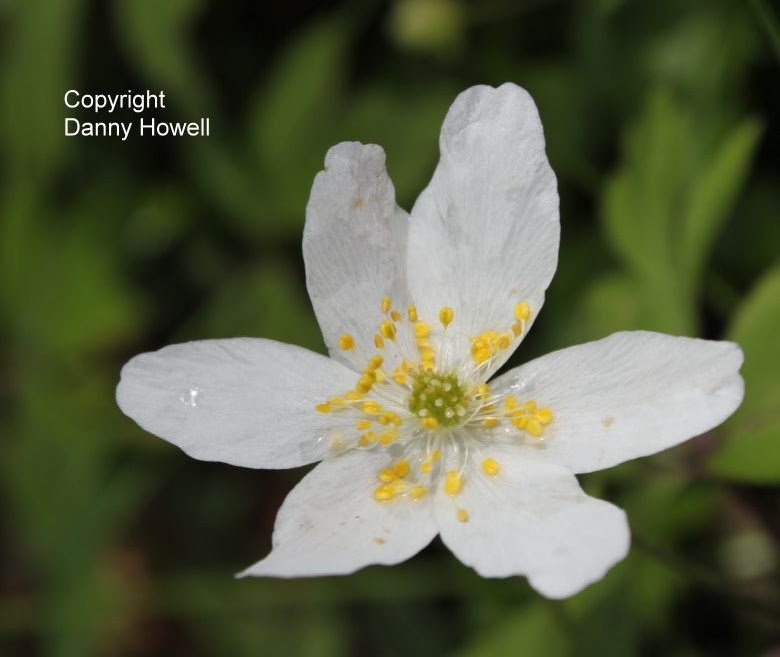
They do not have true petals but have what are called tepals.
The ones, seen here, are white
but some vareties are tinged with purple or pink.
The single star-shaped flowers are on an upright stem
and have many stamens.
Apparently, no honey or scent is produced
as the plant is self-pollinated and does not need
insects for this purpose.
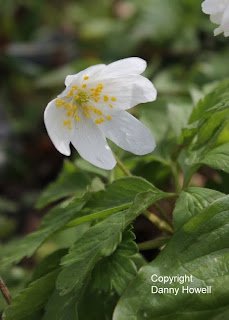
The wood anemone is one of the earliest and prettiest
of woodland flowers but it is poisonous and is not to be eaten. The plants can cause severe irritation of the skin, a burning sensation in the mouth and throat, nausea, vomitting and diarrhea.
As the spring moves into summer and the tree canopy
blocks out the available sunlight, the flowers wither.
The plant dies each year but its underground stem,
which is called a rhizome, survives the winter.